Titanium Anodes for Seawater Electrolysis Chlorine Production
Our Ru-Ir MMO coated titanium anodes generate chlorine directly from seawater for biofouling control, on-site sodium hypochlorite dosing and brine treatment. You get a Gr1 titanium substrate, 8 to 20 g/m² precious metal oxide loading and a recommended operating window of 10 to 40 mA/cm², built to your drawings and shipped from our ISO 9001 certified factory in Baoji, China. Drawing-confirmed quotes are returned within 12 hours.
What This Anode Does
When direct current passes through seawater between a coated titanium anode and a cathode, chloride ions oxidize at the anode surface and form active chlorine: dissolved chlorine gas, hypochlorous acid and hypochlorite. Operators use this reaction to prevent marine growth on seawater intake screens and cooling circuits, to dose sodium hypochlorite on site for ballast water and produced water systems, and to feed electrochlorination packages on offshore platforms and coastal power plants.
The anode is the part of the cell that decides whether this process runs economically. A plain titanium anode passivates almost immediately in chlorine-generating conditions, and an under-specified coating wastes both cell voltage and precious metal. Our seawater anodes pair a corrosion-resistant Gr1 titanium substrate with a ruthenium-iridium mixed metal oxide (MMO) coating selected specifically for chlorine evolution duty, so the cell voltage stays low and the coating consumption rate stays predictable over years of operation.
Why Ru-Ir Coating for Seawater
Seawater electrolysis is a chlorine evolution reaction (CER) environment. Ruthenium-iridium oxide coatings offer the lowest chlorine evolution overpotential available in industrial DSA technology and hold up well against hypochlorite attack. That combination is what keeps energy consumption per kilogram of active chlorine low. If your electrolyte is sulfate-based or your duty is oxygen evolution, the Ir-Ta titanium anode is the better coating match; for concentrated brine and chlor-alkali conditions, see our Ru-Ir titanium anode page for the standard product line.
How the Chemistry Works
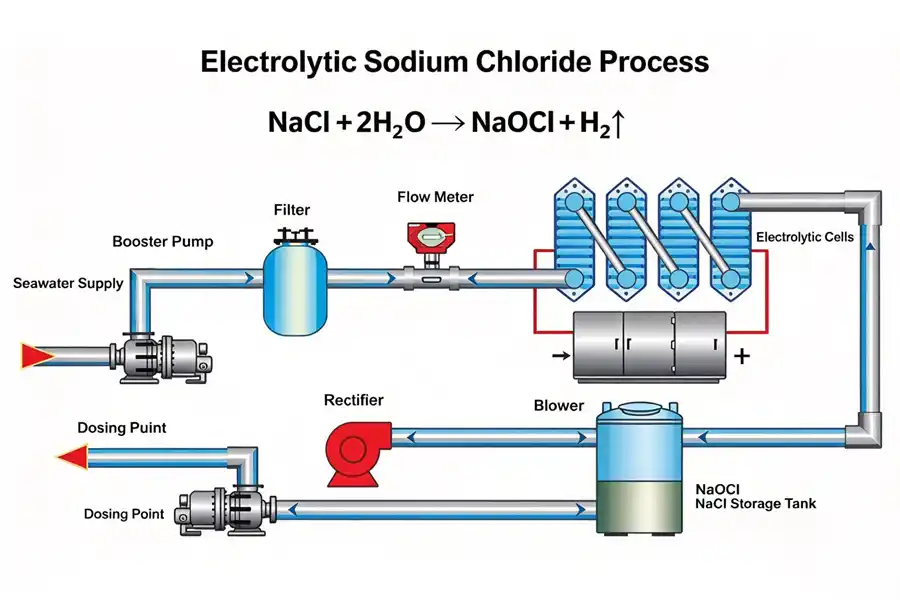
Seawater flows through the electrolyzer while DC current passes between the anode and cathode:
Anode: 2Cl⁻ → Cl₂ + 2e⁻
Cathode: 2H₂O + 2e⁻ → H₂↑ + 2OH⁻
In solution: Cl₂ + 2NaOH → NaClO + NaCl + H₂O
Overall: NaCl + H₂O → NaClO + H₂↑
Two practical consequences follow from this chemistry. First, calcium and magnesium ions in seawater form scale on the cathode over time, which is why every serious installation includes a 10% hydrochloric acid cleaning loop, typically run on a 30 day cycle. Second, hydrogen is generated alongside hypochlorite, so the cell and storage tank must be ventilated to keep hydrogen concentration safely below the lower explosive limit.
Typical Specifications
Typical design range for seawater electrochlorination service. Final values are confirmed for each project.
| Substrate | Grade 1 titanium (TA1 equivalent), mill finished per ASTM B265 |
|---|---|
| Coating system | Ru-Ir binary, or Ru-Ir-Ta ternary for high duty cells |
| Coating load | 10 to 20 g/m² (Ru-Ir), set by target life |
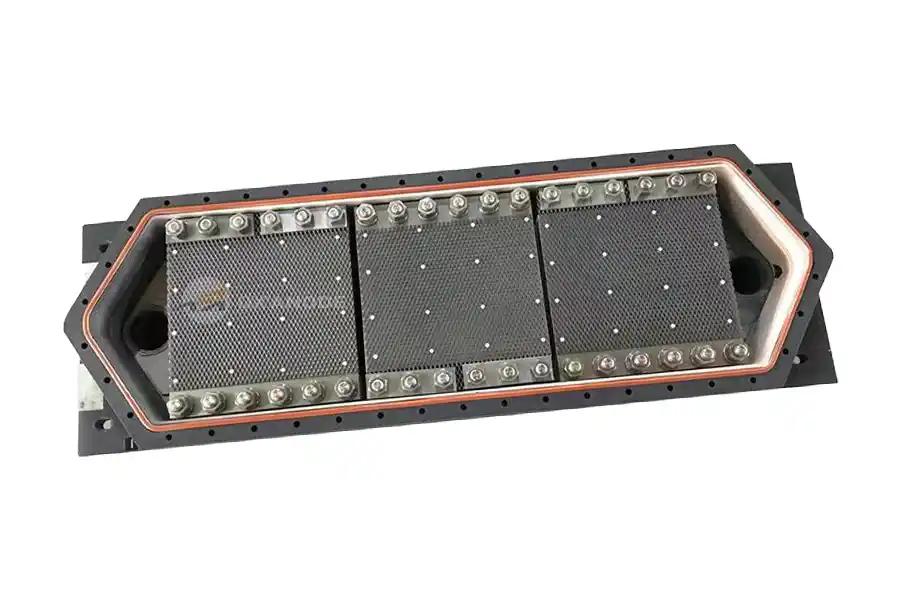
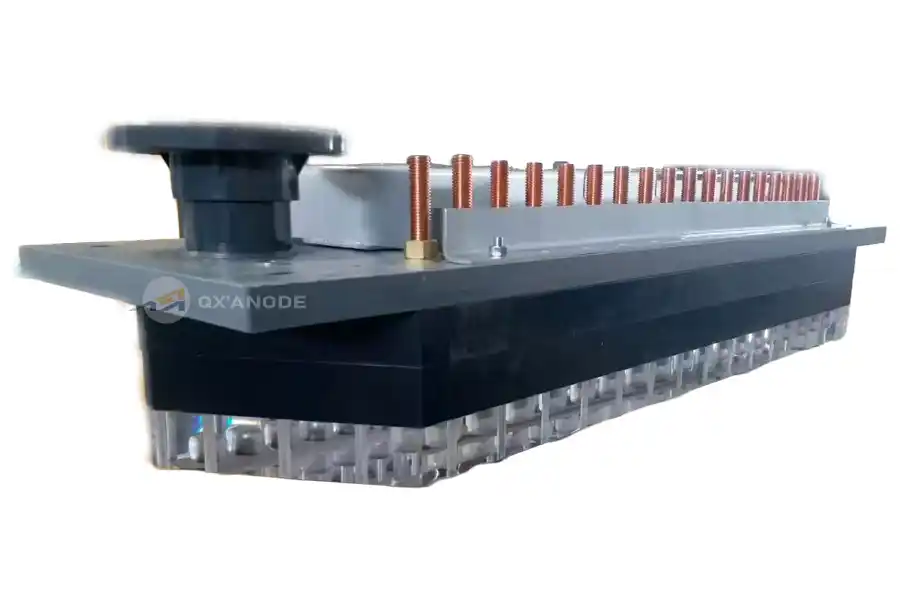
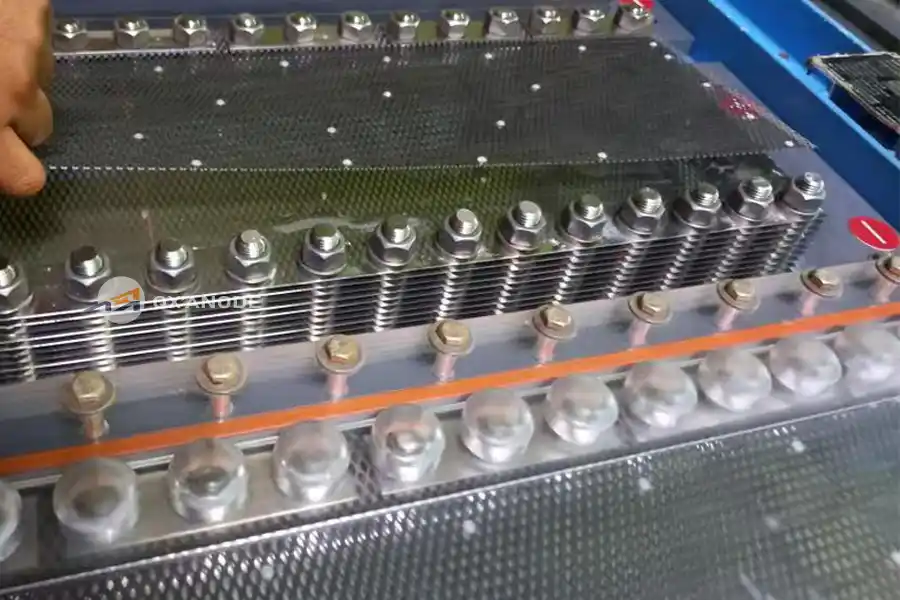
| Anode form | Expanded mesh, or tubular (coaxial) |
| Anode to cathode gap | 2.5 mm typical, held by PVDF spacers |
| Design current density | 1000 to 2000 A/m² |
| Operating temperature | 0 to 45 °C seawater |
| Electrolyte | Seawater, 2 to 3.5% NaCl, natural salinity |
| Chlorine evolution potential | About 1.10 to 1.15 V vs. SCE in saturated NaCl (measured on sample coupons) |
| Acid cleaning interval | About 30 days typical, extended by higher cell flow velocity |
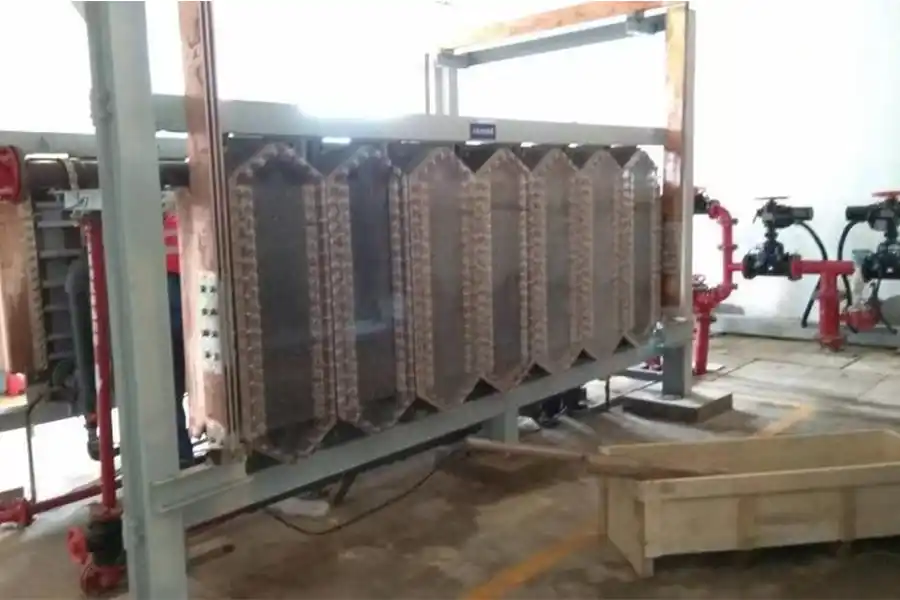
| Chlorine output | Engineered per project; reference installation: two independent 45 kg/h trains |
| Fasteners and conductors | Titanium inside the cell, SS316 or copper outside; Ti-Cu composite current rods |
Why Ru-Ir Coating Works in Seawater
- Low chlorine overpotential. Ru-based oxide coatings drive the chlorine evolution reaction at about 1.10 to 1.15 V vs. SCE, which keeps cell voltage and power draw down at production scale.
- Built for chloride attack. The coating resists both hypochlorite oxidation and the oxygen evolution side reaction that wastes current in chloride media, protecting current efficiency over the whole campaign.
- Bonded, not plated. The substrate is grit blasted and oxalic acid etched, then the coating is applied by brush or roller and sintered at 400 to 500 °C. The result is a metallurgically anchored oxide layer that will not peel the way electroplated layers can under gas evolution.
- Mesh geometry earns its keep. Relative to a flat plate, expanded mesh enlarges the active surface, adds turbulence that strips hydrogen bubbles out of the gap, and slows cathode scaling, all of which push the acid cleaning interval out and cut specific power consumption.
- Handles cold seawater. The coating keeps stable electrochemical performance across 0 to 45 °C, including low temperature operation where chlorine hydrate solids can form, a condition that defeats ordinary coatings.
Where These Anodes Are Used
- Shipboard and ballast water electrochlorination:on-board generation of active chlorine for ballast water management systems, working alongside our ballast water treatment anodes.
- Power plant and LNG terminal cooling water: continuous low-level chlorination of intake water to keep condenser tubes and screens free of mussel and algae growth.
- Offshore platform seawater lift and injection: hypochlorite injection packages that protect downhole and topside pipework from biofouling.
- On-site sodium hypochlorite plants: brine or seawater fed generators producing 0.3 to 0.8% NaOCl for municipal water disinfection.
Geometry Options
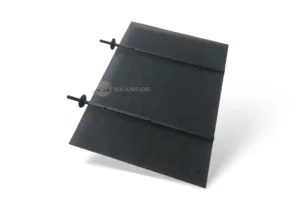
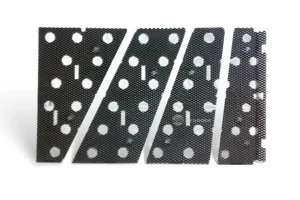
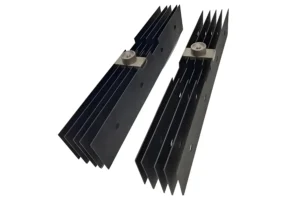
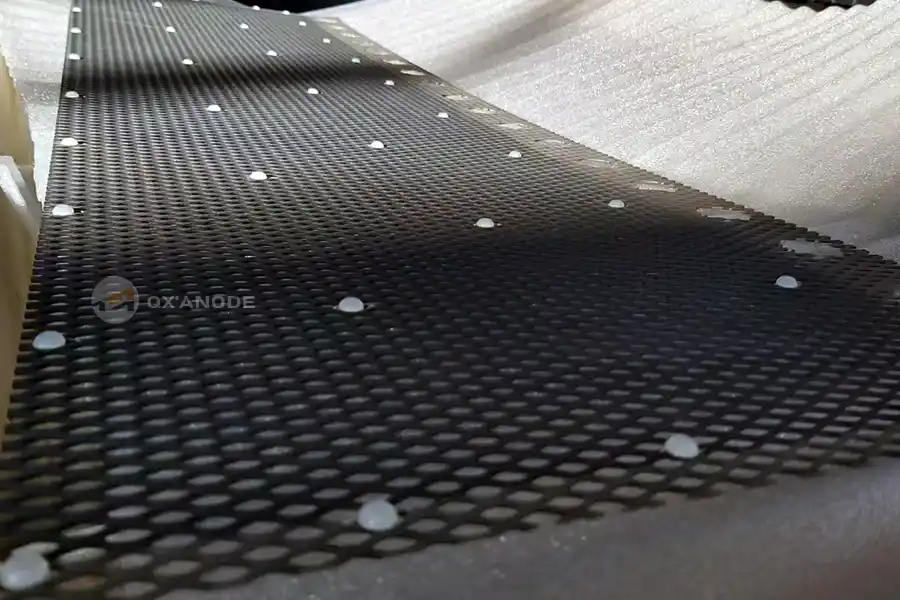
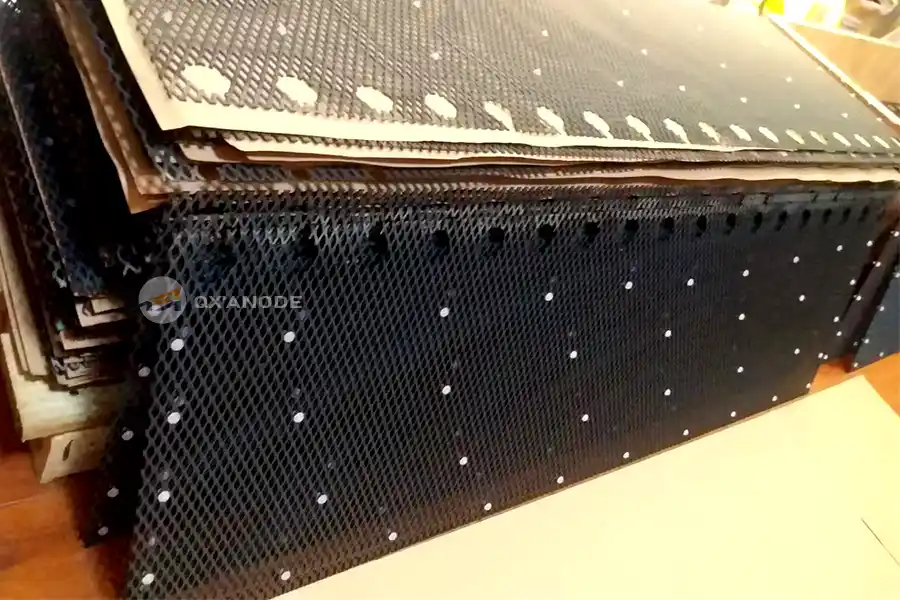
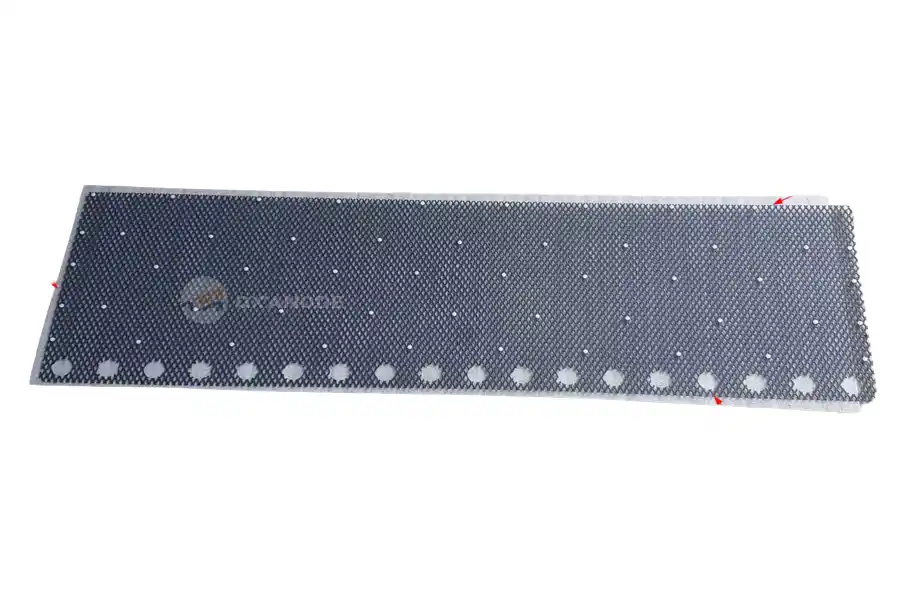
Expanded titanium mesh is the default choice for seawater cells: it maximizes effective surface area per unit weight, lets chlorine bubbles detach quickly and keeps cell voltage down. Plate anodes suit flat-plate electrolyzer stacks, tube anodes serve concentric cylindrical cells, and rod or wire anodes handle small dosing probes and sensor applications. Our MMO titanium mesh anode page shows the standard mesh formats we cut and coat in house.
Quality Behind Every Batch
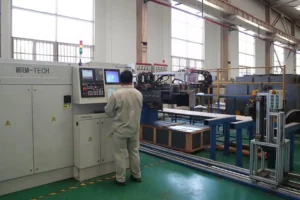
We have manufactured DSA anodes in Baoji since 2006 under an ISO 9001 quality system, and our coating formulations are protected by granted patents. Every order ships with a coating composition report and a quality certificate, and sample anodes for pilot testing are available with matched cathodes on request. For an overview of how substrate preparation, coating application and lifetime testing work, read The Titanium Anode Guide.
Frequently Asked Questions
Why is a Ru-Ir coating recommended for seawater electrochlorination instead of Ir-Ta?
Seawater contains chloride, so the anode works in a chlorine evolution regime. Ru-Ir mixed metal oxide offers the lowest chlorine evolution overpotential (about 1.10 to 1.15 V vs. SCE in saturated NaCl) and strong resistance to hypochlorite attack. Ir-Ta is an oxygen evolution coating designed for acidic sulfate systems, so it is not the right match for chloride media.
What current density should the anode run at?
Seawater electrochlorination cells typically operate at 1000 to 2000 A/m². Higher current density raises chlorine output per unit area but shortens coating life, so the final value is set together with the coating load during cell design. Send us your target chlorine demand and we will size the active area.
How long does a titanium anode last in seawater?
Typical service life is 3 to 5 years in continuous seawater electrochlorination duty at moderate current density. Actual life depends on current density, seawater temperature, coating loading and polarity reversal practices. We size the coating loading to your operating profile, and we can quote enhanced-life anodes for longer replacement intervals.
Why does the electrolyzer need periodic acid cleaning?
Seawater carries calcium and magnesium ions. During electrolysis these deposits build up on the cathode, raising cell voltage and power consumption. A 10% hydrochloric acid circulation wash, typically on a 30 day cycle, dissolves the scale. Mesh anodes and a high flow velocity through the cell help extend this interval.
Should I choose mesh, plate or tube anodes?
Expanded mesh is the default for seawater electrolysis because it gives high effective surface area, lets gas bubbles escape freely and lowers cell voltage. Plate anodes suit flat plate-type electrolyzers, and tube anodes are used in concentric cylindrical cells and well-type installations. We build to your drawings in all three geometries.
Do you also supply cathodes and other cell hardware?
We supply matching titanium or Hastelloy C cathodes, titanium to copper composite current-carrying rods and titanium fasteners. Because all conductive parts inside the cell are titanium, the assembly resists corrosion in both seawater and sodium hypochlorite solution.
Explore more anode types and applications across our site:
Send us your seawater analysis and current density, and our engineers will recommend a coating system and coating load for your electrolyzer, typically within one business day.