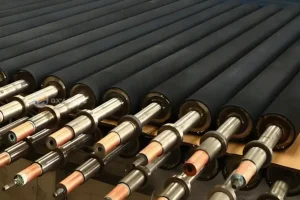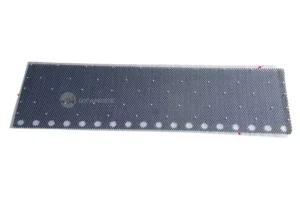

A platinum plated titanium anode, also called a platinized titanium anode or Pt/Ti electrode, is an insoluble electrode with a platinum coating electroplated onto a commercially pure titanium substrate. The titanium base, Grade 1 or Grade 2 per ASTM B265, provides strength, weldability, and corrosion resistance. The platinum surface carries the electrochemical reaction. At a coating thickness of 0.5 to 5 µm, these anodes run at up to 2,000 A/m² and typically last 1 to 5 years before the substrate is re-plated.
Key specs at a glance
- Platinum thickness: 0.5 to 5 µm
- Max operating current density: 2,000 A/m²
- Operating pH range: 3 to 12
- Substrate: reusable after re-plating
- ISO 9001:2015 certified manufacturing
- Samples shipped in 10 to 15 working days
What Is a Platinum Plated Titanium Anode?
A platinum plated titanium anode, also called a platinized titanium anode or Pt/Ti electrode, is an insoluble electrode in which a platinum coating is deposited onto a titanium substrate by electroplating. The titanium substrate provides mechanical strength, weldability, and a self-healing passive oxide film that prevents corrosion. The platinum surface is the active electrocatalyst. It transfers electrons efficiently with minimal electrode consumption.
Unlike soluble anodes, such as copper or nickel balls that dissolve during plating, platinum plated titanium anodes keep their geometry through the full service life. The anode to cathode spacing stays constant, the current distribution stays uniform, and the cell voltage stays stable. Those three factors matter most in high precision electroplating and long term electrolysis. Where platinum fits relative to MMO coatings, and when its cost is justified, is covered in our titanium anode guide.
Platinum plated titanium anodes can be fully coated or partially coated, with selected areas masked to allow electrical contact. The substrate can also be a composite such as copper-clad titanium, which raises conductivity for high-current applications. Other coating methods exist, including thermal decomposition of platinum precursors, but electroplating remains the industry standard for dense, adherent platinum layers.
Key Features & Advantages
Corrosion Resistance
The platinum layer stays chemically inert in most acidic and alkaline electrolytes, including sulfuric acid, hydrochloric acid, and chloride solutions. The titanium substrate below forms a protective TiO₂ passive film, so the anode has a second line of defense against chemical attack.
High Current Efficiency
Platinum has low overpotential for both chlorine evolution (CER) and oxygen evolution (OER). Most of the applied current drives the intended reaction instead of being lost to side reactions.
Long Service Life
At a platinum thickness of 2 to 5 µm, a Pt/Ti anode typically operates for 1 to 5 years, depending on current density and electrolyte chemistry. Platinum dissolves very slowly in most process solutions, on the order of micrograms per ampere-hour.
Reusable Substrate
When the platinum layer is consumed, the titanium substrate can be cleaned, resurfaced, and replated. Re-plating costs much less than a new anode, because the substrate is the most expensive structural component and it is reused.
Zero Electrolyte Contamination
Platinum is insoluble in most process solutions, so no metal ions leach into the electrolyte. This matters for high purity electroplating of gold or palladium, for pharmaceutical-grade water treatment, and for food-contact applications.
Fluoride Tolerance
Platinum plated titanium anodes run in fluoride-containing electrolytes, where MMO (mixed metal oxide) coated anodes fail. The platinum layer shields the titanium substrate from fluoride-induced passivation. That is why Pt/Ti anodes are used in chromium plating baths that contain fluoride catalysts.
Technical Specifications
| Parameter | Value |
|---|---|
| Product Name | Platinum Plated Titanium Anodes (Pt/Ti) |
| Substrate Material | ASTM B265 Gr1 / Gr2 commercially pure titanium |
| Coating Material | Pure platinum (Pt) |
| Coating Method | Electroplating (galvanostatic deposition) |
| Platinum Thickness | 0.5 to 5.0 µm (customizable) |
| Max Operating Current Density | 2,000 A/m² |
| Operating pH Range | 3 to 12 |
| Operating Temperature | Max 60 °C (continuous) |
| Surface Appearance | Silver-white with metallic luster |
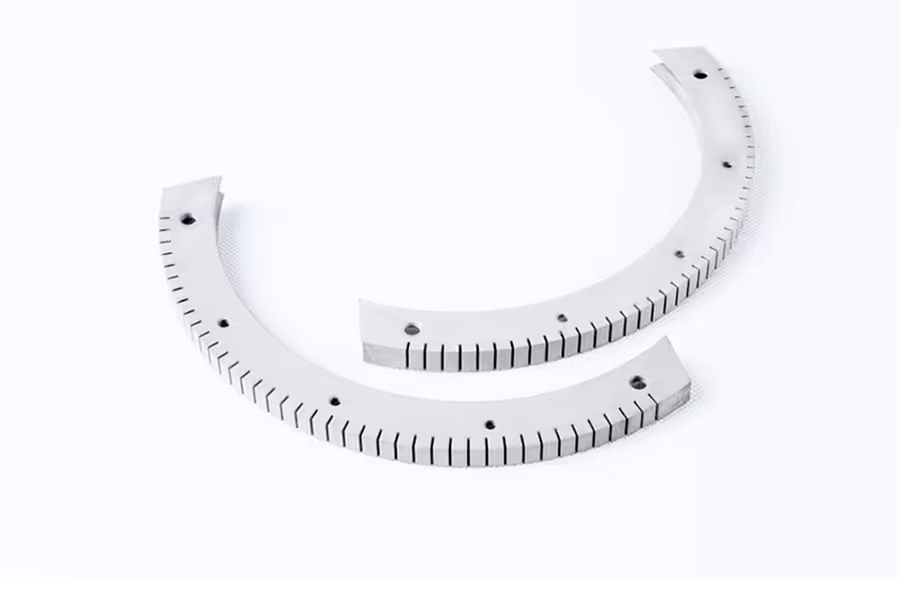
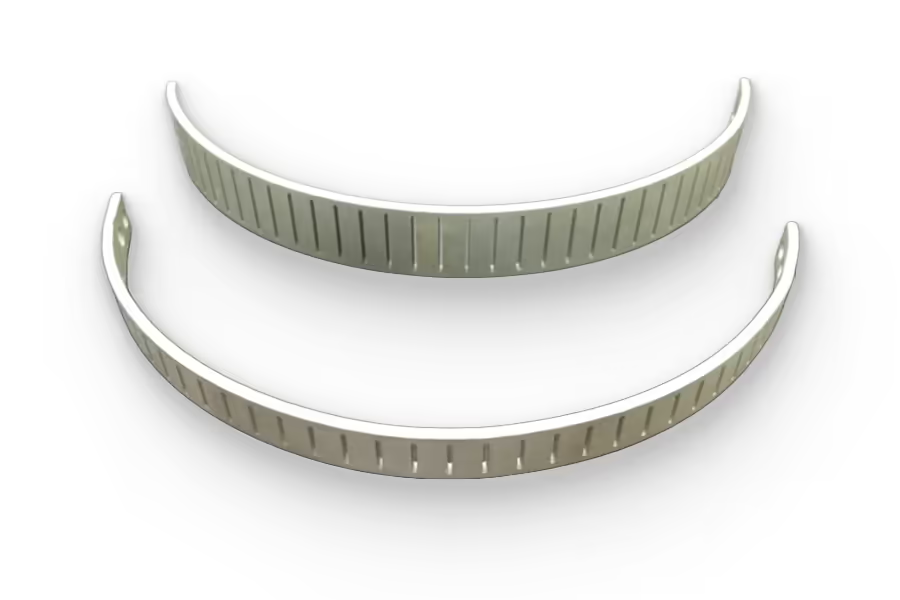
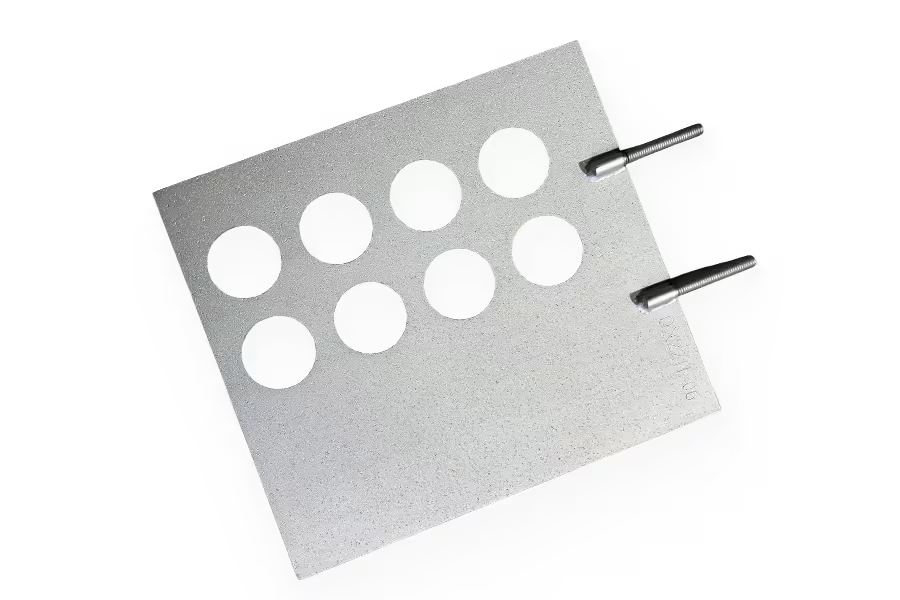
| Available Shapes | Expanded mesh, perforated plate, solid sheet, rod, tube, ribbon, wire, and custom welded assemblies |
| Coating Coverage | Full coating or partial coating (masked contact areas) |
| Substrate Options | Solid titanium; copper-clad titanium (for enhanced conductivity) |
| Sample Lead Time | 10 to 15 working days |
| Bulk Order Lead Time | 15 to 25 working days |
Manufacturing Process
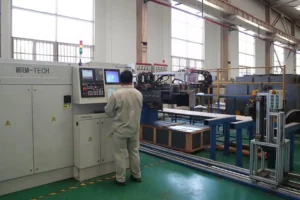
Each platinum plated titanium anode goes through a controlled multi-stage process at our ISO 9001:2015 certified facility in Baoji, China. Every step is documented and inspected to keep coating quality and adhesion consistent.
- Substrate fabrication. Titanium sheet, mesh, tube, or rod is cut, bent, and welded to customer drawings with precision CNC equipment and TIG welding. Connection points such as bolts, lugs, and threaded rods are added at this stage.
- Surface preparation. The substrate is degreased, acid-etched, and sandblasted to remove oxide layers and increase surface roughness. A roughened surface gives the platinum a mechanical grip that prevents coating delamination during electrolysis.
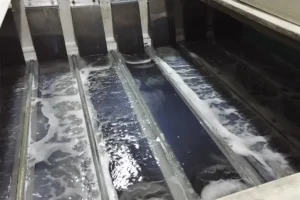
- Platinum electroplating. The prepared substrate goes into a platinum plating bath and is plated under controlled current density. Coating thickness is monitored in real time and verified by XRF (X-ray fluorescence) measurement. Multiple plating cycles are used for thicker coatings of 3 to 5 µm.
- Quality inspection. Every finished anode gets a visual check for coating uniformity, XRF thickness measurement at multiple points, an adhesion test (tape test), and electrical conductivity verification. A coating analysis report ships with every order.
- Packaging and shipping. Anodes are wrapped individually in anti-static film, cushioned in foam inserts, and packed in export-grade plywood crates. Worldwide shipping by DHL, FedEx, air freight, or sea freight.
Applications
Platinum plated titanium anodes are used wherever an inert, long-life electrode is required.
Electroplating: Precision Metal Deposition
Gold, silver, palladium, and rhodium plating for electronics, jewelry, and decorative finishes. The anode does not contaminate the bath, so deposits stay pure and plating thickness stays consistent across complex geometries.
Cathodic Protection: ICCP Systems
Auxiliary anodes for impressed current cathodic protection (ICCP) of ship hulls, offshore platforms, steel docks, bridge trusses, and buried pipelines. Platinum consumption is about 0.4 g per ampere-year, so the anodes run for decades without maintenance in seawater and soil.
Water Electrolysis: Hydrogen Production
PEM and alkaline electrolyzer anodes for on-site hydrogen generation. Platinum’s high catalytic activity for the oxygen evolution reaction lowers cell voltage and improves overall energy efficiency.
Electrochemical Synthesis: Chemical Manufacturing
Production of persulfates, perchlorates, ozone, and other strong oxidants. Platinum anodes hold up in aggressive chemical environments and at high anodic potentials.
Water Treatment: Electrochlorination & Disinfection
On-site generation of sodium hypochlorite for drinking water, swimming pool, and cooling water disinfection. Pt/Ti anodes are the practical choice in low-salinity electrolytes, where MMO coatings have a shorter service life.
Electrowinning: Metal Recovery
Recovery of copper, nickel, and cobalt from leach solutions and electrowinning circuits. Platinum anodes resist acid corrosion and hold stable performance in high-acid, high-temperature electrolytes.
Not sure which anode type fits your process?
If your electrolyte contains fluoride ions, or if you need minimal contamination for high purity plating, a platinum plated titanium anode is likely the right choice. For large-scale chlorine evolution or electrowinning, Ru-Ir coated anodes or Ir-Ta coated anodes may give better cost efficiency. Contact our engineering team for a recommendation based on your application.
Frequently Asked Questions
What is a platinum plated titanium anode?
A platinum plated titanium anode is an insoluble electrode with a thin platinum layer, 0.5 to 5 µm, electroplated onto a commercially pure titanium substrate, Grade 1 or Grade 2. The titanium carries the mechanical load and resists corrosion. The platinum surface is the active electrocatalytic layer. Because the anode keeps its geometry through the full service life, it is classified as a dimensionally stable anode (DSA), unlike consumable graphite or soluble metal anodes.
How long does a platinum plated titanium anode last?
Service life depends on the platinum thickness, operating current density, and electrolyte chemistry. At a platinum thickness of 2 to 5 µm and moderate current densities of 500 to 2,000 A/m², the anode typically lasts 1 to 5 years. Thinner coatings of 0.5 to 1 µm in high-current applications may last 6 to 18 months. After the original platinum layer is consumed, the titanium substrate can be stripped and re-plated, which extends the total service life.
What is the difference between platinum plated and MMO coated titanium anodes?
Platinum plated titanium anodes carry a pure metallic platinum layer applied by electroplating. They offer high catalytic activity and a very low dissolution rate. MMO (mixed metal oxide) coated anodes carry thermally decomposed oxide layers, such as RuO₂-IrO₂ or IrO₂-Ta₂O₅, and are generally more cost-effective for oxygen evolution. Pt/Ti anodes are the right choice for fluoride-containing electrolytes, high-purity applications, and processes that need minimal contamination. MMO anodes are the right choice for large-scale chlorine evolution and electrowinning.
Can platinum plated titanium anodes be used in fluoride-containing solutions?
Yes. Unlike MMO coated anodes, platinum plated titanium anodes run in electrolytes that contain fluoride ions. The platinum layer protects the titanium substrate from fluoride attack, which would otherwise cause rapid passivation and failure of an MMO coating. That is why Pt/Ti anodes are used in chromium plating baths with fluoride catalysts and in certain electrochemical synthesis processes.
What platinum thickness should I choose for my application?
For light-duty work such as laboratory cells or low-current cathodic protection, 0.5 to 1 µm is enough. For standard electroplating and water treatment, 2 to 3 µm balances cost and longevity. For demanding duty such as seawater electrolysis or high-current electrowinning, 3 to 5 µm is recommended. A thicker coating extends service life but costs more, because platinum is a precious metal priced by weight.
Can the titanium substrate be reused after the platinum wears out?
Yes. Substrate reusability is a key advantage of platinum plated titanium anodes. When the platinum layer is depleted, the titanium substrate can be cleaned, surface-prepared, and re-plated with fresh platinum. Re-plating costs much less than manufacturing a new anode, because only the platinum material and the plating labor are needed.
Why Choose Qixin Titanium?
- 20+ years of specialization. Founded in 2006 in Baoji, China’s Titanium Valley, we have focused exclusively on titanium electrode manufacturing for two decades. Our engineers average 15+ years of hands-on experience in precious metal coating and electrochemical applications.
- ISO 9001:2015 certified. Every production step, from substrate fabrication to final XRF inspection, is documented and controlled under our quality management system. Coating thickness reports accompany every shipment.
- Fully custom geometries. Send us your drawings or describe your electrolyzer dimensions. We manufacture expanded mesh, perforated plate, solid sheet, rod, tube, ribbon, and complex welded assemblies to your exact specifications.
- Re-plating service. When your anode’s platinum layer is consumed, send it back. We strip, re-surface, and re-plate the substrate for much less than the cost of a new anode, so the titanium substrate can keep working for decades.
- Global export experience. We have shipped to 25+ countries, including the USA, Germany, South Korea, and Japan. Export-grade packaging, worldwide shipping, and fast customs clearance are standard.
- Rapid response. Drawing inquiries are answered within 12 hours. OEM samples are delivered in 10 to 15 working days. Bulk orders ship in 15 to 25 working days.
Need a platinum plated titanium anode built to your cell geometry and duty cycle?
Send us your electrolyte, current density, temperature, and required dimensions. We will confirm the coating spec and quotation within 48 hours.