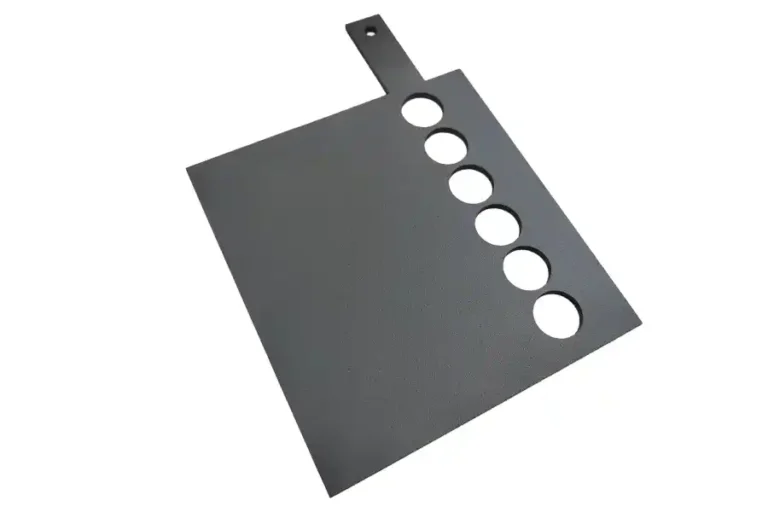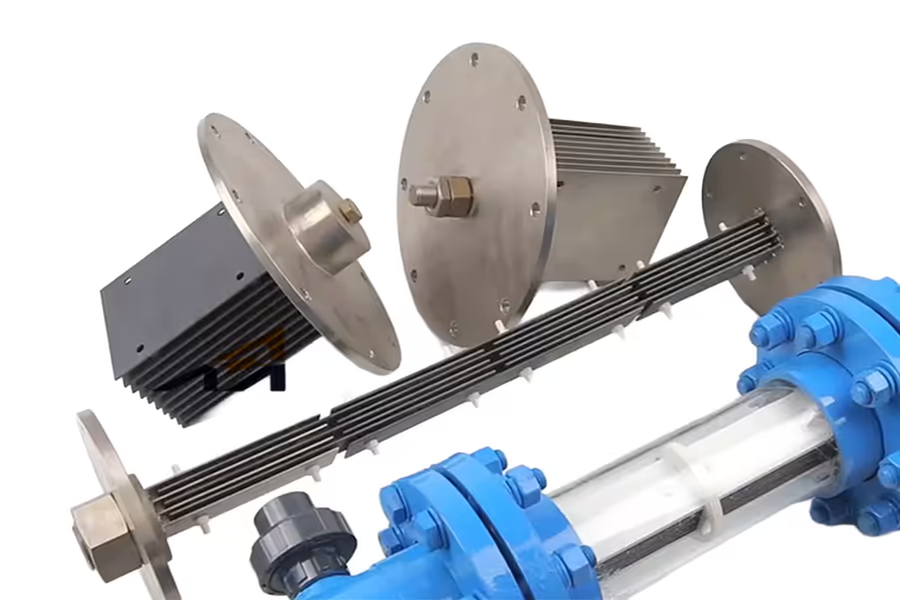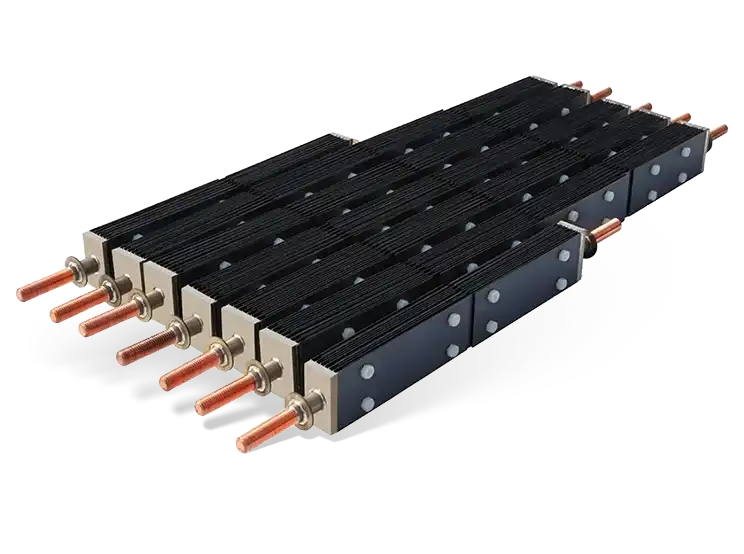
If your process evolves oxygen in an acidic electrolyte (copper electrowinning, copper foil formation, acid copper plating, persulfate or organics oxidation), the iridium-tantalum (Ir-Ta) coated titanium anode is the industry-standard electrode. This guide covers what the coating is, where it outperforms alternatives, its operating envelope, and the details you should specify before requesting a quotation.
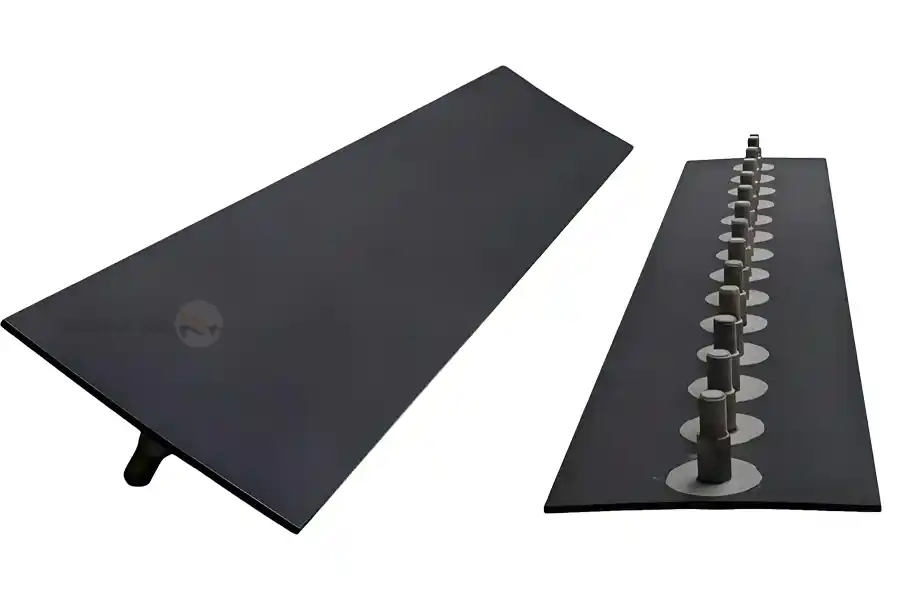
At a Glance: Iridium-Tantalum Coated Specifications
| Parameter | Typical Value |
|---|---|
| Coating system | IrO₂–Ta₂O₅ mixed metal oxide (MMO), typical molar ratio ≈ 70:30 Ir:Ta |
| Substrate | Grade 1 / Grade 2 commercially pure titanium (ASTM B265 / B348) |
| Primary anode reaction | Oxygen evolution in acidic media (sulfate-based systems) |
| Coating thickness | 5–20 µm, applied in multiple thermal-decomposition cycles |
| Precious metal loading | ≈ 5–50 g/m² (Ir + Ta combined), set by duty and target life |
| Continuous current density | 500–1,200 A/m² (electrowinning); up to 5,000–8,000 A/m² (copper foil) |
| Maximum bath temperature | 20–60 °C continuous |
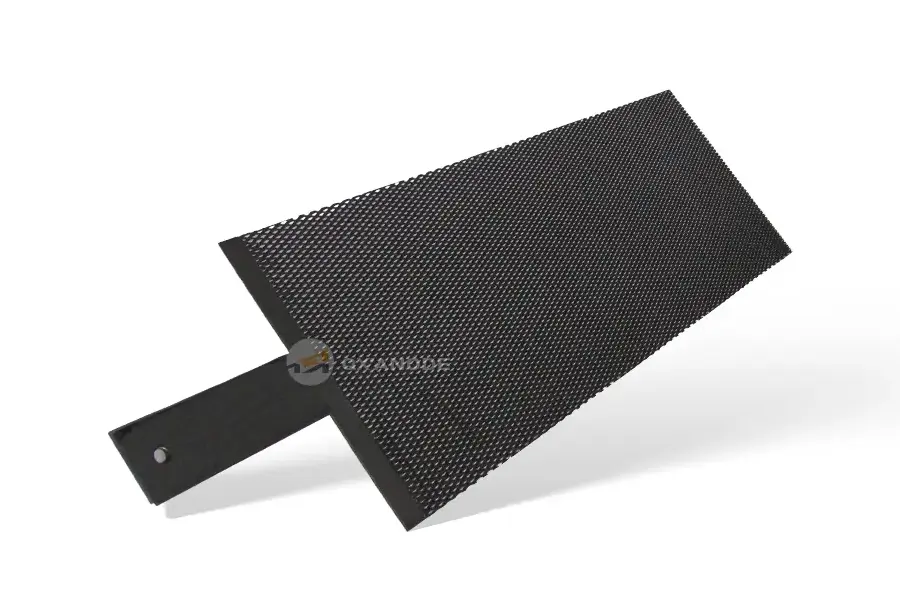
| Available forms | Plate, mesh, tube, rod, wire, and machined parts to drawing |
| Service life | Application-dependent: months at foil-forming currents; several years at electrowinning loads |
Values are typical industry ranges. Every Ir-Ta anode we quote is engineered against your electrolyte chemistry, current density, and target life. Treat the figures above as a starting point; the datasheet we issue with your quotation governs.
What the Coating Is, and Why the 70:30 Ratio Matters
An Ir-Ta anode is a dimensionally stable anode (DSA): a titanium substrate carrying a thin catalytic layer of mixed iridium and tantalum oxides. The two oxides do different jobs.
Iridium dioxide is the workhorse. It catalyzes the oxygen evolution reaction (OER) with a low overpotential and, critically, it stays put. Under high anodic potentials IrO₂ does not form volatile higher oxides, so the coating dissolves slowly rather than evaporating. This is the failure mode that disqualifies ruthenium-based coatings in oxygen-evolving duty.
Tantalum pentoxide is the stabilizer. It is largely inert electrocatalytically, but it forms a dense, acid-resistant framework that suppresses cracking, slows iridium dissolution, and protects the titanium underneath from anodic passivation. Industrial practice and published studies both point to the same optimum for acidic OER: roughly 70 mol% IrO₂ / 30 mol% Ta₂O₅, the best balance of activity and service life. Modest deviations (65:35) trade a little life for cost, and higher iridium fractions buy life at rising cost.
Why Ir-Ta Instead of Ru-Ir, Platinum, or PbO₂
Coating selection comes down to one question: which reaction happens at the anode? The full decision sequence, from reaction to loading to connection design, is laid out step by step in our titanium anode selection guide.
In chloride-rich baths that produce chlorine or hypochlorite (brine electrolysis, sodium hypochlorite generation, seawater electrochlorination), ruthenium-based coatings win on both performance and price. In sulfate media where oxygen evolution dominates, the picture reverses. RuO₂ oxidizes further to volatile RuO₄ under sustained high anodic potentials, so a ruthenium coating in acid OER service loses precious metal continuously and can fail in a fraction of its expected life.
| Coating | Best Environment | Anode Reaction | Weakness |
|---|---|---|---|
| IrO₂–Ta₂O₅ (Ir-Ta) | Strong acid, sulfate systems, sustained OER | Oxygen evolution | Higher material cost (iridium price) |
| RuO₂–IrO₂ (Ru-Ir) | Chloride/brine, chlor-alkali, hypochlorite | Chlorine evolution | Rapid degradation in acid OER duty |
| Pt-plated titanium | Fluoride-free plating, general purpose | Varies | High cost; limited life at high current density |
| PbO₂ | Strong acid, cost-driven electrowinning | Oxygen evolution | Trace lead contamination; heavy; shorter life |
One more note on mixed systems: if your bath carries both chloride and significant oxygen evolution, do not default to a ruthenium coating on price. In mild conditions a high-iridium Ru-Ir formulation can work; in strong acid at high potential, Ir-Ta is the defensible choice.
How the Coating Is Made
Industrial Ir-Ta coatings are applied by thermal decomposition. The sequence matters. Each step controls a specific failure mode:
- Substrate preparation. Grade 1 or 2 titanium is degreased, sandblasted, and acid-etched. The roughened surface is what the coating anchors to; shortcuts here show up later as delamination.
- Precursor application. A solution of iridium and tantalum chlorides in alcohol is brushed, dipped, or sprayed onto the prepared substrate.
- Pyrolysis. Each layer is dried and sintered at roughly 400–550 °C, converting the salts to oxides. The paint–dry–sinter cycle repeats, typically 10–20 times, until the specified loading and thickness are reached.
The finished surface shows a characteristic cracked, “mud-crack” microstructure. The cracks are not a defect — they raise the real electrochemically active surface area — but controlling their density is part of the coating house’s craft. Ultrasound-assisted spray application, used for premium foil and PEM-grade anodes, gives more uniform loading and better batch-to-batch consistency than brushing.
Applications of Ir-Ta Coated Titanium Anode
Copper electrowinning. In sulfate electrolytes at pH 1–1.5 and current densities of roughly 800–1,200 A/m², Ir-Ta anodes replaced lead alloys to eliminate lead contamination of cathode copper and the sludge that comes with it. Dimensional stability keeps the anode–cathode gap constant, so cell voltage and current efficiency hold over the anode’s life.
Electrolytic copper foil. Foil-forming machines run far harder: 5,000–8,000 A/m² in CuSO₄/H₂SO₄ baths at 50–60 °C. At these loads, anode life is usually expressed as accumulated charge throughput rather than calendar time, and coating formulations are tuned for the specific bath chemistry and chloride level.
PCB and acid copper plating. Insoluble Ir-Ta anodes in vertical continuous plating and pattern plating hold bath composition stable and avoid dissolved-anode contamination.
Electrochemical oxidation of wastewater. For high-COD organic effluents, Ir-Ta anodes generate hydroxyl radicals and other strong oxidants that break down organics that resist biological treatment.
Electrosynthesis. Persulfate production, organic oxidations, and other high-potential acid reactions where the anode must survive conditions that destroy base-metal electrodes.
How Ir-Ta Anodes Fail — and How to Read the Signals
Ir-Ta coatings wear out gradually. Iridium dissolves at a slow, finite rate, and once the active loading falls below a threshold, cell voltage climbs. A common end-of-life criterion is a sustained voltage rise of 15–20% over the baseline under identical conditions.
Three mechanisms shorten life below specification, and all three are avoidable:
- Reverse or intermittent currents during shutdowns reduce coating adhesion; specify a reverse-current-tolerant formulation if your plant experiences power interruptions.
- Running above the design current density accelerates coating wear, raises bath temperature, and shortens service life.
- Fluoride in the electrolyte corrodes the titanium substrate under the coating. Above trace levels, discuss substrate protection with the manufacturer before ordering.
What to Specify When Requesting a Quotation
Send these nine items with your inquiry and we can quote a coating engineered to your duty, usually within two business days:
- Electrolyte chemistry: main acid/base system, chloride level, fluoride (even trace), additives
- Current density: design point (A/m²) and any peak or transient loads
- Operating temperature: continuous and maximum bath temperature
- Target service life: expressed as charge throughput (kAh/m²) or calendar time
- Geometry and dimensions: drawing or sketch; plate, mesh, tube, rod, or machined part
- Substrate grade: Grade 1 or Grade 2 titanium (ASTM B265/B348), thickness
- Power profile: rectifier ripple, planned shutdowns, reverse-current exposure
- Quantity and delivery schedule: annual volume, first-delivery date
Frequently Asked Questions
What does an Ir-Ta titanium anode cost?
Pricing tracks iridium metal, so it moves with the market. Quotes are typically per piece or per square meter of coated area, driven by loading, geometry, and quantity. Send your operating conditions for a firm quotation.
Can I use Ir-Ta anodes in chloride-containing baths?
Brief or low-level chloride exposure is tolerable, but Ir-Ta is not the economical choice for chlorine-evolving duty. If chloride is the main electrolyte, a Ru-Ir coating is the correct system.
How long do Ir-Ta anodes last?
There is no single number: life depends on current density, temperature, electrolyte chemistry, and loading. As an order of magnitude, copper foil anodes at 5,000–8,000 A/m² are commonly guaranteed in months; electrowinning anodes at a fraction of that current density run for years.
Can a spent anode be recoated?
Usually yes. The titanium substrate is stripped, re-etched, and recoated, which is typically cheaper than a new anode.
Mesh, plate, or tube: which form should I order?
Follow your cell design. Mesh lowers weight and drag in high-flow cells; plate suits compact high-current geometries; tube and rod forms serve special reactors. The coating system is independent of the form.
Need a custom anode for your process?
Send us your drawing or specs — we’ll quote within 12 hours.