MMO, DSA, Coatings & Key Electrochemical Terms
This glossary is a practical reference for engineers, plating supervisors, procurement teams, and water-treatment operators who specify coated titanium anodes. Every term below is defined in plain language, given with typical operating data, and cross-linked to our detailed product pages. All anodes referenced here are manufactured by Baoji Qixin Titanium Co., Ltd. (ISO 9001 certified, China) since 2006, and supplied to electroplating, chlor-alkali, electrowinning, cathodic protection, and wastewater treatment plants in 25+ countries. These are the terms used across The Titanium Anode Guide and our application articles.
Core Terminology
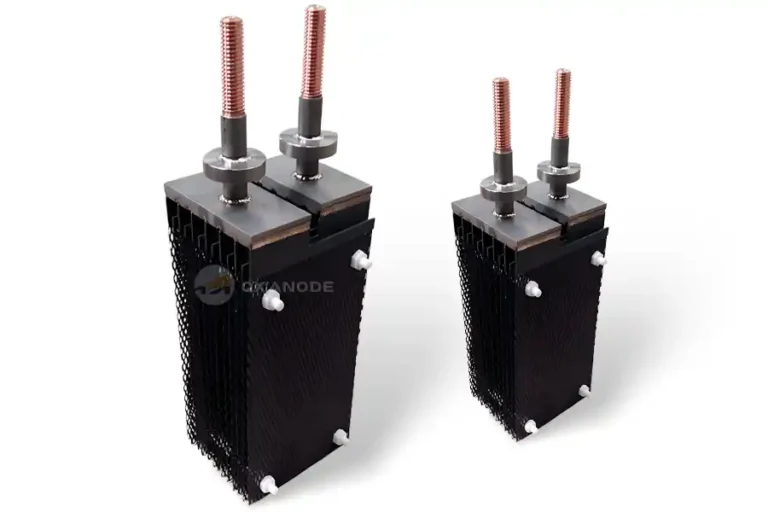
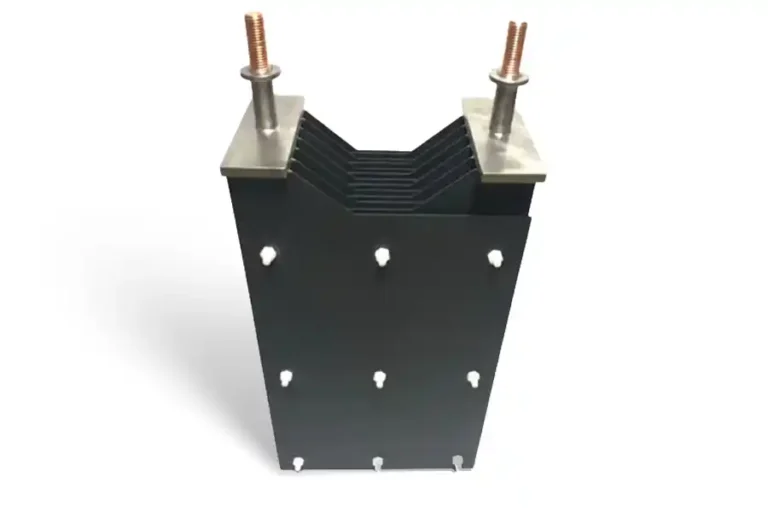
Titanium Anode
A titanium anode is an electrode made from a titanium substrate (typically Grade 1 or Grade 2 pure titanium per ASTM B265) that carries an electrochemically active coating. Compared with graphite or lead-alloy anodes, titanium anodes are dimensionally stable, do not contaminate the electrolyte, and operate at lower overpotential — typical energy savings of 10–30% in the same electrolysis duty.
MMO (Mixed Metal Oxide) Anode
An MMO anode is a titanium electrode coated with a mixed metal oxide layer — usually ruthenium-iridium, iridium-tantalum, or a precious-metal blend — applied by thermal decomposition. MMO anodes are the most widely used type of dimensionally stable anode (DSA) in chlor-alkali, sodium hypochlorite generation, electroplating, and electrowinning.
Typical data: coating loading 8–20 g/m² of precious metal oxide; service life 3–8 years depending on current density and electrolyte; corrosion resistance in both acidic and alkaline media.
DSA (Dimensionally Stable Anode)
DSA (dimensionally stable anode) is the engineering term for a valve-metal electrode (usually titanium) coated with an electrocatalytic layer. The substrate does not dissolve or change shape during operation, which keeps the inter-electrode gap and cell voltage stable over years of service. MMO anodes are a subset of DSA; the two terms are frequently used interchangeably.
CER and OER
- CER (Chlorine Evolution Reaction) — the reaction where chloride ions are oxidized to chlorine gas. Coating choice: ruthenium-iridium (Ru-Ir).
- OER (Oxygen Evolution Reaction) — the reaction where water is oxidized to oxygen. Coating choice: iridium-tantalum (Ir-Ta) or platinum.
Selecting the right reaction type is the single most important coating decision. Applying a chlorine-evolution coating in an oxygen-evolving duty shortens anode life dramatically.
Coating Loading
Coating loading is the amount of precious metal oxide applied per unit area, expressed in g/m². Higher loading generally means longer service life but higher cost. Typical ranges:
| Coating | Typical loading |
| Ru-Ir (CER) | 8–20 g/m² |
| Ir-Ta (OER) | 5–50 g/m² |
| Pt | 0.5–5 µm (plating thickness) |
Current Density
Current density is the current per unit electrode area, expressed in A/m². It is the primary driver of anode service life: doubling current density can reduce anode life by roughly half. Typical working ranges:
| Application | Current density |
| Chlor-alkali (membrane cell) | 1,000–3,000 A/m² |
| Sodium hypochlorite generation | 200–1,500 A/m² |
| Electroplating (nickel, copper, chrome) | 200–1,000 A/m² |
| Electrowinning (oxygen evolution) | 500–5,000 A/m² |
Overpotential
Overpotential is the extra voltage above the thermodynamic equilibrium that an electrode needs to drive a reaction. Lower overpotential means lower cell voltage and lower energy consumption. MMO-coated titanium anodes show significantly lower overpotential than graphite or lead anodes in both chlorine and oxygen evolution — a key reason for the 10–30% energy saving figure quoted above.
Passivation
Passivation is the gradual loss of electrocatalytic activity that leads to rising cell voltage and eventual anode failure. Main causes: operating beyond the rated current density, reverse polarity, high temperature (>60°C sustained), or using a coating type mismatched to the electrolyte. Routine monitoring of cell voltage rise is the standard early-warning signal.
Coating Types at a Glance
Parameter | Ru-Ir (CER) | Ir-Ta (OER) | Platinum | PbO₂ |
Primary reaction | Chlorine evolution | Oxygen evolution | Both | Oxygen evolution |
Typical current density | 100–2,000 A/m² | 500–5,000 A/m² | 200–1,000 A/m² | 100–1,000 A/m² |
Typical lifespan | 3–5 years | 1–3 years | 1–3 years | 1–2 years |
Best-fit industries | Chlor-alkali, NaOCl (NaClO), seawater, electroplating | Copper foil, electrowinning, wastewater | Cathodic protection, electroplating | Organic wastewater, acid electrolysis |
Relative cost | Medium | High | High | Low |
Standards-compliant substrate | Gr1/Gr2 Ti (ASTM B265) | Gr1/Gr2 Ti (ASTM B265) | Gr1/Gr2 Ti (ASTM B265) |
See detailed pages:
New to titanium anodes? Read our guide to choosing coated titanium electrodes or browse our complete product range.
Applications by Coating
- Electroplating (zinc, nickel, copper, chrome): Ru-Ir coated anodes, 200–1,000 A/m². Stable gap geometry keeps coating thickness uniform.
- Chlor-alkali and sodium hypochlorite: Ru-Ir (CER) anodes, 500–2,000 A/m². Low chlorine overpotential reduces cell energy cost.
- Electrowinning and electrolytic copper foil: Ir-Ta (OER) anodes, 500–5,000 A/m², with high reverse-polarity tolerance.
- Cathodic protection: Platinized titanium anodes for pipelines, marine structures, and concrete reinforcement.
- Wastewater electro-oxidation: PbO₂ or Ir-Ta coated anodes for organic pollutant oxidation and disinfection.
Standards & Compliance
Qixin titanium anodes are manufactured under an ISO 9001 quality management system, and the titanium substrate is selected to ASTM B265 (Grade 1/Grade 2) specifications. Product documentation, mill test certificates, and coating test reports are available on request to support OEM and engineering-anodes requirements.
Titanium Anode FAQ
What is the difference between MMO and DSA titanium anodes?
DSA (Dimensionally Stable Anode) is the general class of coated valve-metal electrodes that keep a stable shape and gap during electrolysis. MMO (Mixed Metal Oxide) refers specifically to the metal-oxide coating. An MMO titanium anode is a DSA; the terms are used interchangeably in most industrial contexts.
How long does an MMO titanium anode last?
Typically 3–8 years depending on duty. Key factors: current density (higher current shortens life), electrolyte composition, temperature (keep below 60°C for most coatings), coating loading, and whether the coating matches the reaction (CER vs OER). Monitor cell voltage rise as an early failure indicator.
Which coating should I choose, Ru-Ir or Ir-Ta?
If your process evolves chlorine — chlor-alkali, sodium hypochlorite, seawater electrolysis — choose Ru-Ir. If it evolves oxygen — electrowinning, copper foil, wastewater electro-oxidation — choose Ir-Ta. Using the wrong coating type is the most common cause of premature anode failure.
What current density can a coated titanium anode handle?
Working ranges are roughly 200–1,000 A/m² for electroplating, 500–2,000 A/m² for chlor-alkali/NaOCl (NaClO), and 500–5,000 A/m² for oxygen-evolving duties. Operating above the rated range accelerates passivation and shortens service life.
What is coating loading and why does it matter?
Coating loading is the precious-metal oxide weight per unit area (g/m²). It directly affects lifespan and price — typical Ru-Ir loading is 8–15 g/m², Ir-Ta 10–20 g/m². Higher loading is specified when longer life or higher current density is required.
Why do titanium anodes fail or passivate?
The usual causes are: current density above rating, reverse polarity, sustained high temperature, and coating/electrolyte mismatch. Passivation shows up as rising cell voltage; replacing or re-coating the anode restores performance.
Do you support custom titanium anodes?
Yes. We customize shape (plate, mesh, tube, rod), size, coating type, and coating loading to your drawings. Drawing-based inquiries are typically answered within 12 hours.
What standards do your titanium anodes comply with?
We operate under an ISO 9001 certified quality system, and our substrates meet ASTM B265 Grade 1/Grade 2 titanium specifications. Mill certificates and coating test reports are available on request.
How to Get a Custom Quote
Send your drawings and operating conditions (electrolyte, temperature, current density, required lifetime) to our contact page and receive a quote within 12 hours.