Ru-Ir Coated Titanium Anode: Specs, Applications, and Service Life
Ruthenium-iridium coated titanium anodes (Ru-Ir anodes) are mixed metal oxide (MMO) anodes engineered for chlorine evolution. Compared with lead or graphite, they operate at lower overpotential, tolerate oxygen ingress and reverse-current events better, and typically deliver years of continuous service. The coating chemistry, the numbers that matter when comparing quotes, and the test data that separates a reliable anode from a marginal one are covered below. All values are typical vendor figures, not guarantees — always ask the supplier for the test conditions behind each number.
What Is a Ru-Ir Coated Titanium Anode?
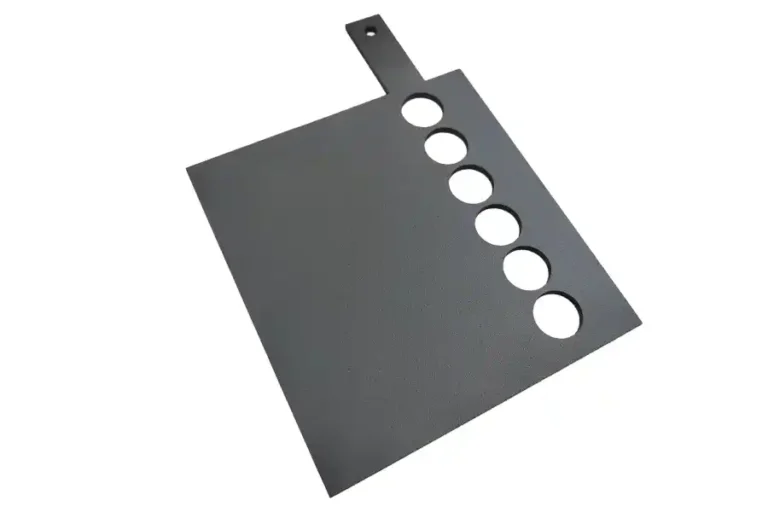
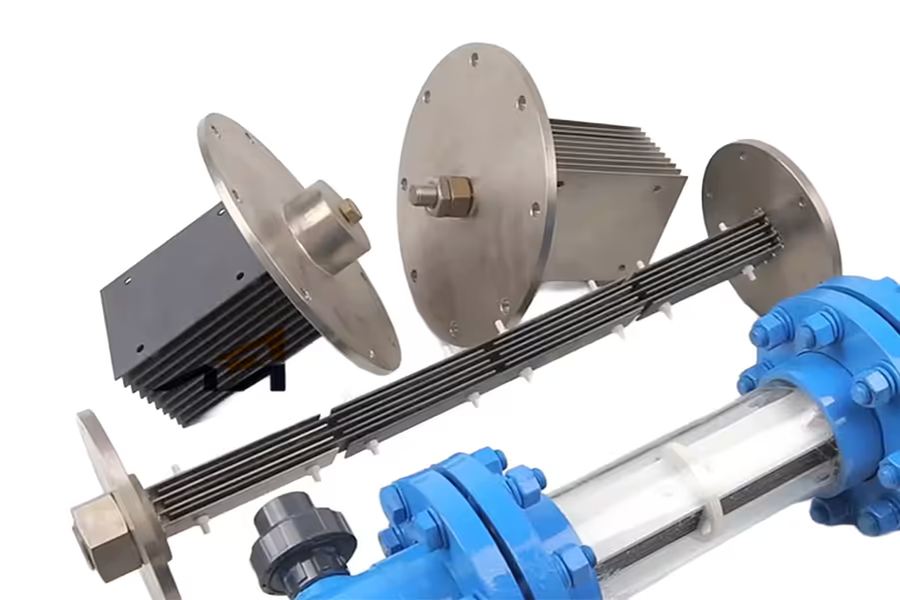
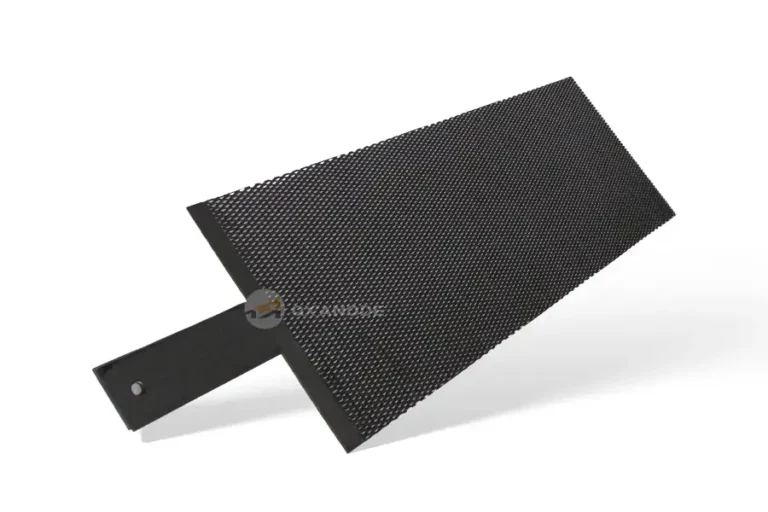
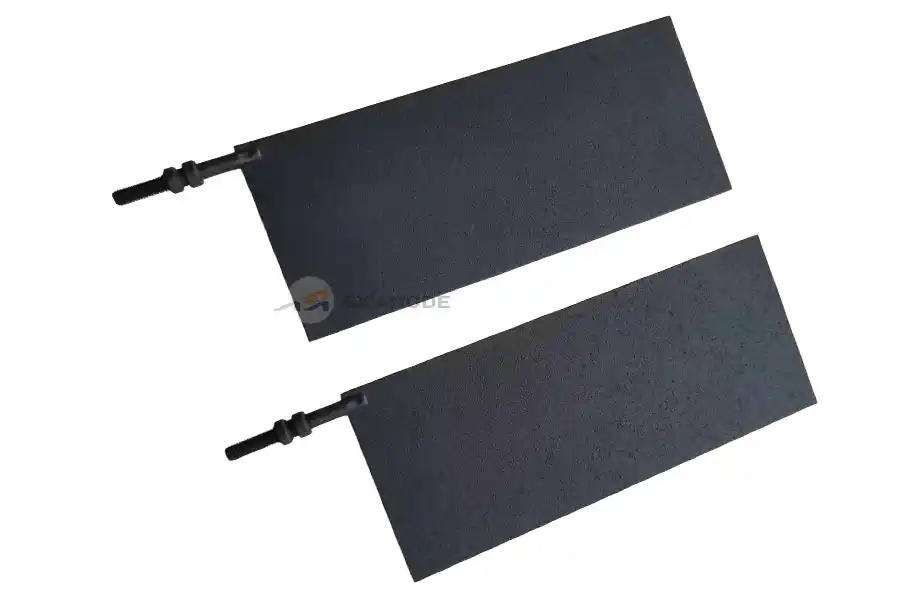
A Ru-Ir coated titanium anode is a titanium substrate, usually Grade 1 or Grade 2, with a thin layer of ruthenium and iridium oxides fired onto the surface. The coating is only a few microns thick and does the electrochemical work. The titanium carries the current and holds the shape.
The anode family goes by several names. Electrochemists call it a dimensionally stable anode (DSA), because unlike graphite or lead it keeps its geometry through years of service. Coating suppliers and most industrial buyers call it an MMO anode, short for mixed metal oxide. Ru-Ir is the most common MMO recipe for chlorine environments.
Why ruthenium and iridium, and in what ratio
The two oxides do different jobs.
Ruthenium oxide (RuO₂) is the active catalyst for chlorine discharge. It gives the anode a low chlorine overpotential, which means lower cell voltage and lower power cost. But RuO₂ does not survive oxygen exposure well. Where oxygen is co-evolved, or where the current is interrupted and the anode sits at open circuit, a high-ruthenium coating ages fast.
Iridium oxide (IrO₂) is less active for chlorine but far more tolerant of oxygen and of reverse-current conditions. Adding iridium extends service life, at some cost to chlorine activity and to price.
Titanium oxide (TiO₂) is usually blended in as a stabilizer. It dilutes the active oxides but improves coating longevity and adhesion substantially.
The ratio is a trade-off, not a fixed standard. Common vendor formulations fall into three bands:
| Coating | Ru:Ir ratio | What it does |
|---|---|---|
| High ruthenium | 70:30 or similar | Lowest chlorine potential, lowest price, shortest life. Fits low-current, continuous chlorine duty in clean brine. |
| Balanced | 60:40 | General purpose. Most sodium hypochlorite and wastewater cells run in this band. |
| High iridium | 30:70 or lower | Best oxygen tolerance and longest life. Fits dirty electrolyte, intermittent operation, and cells with oxygen ingress. |
Where Ru-Ir anodes are used
Ru-Ir anodes show up wherever a cell needs chlorine and can tolerate the electrolyte. The main categories:
Sodium hypochlorite generation
On-site hypochlorite generators for water treatment run almost exclusively on Ru-Ir anodes. The cell oxidizes chloride in a dilute brine stream, and the anode must stay selective for chlorine at low overpotential, which is exactly what Ru-Ir does.
Chlor-alkali and chlorate
Dimensionally stable anodes replaced graphite in this industry decades ago. Ru-Ir and related MMO coatings are the standard for membrane and diaphragm cells.
Electrochemical water and wastewater treatment
COD reduction, cyanide oxidation, and disinfection cells use Ru-Ir anodes where chloride is present. The anode oxidizes chloride to active chlorine, which carries most of the oxidation load.
Seawater electrolysis
Marine anti-fouling systems generate hypochlorite from seawater. The high chloride content is forgiving, but magnesium and calcium in the water demand a coating that tolerates scale and occasional polarity events.
Electroplating and electrowinning
Ru-Ir anodes replace lead anodes in some plating baths, especially where lead contamination of the product is unacceptable. They are less common here than iridium-based oxygen coatings, because many plating baths evolve oxygen.
Cathodic protection
Impressed-current systems use small anodes buried in soil or submerged in water. Ru-Ir coatings handle the current densities involved and survive in that service for long periods.
Not all Ru-Ir anodes are equivalent. The coating load, the substrate grade, and the test conditions define the product. The table below lists the parameters that matter and typical values to benchmark against.
| Parameter | Typical value |
|---|---|
| Substrate | Grade 1 or Grade 2; mesh, plate, tube, or rod |
| Coating system | RuO₂-IrO₂-TiO₂, ratio per application |
| Coating load | 5 to 25 g/m² per side |
| Chlorine evolution potential | ≤ 1.14 V vs SCE at 1,000 A/m² in 1 mol/L NaCl, 25 °C |
| Working current density | 100 to 2,000 A/m², application dependent |
| Accelerated life test | Often > 100 h at 20,000 A/m² in 1 mol/L H₂SO₄; vendor methods differ |
| Coating adhesion | Tape test |
| Maximum electrolyte temperature | Usually below 60 °C for chlorine duty |
Two warnings about this table. First, accelerated life test methods are not standardized across the industry, so a “100 h” result from one factory is not directly comparable to one from another. Always request the exact conditions: electrolyte, temperature, current density, and the failure criterion. Second, a chlorine potential number is only meaningful with the reference electrode and conditions stated. A number without conditions is marketing.
Ru-Ir vs Ir-Ta Coated Titanium Anodes: Which One Fits Your Cell?
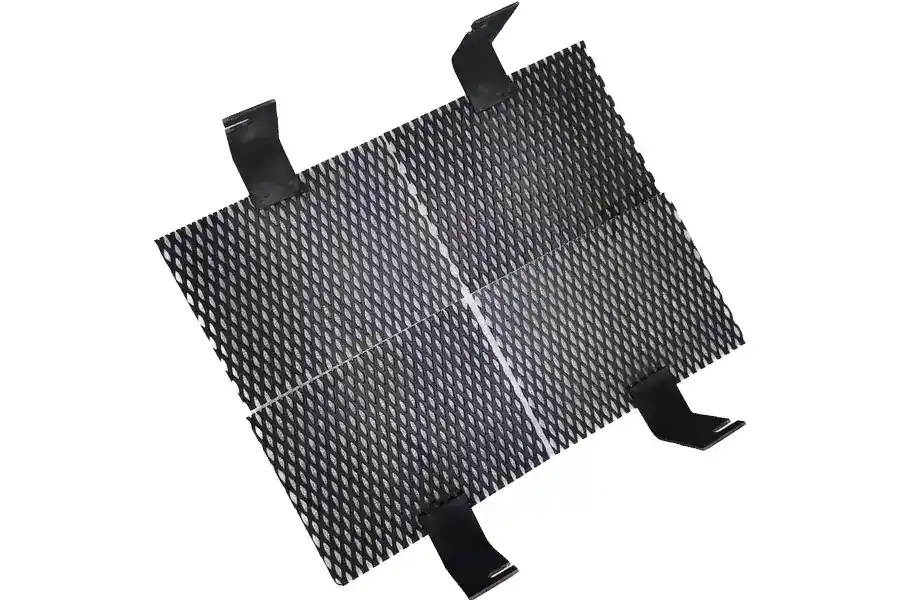
if your cell evolves chlorine, specify Ru-Ir; if it evolves oxygen, specify Ir-Ta.
The CER vs OER logic behind this rule, and what happens when both reactions compete in the same cell, is explained under how coatings are matched to the reaction in our titanium anode guide.
| Ru-Ir Coated Titanium Anode | Ir-Ta Coated Titanium Anode | |
|---|---|---|
| Coating system | RuO₂–IrO₂–TiO₂, ratio tuned per application | IrO₂–Ta₂O₅ composite precious-metal oxide |
| Designed for | Chlorine evolution reaction (CER) | Oxygen evolution reaction (OER) |
| Typical applications | Sodium hypochlorite generators, chlor-alkali and chlorate cells, seawater anti-fouling, chloride-bearing wastewater treatment | Electrolytic copper foil, hydrometallurgy, industrial water electrolysis, acid-based oxidation treatment |
| Working current density | 100–2,000 A/m², application dependent | 1,000–5,000 A/m² |
| Oxygen behavior | RuO₂ dissolves quickly under oxygen evolution; oxygen ingress and open-circuit stand shorten coating life | Built for oxygen evolution — the coating tolerates it by design |
| Common failure modes | Coating exhaustion at high current density or temperature; substrate passivation after local coating loss | Coating dissolution and peeling over long service, leading to substrate passivation |
| Substrate | Grade 1 / Grade 2 commercially pure titanium — plate, mesh, tube, or rod | Grade 1 / Grade 2 commercially pure titanium — plate, mesh, or tube |
| Electrolyte | Chloride-based brines; high-ruthenium blends prefer clean brine, high-iridium blends tolerate impurities | Acidic, neutral, and mildly alkaline electrolytes |
How the coating is made
The standard route is thermal decomposition. The factory pre-treats the titanium base by degreasing, sand blasting, and acid etching to remove the oxide film and create a rough surface for the coating to grip. Then it applies a paint-like solution of ruthenium, iridium, and titanium salts, dries it, and fires it in a furnace, typically between 400 and 500 °C. The salts decompose into the oxide layer. The cycle repeats until the target coating load is reached, usually several layers. A final inspection checks appearance, adhesion, and electrical behavior.
Process control is what separates two anodes with the same nominal spec: substrate cleanliness, layer uniformity, and furnace temperature stability. These process variables are why two anodes with the same nominal spec can perform very differently.
Common failure modes
Ru-Ir anodes fail in a handful of ways, and most failures are traceable:
- Coating exhaustion. This is the normal end of life. The oxide dissolves slowly in service, and the anode voltage rises as the active surface shrinks. High current density, high temperature, and oxygen exposure all accelerate it.
- Substrate passivation. If the coating detaches or wears through at a spot, the titanium underneath oxidizes into an insulating layer at anode potential. Cell voltage jumps, and the anode is finished even though most of the coating looks intact.
- Local peeling. Mechanical damage, thermal shock, or a poorly prepared substrate can lift the coating. The exposed base then passivates as described above.
- Electrolyte attacks. Fluoride and some organics attack titanium or the coating. Cyanide solutions are a known hazard, and so are baths with aggressive fluoride levels.
- Reverse current. Polarity reversal, stray current, or AC ripple erodes the coating quickly. Rectifier faults are a common, avoidable cause.
These failure modes are well documented in the electrochemical literature. What separates a reliable anode from a marginal one is not the coating chemistry on paper but the process control behind it.
FAQ
What is the difference between Ru-Ir, pure ruthenium, and pure iridium coatings?
Ru-Ir is a compromise. Pure ruthenium gives the lowest chlorine potential and the shortest life. Pure iridium tolerates oxygen and reverse current better but is less active for chlorine and more expensive. Ru-Ir blends the two for chlorine-service cells where a single oxide would fail early.
How long does a Ru-Ir coated titanium anode last?
It depends on current density, temperature, electrolyte, and duty cycle. In a well-run hypochlorite generator at moderate current density, several years is normal. At the high end of the current range, or with oxygen ingress, life drops sharply. The accelerated life test is the closest thing to a prediction.
Can I use a Ru-Ir anode in an oxygen-evolving cell?
Not for long. RuO₂ dissolves quickly under oxygen evolution. For oxygen service, the standard coating is iridium-tantalum (IrO₂-Ta₂O₅). If your cell evolves oxygen, say so when you request a quote; the coating decision changes completely.
Why does my anode voltage climb over time?
Usually coating exhaustion or local substrate passivation. It can also be an electrolyte side effect, such as scale buildup or conductivity loss. A polarization curve and a visual check will separate the causes.
Can the titanium substrate be reused after the coating wears out?
Rarely. Stripping the old oxide and recoating is possible in principle, but the substrate is usually etched or thinned, and recoated anodes rarely match new ones. For most buyers, replacement is more economical.
Need a custom anode for your process?
Send us your drawing or specs — we’ll quote within 12 hours.