Bottom line: most premature MMO anode failures are not coating defects. They are operating mistakes: reversed polarity, running dry, current density above the design rating, overheating, or aggressive cleaning. Follow the ten precautions below and a coated titanium anode will routinely reach, and often exceed, its rated service life.
1. Verify polarity before every energization
The mixed metal oxide layer is designed to work as the anode, the positive electrode. Connect it backwards and the coating dissolves electrochemically within minutes to hours. There is no way to reverse that damage.
- Confirm DC polarity with a meter at the anode terminal, not just at the rectifier, before first startup.
- Recheck after any rectifier repair, rewiring work or control system change.
- Label both ends of every anode cable clearly so maintenance staff cannot swap connections later.
2. Never run the anode dry
Current must never flow through a dry or partially exposed anode. Dry spots overheat locally and the coating fails at exactly those spots.
- Fill the cell and confirm the anode is fully submerged before switching on the rectifier.
- Switch off the power before draining, always, including during brief maintenance stops.
- Interlock power and flow where possible: low liquid level or low flow should cut the current automatically.
3. Respect the rated current density
Every anode ships with a design current density, stated on the drawing or datasheet. Coating consumption scales with current density, so exceeding the rating shortens life far more than proportionally.
- Do not raise output to squeeze more production from an existing anode. If process demand has grown, ask us to re-rate or redesign the anode instead.
- Watch for uneven distribution. Poor flow, gas blanketing or damaged contacts can push local current density well above the average reading.
- A steady rise in cell voltage at constant current is often the first sign of overloading or coating wear.
4. Keep the electrolyte within the specified temperature range
Coating life falls as temperature rises. Most coating systems are rated for continuous operation up to roughly 50 to 60 °C, and some systems tolerate more, but the rating depends on the coating chemistry. If your process runs hot, tell us at the inquiry stage so we can recommend the right coating. Add cooling or dilution when the bath approaches its limit rather than accepting the drift.

5. Keep harmful species out of the electrolyte
Certain ions and compounds attack the coating chemically:
| Substance | Risk | Practical control |
|---|---|---|
| Fluoride ions | Dissolve the oxide coating and attack the titanium substrate | Exclude fluoride sources; test feedwater when fluoride is plausible |
| Strong acids at high concentration | Accelerate coating dissolution, especially in oxygen evolution service | Keep pH within the design window; avoid acid puddles on the coating during cleaning |
| Suspended solids and oil | Blanket the surface, cause local hot spots and uneven wear | Filter or skim the electrolyte; inspect anodes during scheduled shutdowns |
| Manganese, iron deposits | Build scale that masks the coating | Treat feedwater; follow the descaling procedure in section 6 |


6. Clean gently: soak, never scrape
Scale and deposits are normal in hard water or brine service. The coating, however, is only micrometers thick and cannot survive abrasion.
- Remove scale by soaking in a dilute citric acid solution, or a brief dilute hydrochloric acid bath where scale is stubborn, then rinse thoroughly with clean water.
- Never use metal scrapers, wire brushes, sandpaper or sandblasting. Any of these removes the coating permanently.
- Rinse until the rinse water is neutral before returning the anode to service.
- Handle wet anodes with clean gloved hands or soft slings. Oils and greases on the surface cause uneven current distribution.
7. Protect the coating during transport and installation
- Keep anodes in their original packaging until the moment of installation.
- Never stack bare anodes on top of each other or drag them across hard surfaces.
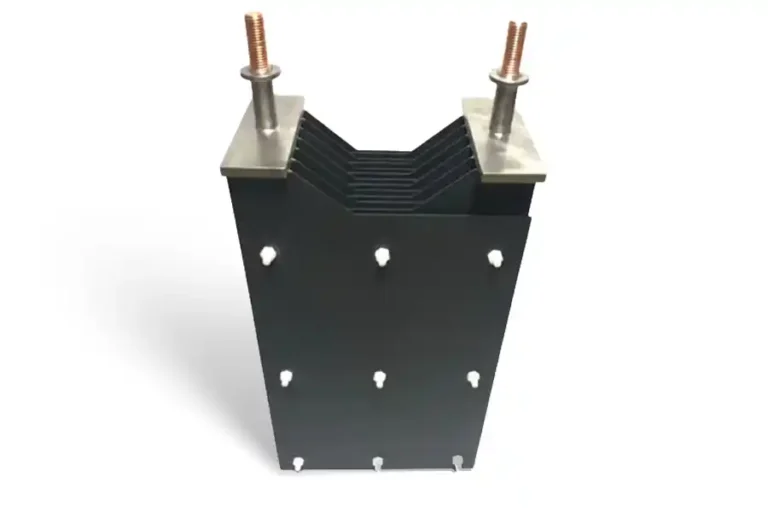
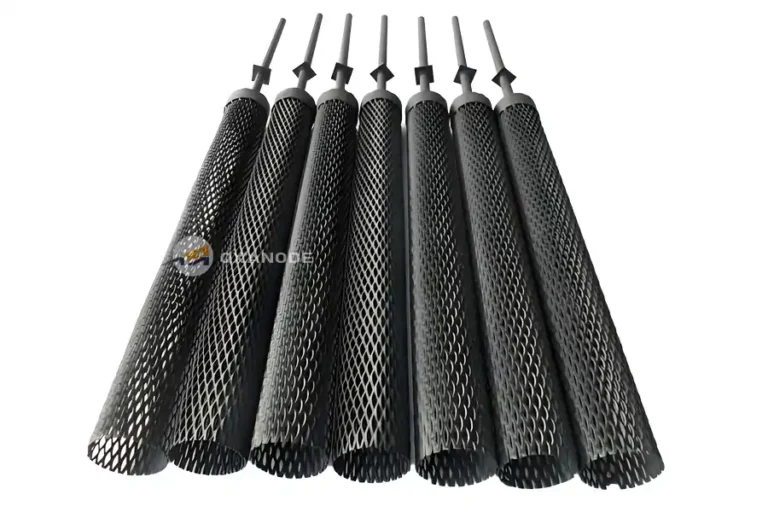
- Bend nothing. Mesh, plate and tube anodes are dimensionally stable precisely so the electrode gap stays constant; a bent anode changes the gap and the current distribution.
- Support anodes by the stem, flange or bus bar, not by the active coated surface.
8. Store spares correctly
Spare anodes need no special climate control, but they do need to stay dry, clean and untouched. Store them indoors in their packaging, away from dust, chemical fumes and condensation. Avoid outdoor storage: airborne chlorides and moisture cycles can leave surface films that must be rinsed off before use. Inspect spare anodes annually and rinse any dust off with clean water.
9. Monitor performance on a schedule
A short monthly log catches problems while they are still cheap:
| What to record | What it tells you |
|---|---|
| Cell voltage at constant current | A gradual rise points to scale, coating wear or contact problems |
| Electrolyte temperature and pH | Drift outside the design window shortens coating life |
| Visual condition during shutdowns | Look for bare titanium spots, flaking, heavy scale or physical damage |
| Current and on time | Total ampere hours consumed is the best predictor of remaining life |
10. Plan the end of life instead of reacting to it
When voltage trends upward and visual checks show worn patches, schedule replacement. Running an anode to complete failure risks damaging the cathode, contaminating the product and stopping the line at the worst possible moment. Because anode life depends mainly on ampere hours delivered, we can help you forecast replacement timing from your operating log.
Frequently asked questions
What happens if a titanium anode is connected with reversed polarity?
The mixed metal oxide coating dissolves within minutes to hours, the substrate passivates and cell voltage rises sharply. The damage is permanent. Verify polarity at the anode terminal before first energization and after any wiring change.
Can a titanium anode be operated dry?
No. The coating must stay fully immersed while current flows. Fill and wet the cell before switching on, and switch off before draining.
How do I remove scale from a titanium anode safely?
Soak in dilute citric acid, or a brief dilute hydrochloric acid bath for stubborn scale, then rinse thoroughly. Never scrape, wire brush, sandblast or grind the surface.
What current density should a titanium anode run at?
Stay within the value on the anode design sheet. Each coating system and geometry is rated for a specific range, and exceeding it shortens life dramatically. If requirements have changed, ask the manufacturer to re-rate the anode.
How should spare titanium anodes be stored?
Keep them in their original packaging, dry, indoors, away from dust and chemical fumes. No climate control is needed; just avoid outdoor condensation and impact.