8 Electrochemical Water Treatment Methods: Principles, Applications, and How to Choose
Electrochemical water treatment covers a family of processes, from electrocoagulation and electrochemical oxidation to electrodialysis, electrosorption, and electro-Fenton. This guide explains how each method works, which wastewater streams it handles best, and what to weigh when selecting a process for industrial duty.
Why Electrochemistry Belongs in Your Wastewater Toolbox
Petrochemical, dyeing, papermaking, pesticide, pharmaceutical, metallurgy, and food processing plants keep pushing global wastewater volumes upward. Much of that effluent is high in concentration, toxicity, salinity, and color, which makes it stubbornly resistant to conventional biological and chemical treatment.
Electrochemical water treatment takes a different route. Inside a purpose-built reactor, an applied electric field drives chemical, electrochemical, and physical processes at the electrode surface that degrade, separate, or recover pollutants. The practical advantages explain why the field keeps growing:
- Simple, compact equipment with a small footprint and low operation and maintenance cost
- Minimal secondary pollution, since no large chemical doses are continuously added
- High controllability, because current density and cell voltage adjust reaction rates precisely, which makes industrial automation straightforward
These traits have earned the technology its reputation as an environmentally friendly process. The main methods available today include electrocoagulation with electroflotation, electrodeposition, electrochemical oxidation, iron-carbon micro-electrolysis, electrodialysis, electrosorption, photoelectrochemical oxidation, and electro-Fenton. Each has its own best-fit applications, described below.
All 8 Methods at a Glance
| Method | Core principle | Best suited for | Main limitation |
|---|---|---|---|
| Electrocoagulation and electroflotation | Sacrificial Al or Fe anode forms active flocs; cathode bubbles float the flocs | Colloids, emulsified oils, suspended solids, color | Consumes sacrificial electrodes; sludge handling |
| Electrodeposition | Metal ions reduce and plate out at the cathode | Metal recovery from plating and mining effluent | Needs careful potential control; low concentrations are slow |
| Electrochemical oxidation | Direct anode oxidation plus hydroxyl radicals and active chlorine | Persistent organics, ammonia, cyanide, leachate | Side oxygen evolution competes; energy cost at high COD |
| Iron-carbon micro-electrolysis | Fe-C galvanic cells form Fe2+, new hydrogen, and flocs | Pretreatment to raise biodegradability, remove color | Slow kinetics; bed compaction and clogging |
| Electrodialysis (ED) | Ion exchange membranes sort ions under a DC field | Desalination, salt and acid recovery, metal rinse water | Only removes charged species; membrane fouling |
| Electrosorption / capacitive deionization | Ions store in electrode double layers under a small voltage | Brackish water, cooling tower blowdown recycling | Suits low to moderate salinity best |
| Photoelectrochemical oxidation | UV excites semiconductor photocatalysts, generating electron-hole pairs | Toxic, refractory small-molecule organics such as dyes | Light penetration limits scale-up |
| Electro-Fenton | Electrogenerated H2O2 plus Fe2+ yields hydroxyl radicals | Leachate, pesticide, pharmaceutical pretreatment and polishing | pH control and iron sludge management |
How the Field Developed
Electrochemical water treatment is not new. Its milestones track the broader history of electrochemistry itself:
- 1799Volta built the first voltaic pile, the first device converting chemical energy into electricity, which opened the door to all applied electrochemistry.
- 1833Faraday established the quantitative laws linking electric current to chemical reaction, the theoretical backbone of every electrolytic process.
- 1879Helmholtz proposed the electrical double layer concept: whenever two different phases contact, charge separation creates equal and opposite excess charges at the interface, forming a double layer that attracts them together.
- 1887Arrhenius published his theory of electrolytic dissociation.
- 1889Nernst formulated the equation relating electrode potential to the concentration of the species taking part in the electrode reaction.
- 1903Morse and Pierce placed two electrodes inside and outside a dialysis bag and found that charged impurities left the gel quickly, an early demonstration of electrodialysis.
- 1905Tafel published the equation relating current density to hydrogen overpotential, a foundation of electrode kinetics.
- 1906Dietrich received a patent on electrocoagulation, and dedicated companies began refining the process.
- 1909Harries patented electrolytic wastewater treatment using free ions with an aluminum anode.
- 1950Juda produced the first highly selective ion exchange membranes, moving electrodialysis into practical service, first for brackish water desalination and later for seawater desalination and industrial pure water.
- 1950sBockris and coworkers developed electrode process kinetics, laying the theoretical basis for later semiconductor electrode studies and quantum treatments of interfacial electron transfer. In 1956, Holden in the UK used iron electrodes to treat river water.
- 1960sRapid growth in the power industry renewed interest in electrolysis. Conventional two-dimensional plate electrodes offered limited active area and poor mass transfer, so the industry demanded new, high-efficiency reactor designs.
- 1969Backhurst and coworkers proposed the fluidized bed electrode (FBE). Unlike flat plates, it has a three-dimensional structure with tens to hundreds of times the specific surface area, and electrolyte flowing through the pores greatly improves mass transfer.
- 1972Fujishima and Honda reported sustained photo-induced redox of water on a TiO2photoelectrode, opening the era of photocatalytic oxidation for water treatment.
- 1973Fleischmann and Goodridge developed the bipolar packed bed electrode (BPBE). Under a high-gradient field the packing particles polarize, and each particle behaves as a tiny electrolytic cell with an extremely short ion migration distance, so the whole bed acts as countless micro-cells in series and efficiency rises sharply.
- 1976Asovov and coworkers applied electrocoagulation to petrochemical wastewater; in 1977, Osipenko and coworkers in the former Soviet Union treated chromium-bearing wastewater the same way.
- 1980sElectro-Fenton emerged as a new advanced oxidation process built to overcome the drawbacks of conventional Fenton chemistry.
- 1990sCore breakthroughs arrived in electrode materials and cell design. Lawrence Livermore National Laboratory researchers and Mark Andelman ran successful pilot electrosorption desalination trials.
- 2000sIn 2002, Cardia patented radionuclide and cyanide removal, and electrocoagulation entered a strongly industrial phase focused on reactor design, electrode cleaning, power supply, and system integration. Electrosorption modeling matured in parallel: one laboratory module treated industrial circulating cooling water at 1,000 mg/L TDS and produced effluent at 10 mg/L TDS.
1. Electrocoagulation and Electroflotation
Electrocoagulation and electroflotation are really one combined process, often written as the electrocoagulation-electroflotation method, because floc formation and bubble flotation happen simultaneously in the same cell.
Under an applied voltage, a soluble anode (typically aluminum or iron) releases cations that destabilize colloidal pollutants, while the cathode evolves fine hydrogen bubbles that lift the flocs to the surface. Pollutant separation and water purification thus happen through anodic coagulation plus cathodic flotation at once.
Electrolysis of the sacrificial anode generates Al3+ or Fe3+ (with Fe2+ further oxidized by dissolved oxygen), which hydrolyze into active floc species:
Al − 3e− → Al3+ or Fe − 3e− → Fe3+
Al3+ + 3H2O → Al(OH)3 + 3H+ or 4Fe2+ + O2 + 2H2O → 4Fe3+ + 4OH−
The resulting polymeric hydroxo complexes, often written M(OH)n, act as fast, effective coagulants. They compress the colloidal double layer to destabilize particles, then adsorb, bridge, and sweep fine oil droplets and mechanical impurities into large separable flocs. Although the electrochemical activity of these fresh floc species lasts only minutes, their effect on the double-layer potential, and therefore their flocculating power, is enormous. Compared with dosing aluminum or iron salts, they adsorb more strongly, are needed in smaller amounts, cost less, work across a wide pH range, and are unaffected by water temperature or biological impurities, with no risk of hydrolysis side reactions.
Meanwhile, the fine bubbles released at the cathode accelerate particle collision and separation, direct anodic oxidation and indirect oxidation via active chlorine converted from Cl− attack dissolved organics and reduced inorganic species, and the nascent hydrogen at the cathode and nascent oxygen at the anode add further reducing and oxidizing capacity.
Because coagulation, flotation, and oxidation all proceed together inside one reactor, dissolved colloidal and suspended pollutants are converted and removed simultaneously. That is the real strength of this method.
2. Electrodeposition for Metal Recovery
Electrodeposition exploits the potential differences between dissolved metal species: free or complexed metal ions in the electrolyte reduce and plate out at the cathode. For wastewater, that turns pollutant removal into clean metal recovery, an essentially green outcome.
The key is choosing the right potential. Whatever form the metal takes, the Nernst equation, applied to the ionic activity in solution, sets the deposition potential, while solution composition, temperature, overpotential, and electrode material all influence the process. In practice, the heart of an electrodeposition treatment system is a well-designed, efficient electrode structure and cell geometry, so that different pollutants and different production conditions can each get a matched reactor.
3. Electrochemical Oxidation
In its broad sense, electrochemical oxidation covers the whole electrochemical conversion of pollutants through direct or indirect electrode reactions. In its narrow sense, it refers specifically to the anodic process: an organic solution or suspension is fed to the electrolytic cell, DC current is applied, and the anode strips electrons to oxidize the organics directly, or first oxidizes lower-valent metal ions to higher valence states that then attack the organics. Many functional groups in organic molecules are electrochemically active, so a forced electric field changes their structure, weakens or eliminates toxicity, and improves biodegradability.
Direct oxidation
Direct oxidation (direct electrolysis) destroys pollutants right on the electrode surface and splits into an anodic and a cathodic branch. In the anodic branch, pollutants convert at the anode surface into less toxic or more biodegradable substances. In the cathodic branch, properly called electrochemical reduction, pollutants reduce at the cathode, typically a stainless steel cathode or a Pt-coated titanium electrode. Typical uses include Cr6+ reduction to Cr3+, Hg2+ reduction and deposition, and reductive dehalogenation of chlorinated organics:
R−Cl + 2H+ + 2e− → R−H + Cl−
Indirect oxidation
Indirect oxidation uses electrochemically generated oxidants or mediators to convert pollutants into less toxic forms. Reversible indirect oxidation (mediated electrochemical oxidation) regenerates and recycles the redox mediator electrochemically. Irreversible indirect oxidation consumes strong oxidants such as Cl2, chlorate, hypochlorite, H2O2, and O3 generated in situ, or powerful reactive intermediates including solvated electrons, the hydroxyl radical ·OH, the hydroperoxyl radical ·HO2, and the superoxide anion radical ·O2−. These species degrade cyanide, phenols, sulfide, and COD into harmless end products.
Direct oxidation at low pollutant concentration becomes mass-transfer limited at the electrode surface; indirect oxidation does not face that limit. Both routes compete with hydrogen or oxygen evolution side reactions, but careful electrode material selection and potential control keep them in check.
Electrochemical oxidation performs well on offshore oilfield produced water, dyeing wastewater, high-strength landfill leachate, and ammonia- or cyanide-rich effluent, in other words, streams that are high in organics, complex in composition, rich in refractory matter, and deeply colored. With electrochemically active anode materials, the process generates hydroxyl radicals of extreme oxidative power that either break persistent organic pollutants into non-toxic, biodegradable fragments or mineralize them completely to CO2 and carbonate.
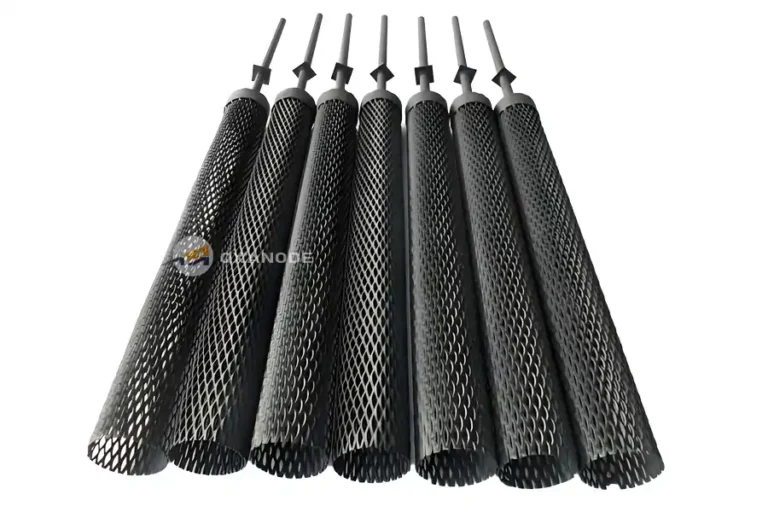
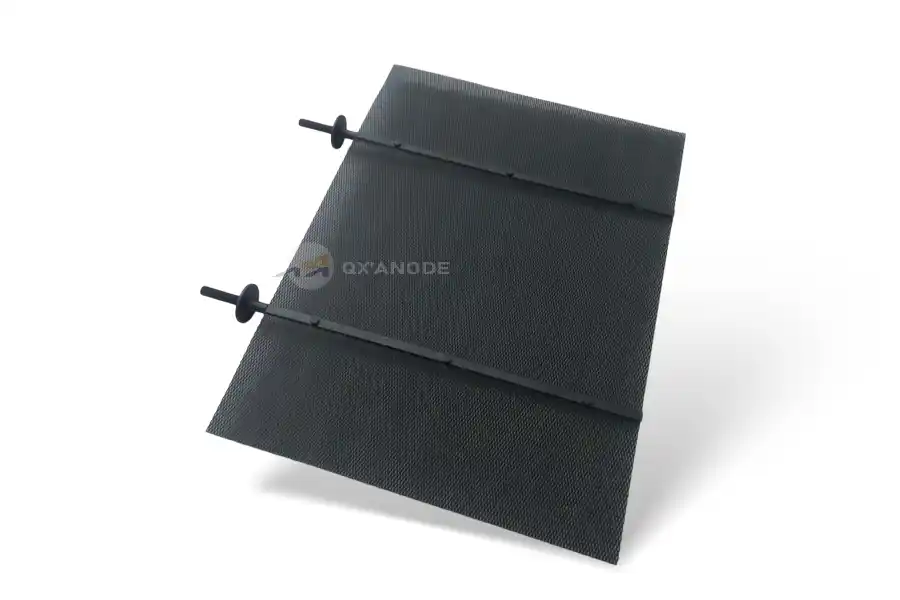
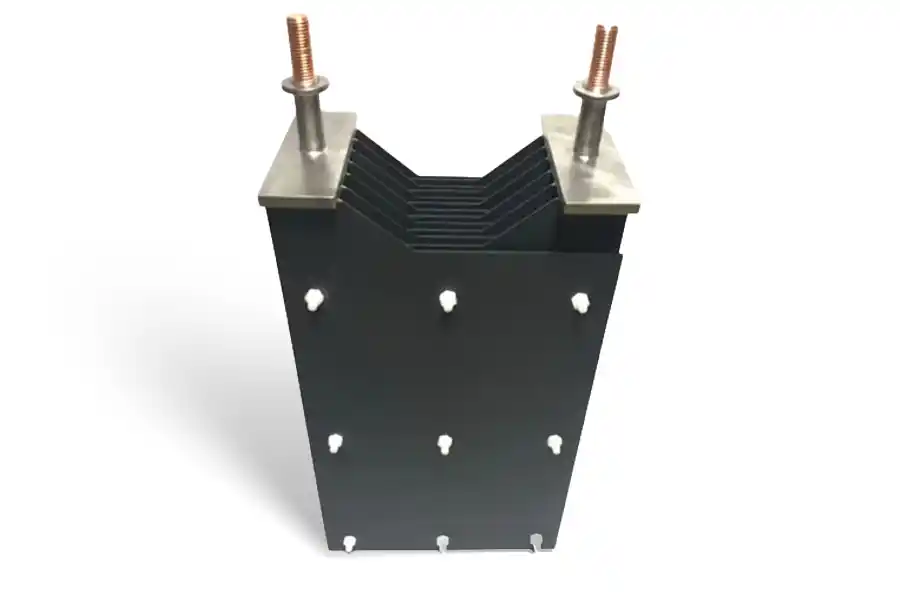
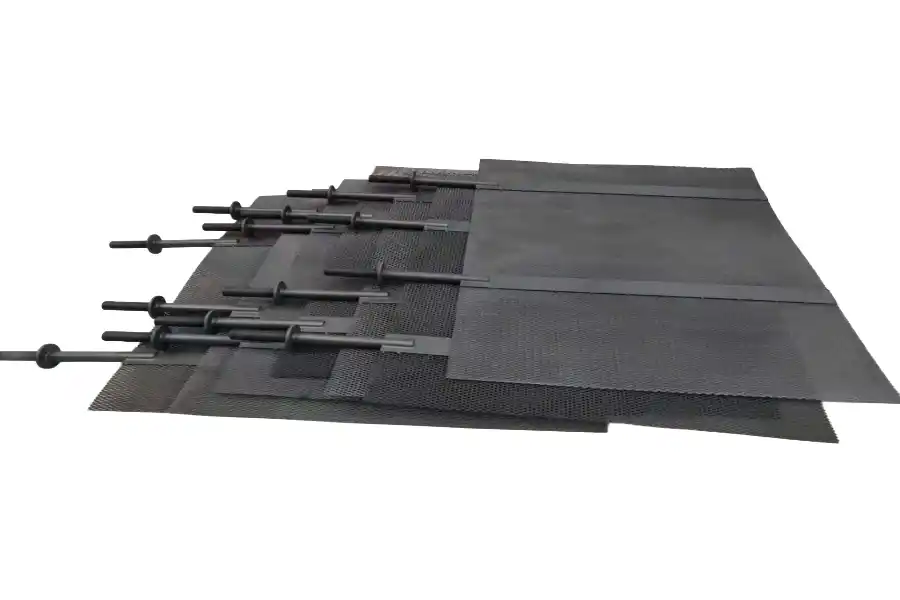
Why the anode matters. Industrial electrochemical oxidation reactors almost universally rely on dimensionally stable anodes (DSA): mixed metal oxide (MMO) coatings on titanium substrates. A well-manufactured MMO titanium anode holds its activity and geometry for years in chloride-bearing media, which is exactly what long-run oxidation duty demands.
4. Iron-Carbon Micro-Electrolysis
Researchers began treating dyeing wastewater with iron filings in the 1970s, and micro-electrolysis entered wastewater practice from that point; Chinese research in the field started in the 1980s. Today, iron-carbon micro-electrolysis is a mature process and a valued option among pretreatment technologies for refractory industrial wastewater.
The principle is simple and elegant: build countless galvanic cells from metal corrosion. Scrap iron filings and activated carbon pack the internal electrolysis column, no external power is needed, and the process treats waste with waste. The corrosion reaction generates strongly reducing Fe2+, which reduces oxidizing components in the wastewater; Fe(OH)2 adds flocculation; the activated carbon adsorbs organics and microorganisms; and the weak currents from the iron-carbon cells even stimulate microbial growth and metabolism.
The biggest advantage is near-zero energy input. The method removes many pollutant types and color simultaneously while improving the biodegradability of refractory compounds, which is why it usually serves as a pretreatment or supplementary step ahead of other processes. Its weaknesses are equally clear: slow reaction rates, reactors that tend to clog and compact, and difficulty handling high-concentration streams.
Besides dyeing wastewater, where it first proved itself, iron-carbon micro-electrolysis is widely studied and applied for papermaking, pharmaceutical, coking, high-salinity organic, electroplating, petrochemical, pesticide, and arsenic- or cyanide-bearing streams. The nascent ferrous ions reduce oxidizing groups in the organics while adsorption, flocculation, complexation, and electrodeposition all contribute, so the process cuts COD, removes organics, and raises biodegradability to set up downstream treatment. Remaining engineering challenges, mainly bed compaction (hardening) and pH adjustment, are what current research aims to solve for full-scale deployment.
5. Electrodialysis
Electrodialysis (ED) drives charged solutes through selective ion exchange membranes under a DC field. Ions migrate directionally through the membranes and separate from the water and other uncharged components, achieving concentration, desalination, refining, and purification in one unit operation. ED has grown into a large-scale chemical engineering process with a firm place in membrane separation, serving chemical desalting, seawater desalination, food and pharmaceutical production, and wastewater treatment. In some regions it is the primary method of drinking water production.
Its selling points: low energy consumption with strong economics, simple pretreatment, durable equipment, flexible design and system configuration, easy operation and maintenance, a clean process with low chemical consumption and no environmental pollution, long service life, and high raw water recovery, generally 65% to 80%.
Common variants include filled-bed electrodialysis (EDI, also called electrodeionization), electrodialysis reversal (EDR), liquid membrane electrodialysis (EDLM), high-temperature electrodialysis, spiral-wound electrodialysis, and electrodeionization without polarization water.
For electroplating and heavy metal wastewater, ED recovers metal ions from the effluent, turning waste streams into reusable water and raw material. Documented examples show the range: membrane electrolysis of passivation liquors in copper production recovered copper and zinc while oxidizing Cr3+ back to Cr6+, regenerating the passivation bath; membrane electrolysis recovered nickel directly from spent nickel plating liquor; combined ED and ion exchange processes recovering metals and acid from pickling waste liquor are in industrial service; layered resin-bed electrodeionization units achieve closed-loop, zero-discharge treatment of heavy metal wastewater.
ED also handles alkaline and organic wastewater. Membrane electrolysis applied to alkaline scrubbing liquor from propylene oxide chlorohydrin tail gas achieved a 78% COD removal and 73.55% alkali recovery after 3 hours of circulation at 5.0 V, an excellent pretreatment ahead of biological units. An ED process for high-strength mixed organic acid wastewater at 3% to 15% concentration produced no residue or secondary pollution, yielded a 20% to 40% acid concentrate fit for recovery, and dropped residual acid in the effluent to 0.05% to 0.3%. A specialized ED unit treating condensate wastewater handled up to 36 t/h, recovered over 96% of ammonium nitrate into a 20% concentrate, and kept ammonia nitrogen in the discharged water at or below 40 mg/L.
6. Electrosorption (Capacitive Deionization)
Electrosorption technology (EST), also called capacitive deionization, started as theory in the 1960s and 1970s and reached application in the late 1990s. Built on the electrical double layer theory of electrochemistry, it separates ions from water using the electrochemical behavior of charged electrode surfaces.
Think of it as a flat capacitor submerged in the water. Applying a small voltage creates an electrostatic field: anions migrate to and accumulate on the positively charged plate, cations migrate to the negative plate, and the salinity of the water itself drops. Raw water flows through the gap between the two electrode plates; as it passes the field, ions move toward the plate of opposite charge and store inside its double layer. As adsorption proceeds, ions enrich and concentrate at the electrode surface until salt and water separate, delivering desalted product water.
Where electrosorption fits
- Drinking water polishing: removes excess inorganic salts such as calcium, magnesium, fluoride, arsenic, sodium, nitrate, sulfate, and chloride, and can bring water sources that exceed salt limits back into usable service
- Municipal and industrial water reuse: for wastewater high in COD and salinity, where conventional desalting struggles because high COD interferes with salt removal, electrosorption resists fouling and still removes the salt while contributing some COD reduction
- Industrial process water: textile dyeing, light industry and papermaking, power and chemical plants, and metallurgy all consume large volumes of demineralized or pure water
- Makeup water pretreatment for cooling towers: lower salt in the makeup raises achievable cycles of concentration, cutting both makeup and blowdown volumes
- Cooling tower blowdown recycling: desalted blowdown can replace fresh makeup, cutting freshwater intake and wastewater discharge while raising overall water reuse
- Brackish water desalination: and, further out, seawater desalination, the most attractive next frontier for EST
7. Photoelectrochemical and Photocatalytic Oxidation
Photochemical oxidation degrades pollutants through light-driven processes, with or without a catalyst. Non-catalytic schemes use oxygen or hydrogen peroxide as the oxidant under UV irradiation. Catalytic schemes, called photocatalytic oxidation, divide into homogeneous and heterogeneous types. In the common heterogeneous version, a photosensitive semiconductor powder is dosed into the polluted water and irradiated; light excites electron-hole pairs in the semiconductor, and adsorbed dissolved oxygen and water molecules react with those pairs. The stored excess energy lets the semiconductor particles overcome thermodynamic barriers and act as catalysts, generating extremely powerful oxidizing radicals such as ·OH, which then degrade pollutants through hydroxyl addition, substitution, and electron transfer.
Photochemical oxidation therefore spans three process families: photosensitized oxidation, photoexcited oxidation, and photocatalytic oxidation. Combining chemical oxidation with light radiation raises both the rate and the oxidative power well beyond what either chemicals or UV alone can deliver. With UV as the radiation source and a pre-dosed oxidant such as hydrogen peroxide or ozone, plus catalysts where needed, photo-oxidation is exceptionally effective against small, refractory, toxic organics such as dyes, because the reaction floods the water with highly active radicals that readily tear organic structures apart.
8. Electro-Fenton
Electro-Fenton equipment is an advanced oxidation process (AOP) built on Fenton catalysis, aimed at degrading high-concentration, toxic, organic wastewater.
Fenton discovered in 1894 that H2O2, catalyzed by Fe2+, generates hydroxyl radicals (·OH). Conventional Fenton dosing has well-known drawbacks, so researchers developed electro-Fenton in the 1980s as an electrochemical version: the process generates Fe2+ and H2O2 electrochemically and continuously, and the two react on the spot to form highly active hydroxyl radicals. In effect, Fenton reagent is produced inside the electrolysis itself. Dissolved oxygen reduces to hydrogen peroxide at a suitable cathode surface, and the H2O2 then reacts with the Fe2+ catalyst:
O2 + 2H+ + 2e− → H2O2
H2O2 + Fe2+ → Fe3+ + ·OH + OH−
Radical probes, spin trapping, and other spectroscopic techniques have confirmed the ·OH generation pathway. In practice, the non-selective oxidative power of ·OH is what removes refractory organics.
Electro-Fenton targets two duty profiles. As pretreatment for raw landfill leachate, leachate concentrate, and chemical, pharmaceutical, pesticide, dye, textile, and electroplating wastewater, it can link with advanced electrochemical oxidation equipment to slash COD and sharply raise biodegradability. As deep polishing for biological effluent from the same industries, it brings COD down to discharge limits directly, and pairing it with pulsed electro-Fenton equipment lowers overall operating cost.
Where Electrochemical Treatment Delivers Results
Persistent organic pollutants
Papermaking, dyeing, and pharmaceutical effluent runs high in organics, complex in composition, and rich in refractory compounds. Electrochemical treatment raises biodegradability effectively: the anode surface adsorbs, catalyzes, and oxidizes at once, and hydroxyl radicals of extreme oxidative power either decompose persistent organics into non-toxic, readily degradable substances or mineralize them completely to CO2 and carbonate. Because such wastewater usually has low conductivity, plants typically add a strong electrolyte such as NaCl or Na2SO4 to boost solution conductivity, treatment efficiency, and effluent quality.
Phenolic wastewater
Coking, oil refining, papermaking, plastics, ceramics, and textile plants discharge phenolic wastewater loaded with phenol and aromatic derivatives. Sources are widespread and the pollution load heavy, and conventional treatment is complicated and inefficient. Electrochemical oxidation handles these streams well; performance depends on initial phenol concentration, pH, current density, and supporting electrolyte type. In one documented study using a fluororesin-modified β-PbO2 anode at 7.0 V and pH 2.0, COD fell below 60 mg/L and volatile phenol was removed completely.
Nitrobenzene compounds
Pharmaceutical, pesticide, dye, explosives, and other chemical production generate nitrobenzene wastewater that resists biological degradation. Electrochemical catalytic systems with dimensionally stable anodes (DSA) perform strongly here: with a properly selected current density, reported nitrobenzene removal rates exceed 90%, a very promising result for real-world deployment.
Heavy metal ions
The heavy metals of concern include mercury (Hg), cadmium (Cd), lead (Pb), chromium (Cr), arsenic (As), copper (Cu), zinc (Zn), cobalt (Co), and nickel (Ni). Mining, metallurgy, and chemical production are the main anthropogenic sources, and excess bioaccumulation threatens both ecosystems and human health, which keeps heavy metal treatment in the research spotlight. Electrodeposition leads the electrochemical options here. Three-dimensional electrodes outperform conventional two-dimensional plates by raising the surface-to-volume ratio of the cell, speeding mass transfer, and lifting current efficiency and treatment performance, and three-dimensional electrode systems have delivered good results on copper- and mercury-bearing wastewater in practice.
Hybrid electrochemical-biological processes
Combining electrochemistry with other methods multiplies treatment efficiency and quality, and the electrochemical-biological combination draws the most research attention. Working together, the two technologies degrade a broad range of pollutants, and a notable bonus is that the weak currents generated in the electrochemical reaction stimulate microbial metabolism, which further accelerates biological treatment. The combination holds a clear edge for refractory wastewater and for polishing streams that electrolysis alone cannot finish.
Frequently Asked Questions
What is electrochemical water treatment?
It is a family of processes that use an applied electric field inside an electrochemical reactor to degrade, separate, or recover pollutants through chemical, electrochemical, or physical processes at the electrode surface. Equipment stays simple and compact, secondary pollution is minimal, and reaction control and automation are straightforward.
Which industries use it the most?
Landfill leachate, petrochemical, dyeing and textile, pharmaceutical, pesticide, coking, electroplating, and papermaking operations use it most, especially where effluent is high in COD, salinity, toxicity, or color and resists biological treatment.
What is the difference between electrocoagulation and electrochemical oxidation?
Electrocoagulation dissolves a sacrificial aluminum or iron anode to form active flocs that capture suspended and colloidal pollutants; the cathode bubbles then float the flocs out. Electrochemical oxidation destroys dissolved organics at the anode surface or through oxidants such as hydroxyl radicals and active chlorine. The first separates pollutants; the second converts them chemically.
Why are MMO coated titanium anodes used in electrochemical oxidation?
Mixed metal oxide (MMO) coated titanium anodes, also known as dimensionally stable anodes (DSA), keep a stable active surface over years of operation, resist corrosion in chloride-bearing media, and drive the formation of hydroxyl radicals and active chlorine that degrade persistent organics. That combination makes them the standard anode choice for industrial oxidation reactors.
For guidance on selecting MMO coated titanium anodes for electrochemical oxidation, electrochlorination, or cathodic protection duty, contact our technical team.