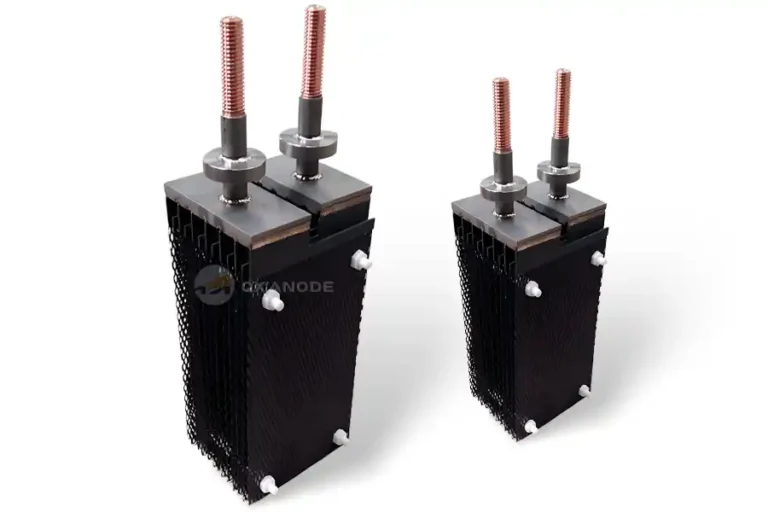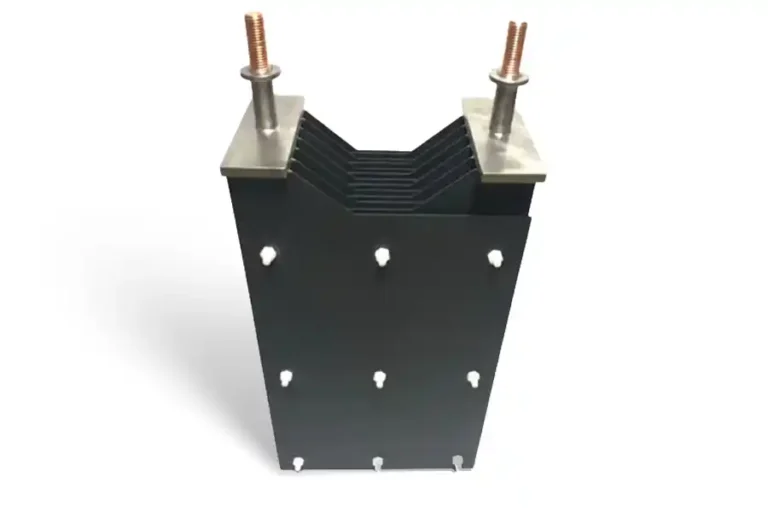
DSA Coated Titanium Electrodes (MMO Titanium Anodes)
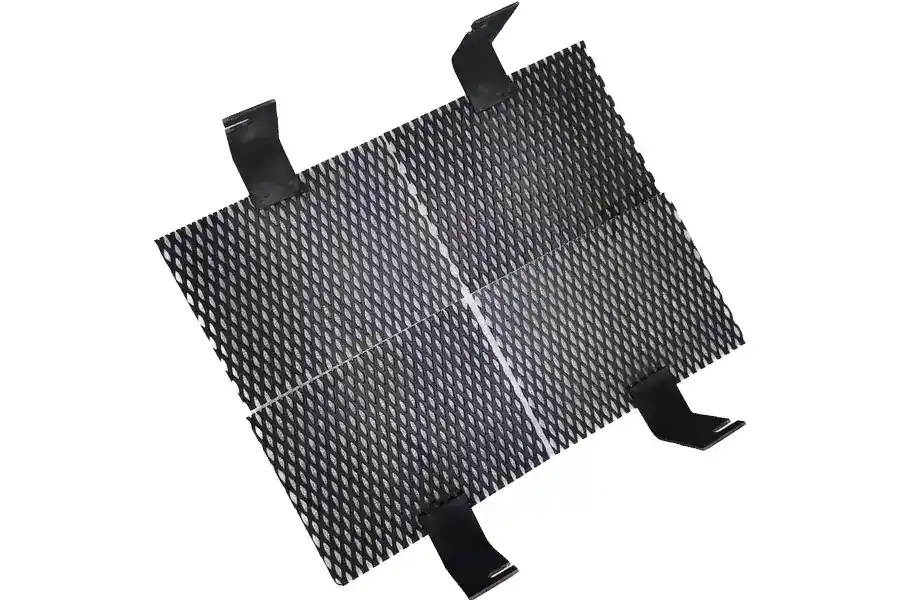
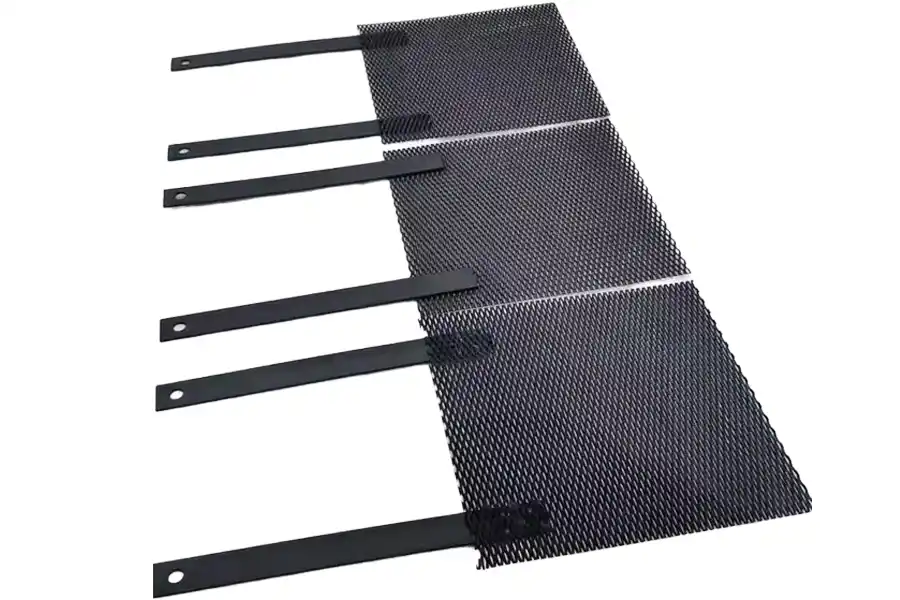
DSA coated titanium electrodes — also known as MMO titanium anodes or dimensionally stable anodes — are insoluble electrolytic electrodes made from a high-purity titanium substrate coated with a thermally decomposed layer of mixed precious metal oxides (ruthenium, iridium, tantalum, or platinum). They deliver low overpotential, long service life, and zero electrolyte contamination, making them the industry-standard replacement for traditional graphite and lead anodes in chlor-alkali, sodium hypochlorite generation, water treatment, electroplating, and cathodic protection.
What Is a DSA Coated Titanium Electrode?
DSA stands for Dimensionally Stable Anode. Unlike graphite anodes, which erode during operation, or lead anodes, which dissolve and contaminate the electrolyte, a DSA electrode keeps its exact dimensions and electrode spacing throughout its service life. This dimensional stability maintains a constant cell voltage, stable current distribution, and uniform electrolysis efficiency.
The electrode combines two functional layers:
- Titanium substrate (Grade 1 or Grade 2 per ASTM B265, Ti ≥ 99.6%) — provides mechanical strength and inherent corrosion resistance; the substrate is recoatable after the coating reaches end of life.
- Electrocatalytic coating (3–12 μm of mixed metal oxides) — lowers the reaction overpotential and drives the desired electrochemical reaction at high efficiency.
How a DSA Electrode Works
The mixed metal oxide coating acts as an electrocatalyst. When current is applied, the coating lowers the activation energy of the target reaction — chlorine evolution in chloride-rich electrolytes, or oxygen evolution in acidic or sulfate systems — reducing cell voltage by 0.3–0.8 V compared with lead and graphite anodes. This translates into 10–20% lower power consumption at the same production output.
Technical Specifications
| Parameter | Standard Range / Option |
| Substrate material | Grade 1 / Grade 2 pure titanium (ASTM B265, Ti ≥ 99.6%) |
| Coating systems | RuO₂–IrO₂ (ruthenium-iridium), IrO₂–Ta₂O₅ (iridium-tantalum), platinum (Pt) |
| Coating thickness | 3–12 μm (MMO coatings typically 8–12 μm; platinum 0.5–5 μm) |
| Precious metal loading | 5–20 g/m² (customizable up to 50 g/m²) |
| Substrate thickness | 0.5–10 mm |
| Available shapes | Plate, expanded mesh, tube, rod, wire, strip, disc, ribbon, custom assemblies |
| Working current density | ≤ 2,000 A/m² (higher on request for specific coatings) |
| Working temperature | ≤ 60°C (coating dependent) |
| Applicable pH range | 2–14 (coating dependent) |
| Chlorine evolution potential | ≤ 1.08–1.13 V (vs. SCE, saturated NaCl, 2,000 A/m²) |
| Typical service life | 1–5 years under standard conditions; substrate recoatable for a second service cycle |
| Standards & testing | ASTM B265 substrate; XRF coating uniformity (≤15% variation), adhesion, bending, and accelerated life tests (ALT) |
Coating Systems Comparison
Choosing the right coating is the single most important factor in anode longevity. The rule of thumb: chlorine evolution → ruthenium; oxygen evolution → iridium.
| Feature | Ru-Ir (Ruthenium-Iridium) | Ir-Ta (Iridium-Tantalum) | Platinum (Pt) |
| Primary reaction | Chlorine evolution (CER) | Oxygen evolution (OER) | Chlorine / oxygen / high-purity media |
| Ideal electrolyte | Brine, seawater, chloride-rich solutions | Sulfuric acid, acidic media, chloride-free systems | Acid, alkali, cyanide, high-purity water |
| Typical applications | Chlor-alkali, sodium hypochlorite, seawater electrolysis, pool chlorination | Electrowinning, copper foil, acidic wastewater, PEM water electrolysis | Precision electroplating, water ionizers, semiconductor |
| Cost level | Moderate | High | High |
| Key limitation | Degrades under strong continuous oxygen evolution | Higher initial cost | Highest cost; overkill for most bulk applications |
Do not use ruthenium-based coatings in continuously oxygen-evolving acidic baths — the coating can deactivate several times faster. If your electrolyte contains significant fluoride ions, notify us before ordering; fluorides rapidly attack the titanium substrate.
For a deeper walk through substrate standards, coating loading, and supplier qualification, see our titanium anode guide.
Applications
DSA coated titanium electrodes are used wherever electrochemical oxidation or reduction is required at industrial scale:
- Sodium hypochlorite generation — on-site NaOCl disinfection for water treatment, swimming pools, and food processing (our core application).
- Chlor-alkali industry — chlorine and caustic soda production.
- Wastewater treatment — electrochemical oxidation of organic pollutants, cyanide destruction, and disinfection.
- Electroplating — hard chrome, copper, zinc, nickel, and precious metal plating.
- Electrolytic copper foil and metal electrowinning / hydrometallurgy.
- Cathodic protection (ICCP) — ship hulls, offshore structures, pipelines, and deep-well ground beds.
- Electrodialysis / EDI and electrolytic hydrogen production (alkaline and PEM water electrolysis).
- Electrochemical ozone generation and laboratory electrolysis.
Manufacturing Process
- Substrate machining — CNC cutting, stamping, and forming of Grade 1/2 titanium to the specified shape and size.
- Surface pretreatment — sandblasting to roughen the surface, followed by multi-stage acid pickling and ultrasonic cleaning to remove grease and oxide layers, maximizing coating adhesion.
- Coating application — noble metal precursor solutions are applied by brush, roller, or spray in controlled layers.
- Thermal decomposition — segmented high-temperature sintering converts the precursors into a dense, conductive mixed oxide layer bonded to the titanium surface.
- Post-treatment — polishing and passivation to stabilize the electrode surface.
- Inspection and testing — every batch undergoes adhesion, uniformity, electrochemical, and accelerated life testing before shipment.
Advantages Over Traditional Anodes
- Low overpotential — reduces cell voltage by 0.3–0.8 V and power consumption by 10–20%.
- Long service life — 3–8 years typical, depending on operating conditions and coating selection.
- No secondary pollution — no heavy metal dissolution, safe for drinking water and food-grade applications.
- Recoatable substrate — the titanium matrix can be stripped and recoated after coating end-of-life, cutting long-term procurement cost.
- Lightweight and strong — simplifies cell assembly and installation.
- High current density capability — supports compact, high-output electrolyzers.
Customization
Every electrolysis cell is different. We customize DSA electrodes by:
- Shape and size — plate, mesh, tube, rod, ribbon, disc, or complex 3D assemblies per your drawings (a few cm² to several m²).
- Coating formulation — Ru-Ir, Ir-Ta, Pt, or proprietary multi-component formulations matched to your electrolyte chemistry.
- Precious metal loading — 5–20 g/m² (or higher) tuned to current density and target service life.
- Connections — titanium or copper core rod, cable attachments, mounting holes, and busbar configurations.
FAQ
What is the difference between DSA and MMO titanium anodes?
None — they describe the same product. DSA (Dimensionally Stable Anode) emphasizes the anode’s stable dimensions, while MMO (Mixed Metal Oxide) describes the coating chemistry. Most suppliers use the terms interchangeably.
How long does a DSA electrode last?
Typically 1–5 years under standard operating conditions. Actual life depends on current density, electrolyte chemistry, temperature, and coating selection. We provide batch accelerated life test (ALT) data to support life prediction, and the titanium substrate can be recoated for a second service cycle.
Which coating should I choose — Ru-Ir or Ir-Ta?
If your electrolyte is chloride-rich and the target reaction is chlorine or hypochlorite production (e.g., sodium hypochlorite generators), choose Ru-Ir. If your process runs in acidic or sulfate media with continuous oxygen evolution (e.g., electrowinning, copper foil, acidic wastewater), choose Ir-Ta. Send us your electrolyte composition and we will recommend the correct formulation.
Can you manufacture custom sizes and shapes?
Yes. We produce plate, mesh, tube, rod, strip, wire, ribbon, disc, and custom assemblies from customer drawings, with substrate thickness from 0.5 mm to 10 mm.
Are your electrodes tested before shipment?
Yes. Every batch is tested for coating adhesion, uniformity, and thickness, and representative samples undergo chlorine potential and accelerated life testing. Test reports can be provided with the shipment.
Need a custom anode for your process?
Send us your drawing or specs — we’ll quote within 12 hours.