How to Choose Coated Titanium Electrodes: The Complete Buyer’s Guide for 2026
Quick Answer: What Coated Titanium Electrode Should You Choose?
In short: choose an iridium-tantalum (IrO₂–Ta₂O₅) MMO coating for oxygen-evolving acidic electrolytes (electroplating, wastewater, electrowinning), a ruthenium-based (RuO₂–TiO₂) coating for chlorine-evolving media (seawater electrochlorination, chlor-alkali), and platinum-coated titanium only when the process demands platinum’s specific catalysis or product purity. Always specify Gr2 titanium substrate, a precious-metal loading matched to your target service life (typically 5–50 g/m²), and verify the supplier’s accelerated life-test data before ordering.
What Is a Coated Titanium Electrode (DSA Anode)?
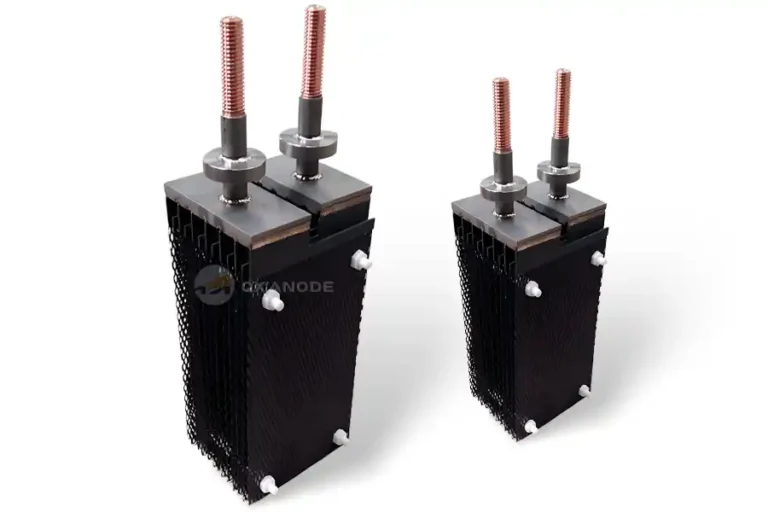
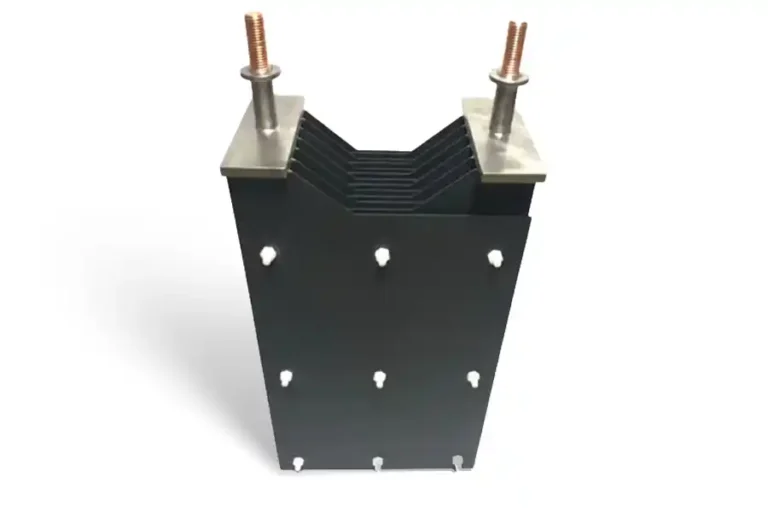
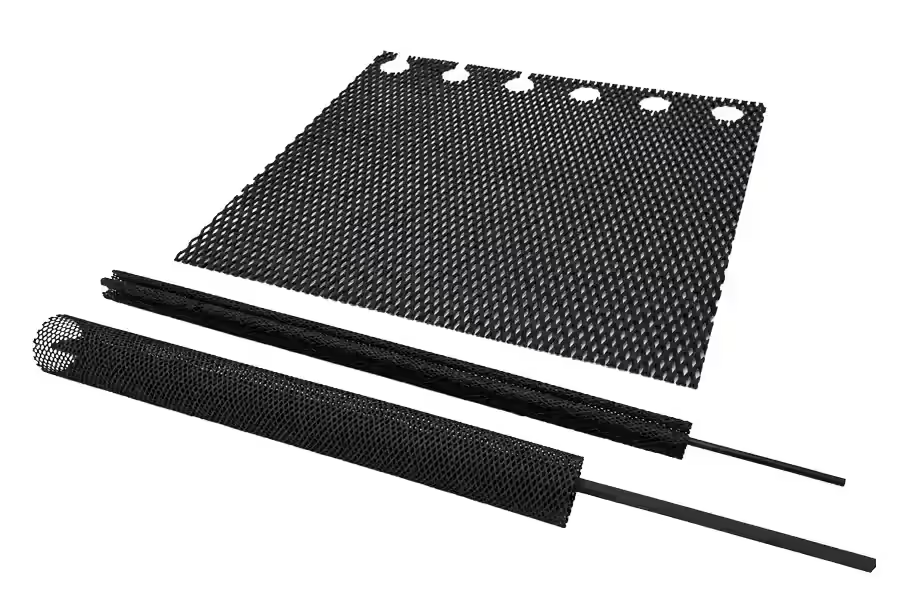
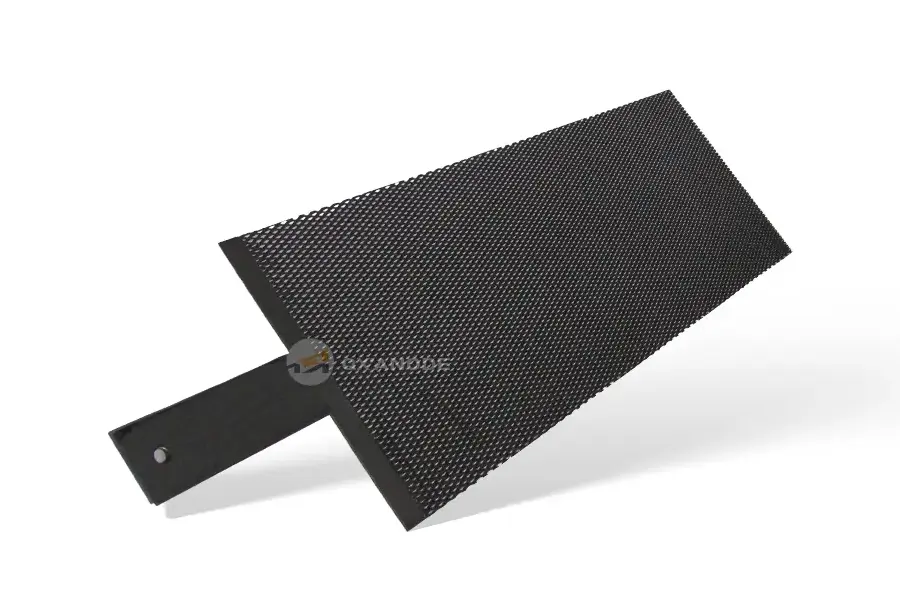
A coated titanium electrode — widely called an MMO anode (Mixed Metal Oxide) or DSA (Dimensionally Stable Anode) — is a titanium plate, mesh, rod or tube carrying a thin electrocatalytic layer of precious metal oxides (IrO₂, RuO₂, Ta₂O₅) or platinum, applied by thermal decomposition of precursor salts at 400–450 °C.
This checklist condenses the reasoning in our titanium anode guide into a form you can paste straight into an RFQ.
Compared with graphite or lead-alloy anodes, coated titanium electrodes deliver three decisive advantages:
Property | Graphite Anode | Lead Alloy Anode | Coated Titanium (MMO/DSA) |
|---|---|---|---|
Dimensional stability | Poor – erodes | Moderate – deforms | Excellent – no shape change |
Overpotential | High | High | Low (energy saving 10–30%) |
Product contamination | Carbon particles | Lead dissolution | Negligible |
Typical service life | 3–12 months | 1–3 years | 1–8+ years (recoatable) |
This is why MMO titanium anodes have become the industry standard across electroplating, chlor-alkali production, sodium hypochlorite generation, cathodic protection, electrowinning and electro-oxidation water treatment.
Selection Guide in 5 Steps
- Step 1 – Identify the electrode reactionChlorine evolution (chloride media) → ruthenium-based coating. Oxygen evolution (sulfate/nitrate media) → iridium-based coating. This is the single most important decision; the wrong coating family can fail within weeks.
- Step 2 – Define your operating conditionsDocument electrolyte composition, pH, temperature, fluoride content, current density (A/m²), and duty cycle. Fluoride above ~20 ppm or pH < 1 requires a revised design.
- Step 3 – Select coating system & loadingHigher precious-metal loading (g/m²) extends life roughly proportionally. Match loading to your economic optimum — over-specifying wastes platinum-group metals, under-specifying causes premature failure.
- Step 4 – Design substrate geometry & connectionsChoose plate, mesh, expanded mesh, rod, tube or basket forms; confirm Gr2 titanium, argon-arc (TIG) welding, and connection method (bolt, welding lug, copper-titanium clad bar).
- Step 5 – Validate with data & warrantyRequest accelerated life test (S-N) reports, coating adhesion and loading certificates, and a written service-life warranty including a recoating option.
Coating Systems Compared: Ir, Ru, Pt and BDD Alternatives
Coating System | Best For (Reaction) | Typical Electrolyte | Current Density | Relative Cost |
|---|---|---|---|---|
IrO₂–Ta₂O₅ | Oxygen evolution | Acidic sulfate, nitrate | 100–8,000 A/m² | High |
RuO₂–TiO₂ | Chlorine evolution | Seawater, brine, HCl | 50–2,000 A/m² | Medium |
Platinum | O₂ evolution, precision plating | Neutral & mild acidic baths | 50–1,000 A/m² | High |
PbO₂ on Ti | Organic oxidation | Strong acid wastewater | 100–1,000 A/m² | Low |
BDD on Ti | Hard-to-oxidize organics | High-end EO treatment | 50–500 A/m² | Very high |
Key Specifications to Include in Your RFQ
- Substrate
Gr1/Gr2 pure titanium (ASTM B265), thickness 1–5 mm; welded by argon-arc (TIG). - Current density
Design point & maximum A/m². - Dimensions
Plate/mesh/rod/tube; tolerance ±1 mm; connection: bolt / lug / Cu-clad bar - Electrolyte
Chemical composition of electrolyte. - Temperature
Electrolysis operating temperature.
Need a custom anode for your process?
Send us your drawing or specs — we’ll quote within 12 hours.
Application Matching: Which Electrode for Which Process?
Application | Recommended Coating | Why |
|---|---|---|
Electroplating (Ni, Cu, Zn, Cr-III) | Ir-Ta MMO | Oxygen evolution in sulfate baths; no bath contamination |
Chlor-alkali / chlorate cells | Ru-Ir MMO | Low chlorine overpotential, high current density |
Seawater / brine electrochlorination | Ru-Ir MMO (Ti substrate) | Stable chlorine evolution in high-chloride media |
Electrowinning (Cu, Zn, Mn) | Ir-Ta MMO | Long life in strong acid, dimension stability for flat cathode deposits |
EO / wastewater treatment (dye, pharma, landfill leachate) | Ir-Ta, PbO₂ | High oxygen-overpotential coatings generate ·OH radicals |
Sodium hypochlorite generators (on-site) | Ru-Ir MMO | Optimized Cl₂ → HOCl conversion efficiency |
Precious metal plating (Au, Pt, Rh) | Platinized Ti | Purity and plating-bath compatibility |
Cathodic protection (ICCP) | Ir-Ta or MMO mixed | Decades of life in soil/sea water at low current density |
Cost & Lifespan Optimization
Coated titanium electrode cost is dominated by platinum-group metal (PGM) usage and current market prices of iridium/ruthenium/platinum. Practical cost-control levers:
- Right-size the loading — every extra g/m² adds cost but also life; calculate total cost per ampere-hour, not unit price.
- Reduce current density by increasing area — halving current density can extend coating life 3–5×.
- Plan for recoating — recoated anodes cost 30–50% less than new ones while reusing the titanium substrate.
- Avoid polarity reversal errors — MMO anodes must operate as anodes; cathodic polarization strips the coating (exception: specially designed DSA/DSA systems).
- Control fluoride & temperature — keep F⁻ below 20 ppm and temperature below the coating’s rated maximum (typically 20–60 °C).
Frequently Asked Questions: How to Choose Coated Titanium Electrodes
What is a coated titanium electrode?
A titanium-based anode (Gr1/Gr2) with an electrocatalytic coating of mixed metal oxides (IrO₂, RuO₂, Ta₂O₅) or platinum applied by thermal decomposition. Also called MMO or DSA anodes, they resist corrosion, keep their dimensions during electrolysis and lower energy consumption. Used in electroplating, chlor-alkali, water treatment, cathodic protection and electrowinning.
IrO₂ or RuO₂ coating — which should I choose?
Ruthenium-based coatings are optimized for chlorine evolution in chloride media (seawater, brine, HCl). Iridium-based coatings are the correct choice for oxygen evolution in acidic sulfate/nitrate baths, because IrO₂ resists oxidative dissolution much longer. Rule of thumb: chlorine → Ru system; oxygen → Ir system.
What is a coated titanium electrode (DSA anode)?
A coated titanium electrode — also called an MMO anode (Mixed Metal Oxide) or DSA (Dimensionally Stable Anode) — is a titanium plate, mesh, rod or tube carrying a thin electrocatalytic layer of precious metal oxides (IrO₂, RuO₂, Ta₂O₅) or platinum, applied by thermal decomposition at 400–450 °C. It resists corrosion, keeps its dimensions during electrolysis, and lowers energy consumption compared with graphite or lead-alloy anodes.
What applications are MMO titanium anodes best suited for?
Electroplating (Ni, Cu, Zn, Cr-III) → Ir-Ta MMO; chlor-alkali and chlorate cells → Ru-Ir MMO; seawater/brine electrochlorination → Ru-Ir MMO; electrowinning (Cu, Zn, Mn) → Ir-Ta MMO; electro-oxidation wastewater treatment (dye, pharma, landfill leachate) → Ir-Ta or PbO₂; sodium hypochlorite generators → Ru-Ir MMO; precious-metal plating (Au, Pt, Rh) → platinized titanium; ICCP cathodic protection → Ir-Ta MMO.
What does precious-metal loading (g/m²) mean and how does it affect service life?
Precious-metal loading is the weight of iridium/ruthenium/platinum oxides applied per square meter of coated area — typically 5–50 g/m². Higher loading extends service life roughly proportionally. Match the loading to your economic optimum: over-specifying wastes platinum-group metals (cost), under-specifying causes premature failure. Evaluate total cost per ampere-hour, not unit price.