

Titanium Anode R&D: Coating Development, Testing, and Custom Engineering
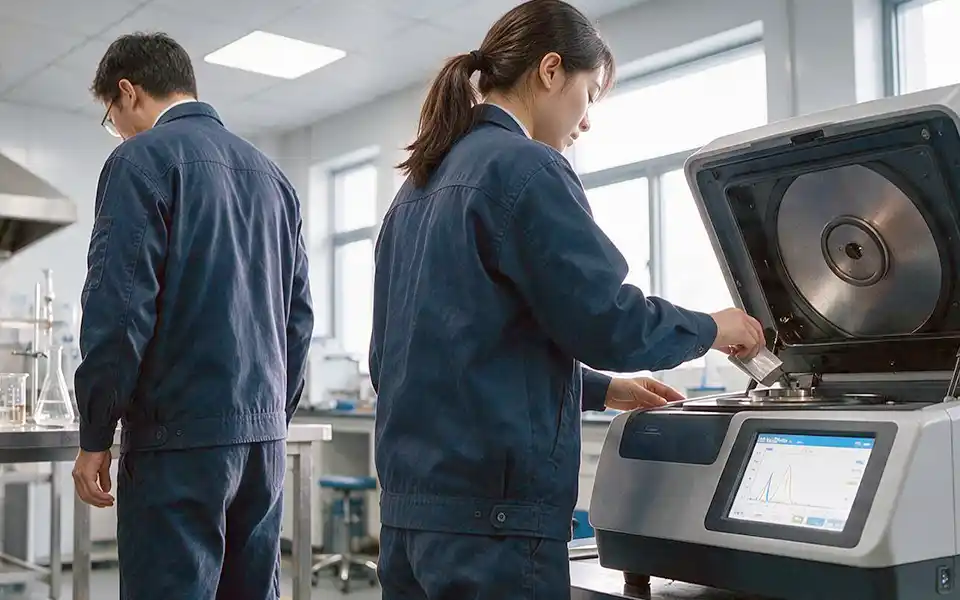
Every Qixin anode starts in the same place: our coating R&D center in Baoji, China. The lab formulates and validates mixed metal oxide (MMO) and platinum coatings on titanium, tunes each formulation to the electrolyte, current density, and service life your process demands, and proves the result in electrochemical tests before anything ships. This discipline has produced 10+ granted patents and coating technology trusted by 300+ clients in 25+ countries since 2006.
What We Develop
Four Coating Families, Tuned to Your Cell
Our R&D team works across four coating families on titanium substrates. Each family has its own formulation variables, and every project begins by matching those variables to your operating conditions: electrolyte chemistry, working current density, polarity, and target service life.
| Coating system | Anode reaction | What R&D tunes | Typical applications |
|---|---|---|---|
| Ru-Ir MMO | Chlorine evolution (CER) | Ru to Ir ratio, precious metal loading, coat-bake cycle count | Electrochlorination, chlor-alkali, sodium hypochlorite generators |
| Ir-Ta MMO | Oxygen evolution (OER) | Ir to Ta ratio, multilayer structure, gradient loading | Copper foil, electrowinning, wastewater electro-oxidation |
| Platinized Ti (Pt/Ti) | CER and OER | Platinum thickness 0.5 to 5 μm, deposition route | Electroplating, cathodic protection, precision finishing |
| PbO2 on Ti | Oxygen evolution (OER) | Interlayer design, deposition control | Electrocatalytic oxidation, hydrometallurgy |
The Development Process
How an Anode Is Developed at Qixin
Development follows a fixed sequence. Nothing moves to the next stage until the previous stage passes inspection.
1. Substrate preparation
Titanium substrate is degreased, etched, and activated. Etching strips the natural oxide and creates a fresh, roughened surface. This raises the true surface area, lowers the real current density, reduces overpotential, and gives the coating a mechanical key to grip. For platinized anodes, activation forms a titanium hydride layer that bonds platinum to the substrate; plating follows within one hour.
2. Coating formulation and application
Precursors are applied by brushing, spraying, or dipping, then dried and thermally oxidized at approximately 450°C. The cycle repeats until the target loading is reached. Each pass lays down a thin, uniform layer, and drying ramps are controlled deliberately: solvent that evaporates too fast, or uneven heating, degrades the coating. For platinum anodes we also qualify molten salt deposition at approximately 550°C, sulfamate electroplating, and PVD routes when the duty calls for them.
3. Coating structure engineering
Microstructure decides how an anode ages. We design multilayer coatings with a division of labor: the inner layer mainly governs electrode potential, the outer layer mainly governs service life. Layer ratios, iridium or tantalum stabilizers, and crack morphology are all formulation levers. For hard duty in strong acid at high current density, multilayer deposition strengthens the bond between precious metal coating and titanium substrate and cuts coating loss.
4. Verification and field loop
Lab data only counts after it survives testing and real cells. Every development project closes the loop: coating preparation, electrochemical testing, then verification under actual working conditions. Findings feed the next formulation round through our standing anode performance test regime.
Testing and Measurement
What Our Lab Measures, and What It Proves
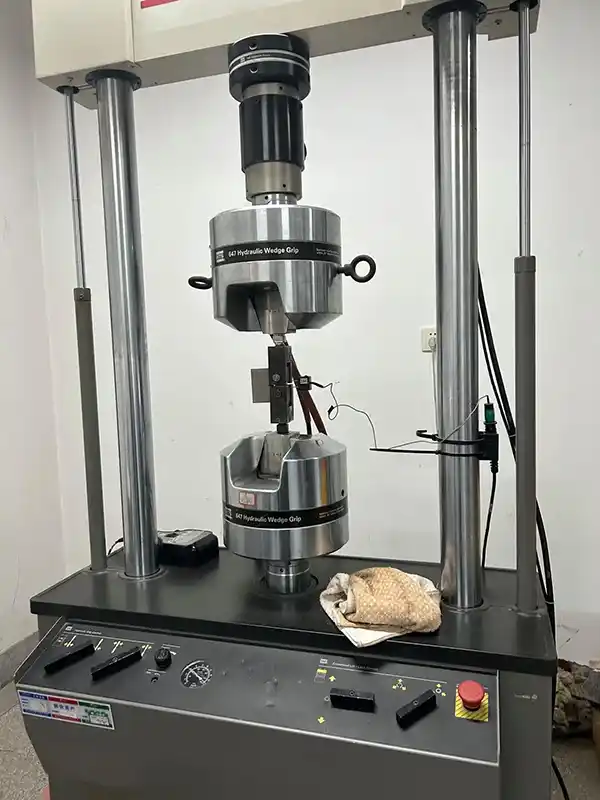
The quality testing lab and the R&D center share the same instruments, so development data and production data are directly comparable. A formulation is only released when it clears the full battery.
| Test | Method summary | What it proves |
|---|---|---|
| Polarization measurement | Anode potential recorded across current densities, typically 400 to 2400 A/m², with simultaneous cell voltage | Low overpotential and stable operation across the working range |
| Accelerated life testing | Constant current hold at elevated current density, 1500 A/m² and above, until end of life, defined as current collapse and a sharp cell voltage rise | Service life projection for the coating formulation |
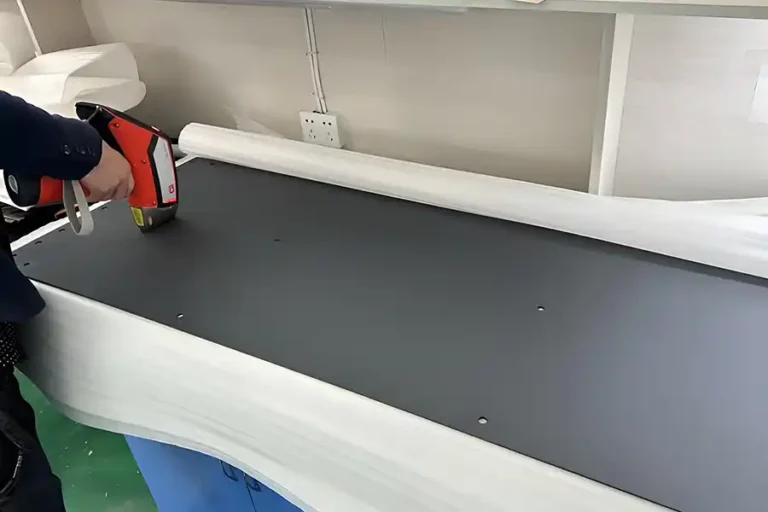
| XRF coating thickness | X-ray fluorescence, precision to 0.01 μm | Precious metal loading and thickness uniformity |
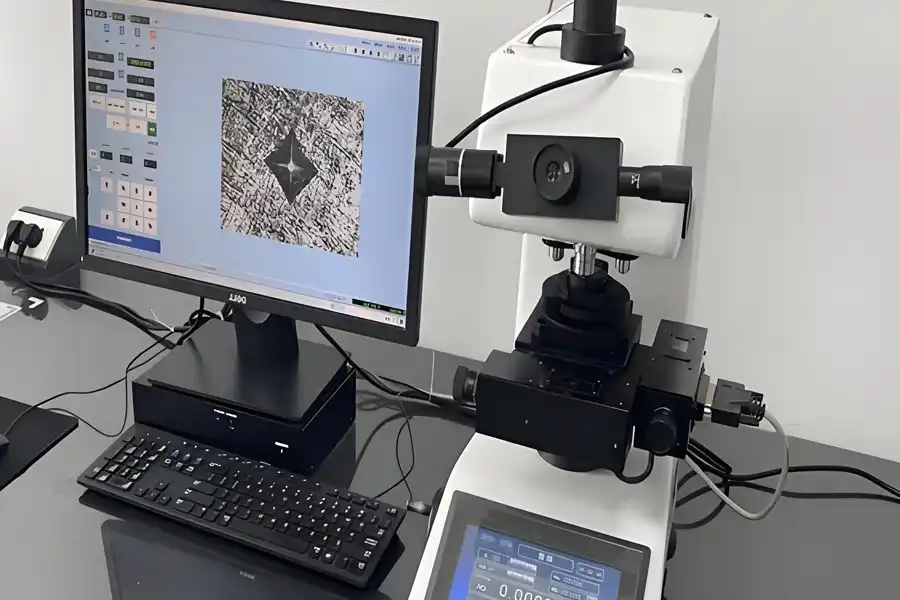
| SEM inspection | Coating morphology, porosity, and crack structure | Structural quality of the batch |
| Adhesion testing | Weight loss on strengthening test with reference to HG/T 2471 | Coating to substrate bonding |
| Salt spray exposure | 720 hours with no peeling | Environmental durability |
| Overcurrent shock | 10x rated current for 30 minutes with no burnout | Tolerance of current transients |
| Electrochemical characterization | Polarization curves, oxygen evolution potential stability | Electrocatalytic performance and drift |
Design Insights
Why Anodes Fail, and How We Design Against It
Two decades of coating work plus failure analysis of returned anodes point to one conclusion: anodes rarely fail at random. They fail through passivation, and passivation has four known mechanisms.
- Coating exfoliation. Weak bonding between coating and substrate lets the active layer flake off, as powder, blisters, or cracks, until the anode stops working.
- RuO₂ dissolution. The active oxide slowly dissolves into the electrolyte, eroding catalytic activity.
- Oxygen vacancy saturation. The non-stoichiometric oxides that carry catalytic activity gradually fill with oxygen, and overpotential climbs sharply.
- Coating cracks. New oxygen or electrolyte penetrates cracks to the titanium surface and grows an insulating TiO₂ film, driving resistance up and accelerating coating loss.
Each mechanism has a design answer: controlled coat-bake cycles for adhesion, iridium or tantalum stabilizer ratios against dissolution, and crack morphology tuned in formulation. Operating parameters matter just as much. For chlor-alkali duty we validate anodes in the 2 to 5 kA/m² window with electrolyte temperature held between 30 and 60°C, and we deliver documented operating limits with every custom anode so passivation never arrives as a surprise.
Collaborative R&D
One Lab Is Not Enough, So We Built a Network
Titanium anode development spans materials science, electrochemistry, and precision manufacturing. No single company covers that whole chain alone, so we run a collaborative program with materials research institutes, electrochemistry laboratories, and supply chain partners. Coating performance test data and pilot production parameters flow through a shared platform, which shortens every iteration.
The model pays off in calendar time. One precious metal oxide coating program recently completed a full formulation optimization in 6 months, where a traditional in-house cycle runs 18. Shared electrocatalytic activity data across partner labs lifted coating electrocatalytic efficiency by 10%.
Recent Results
Where the R&D Has Landed
- Multilayer deposition for hard duty. A redesigned multilayer structure strengthens the bond between precious metal coating and titanium substrate, with measurably lower coating loss in strong acid at high current density.
- New platinum precursor chemistry. A novel organometallic complex precursor replaces conventional platinum salts. Thermal decomposition is more uniform, coating quality is more consistent, and platinum usage drops by 5%, cutting cost at scale.
- Closed-loop validation. A standing test regime links coating preparation, electrochemical testing, and field verification, so every formulation change is proven against real duty before release.
Application-Driven Development
R&D Aimed at Your Process
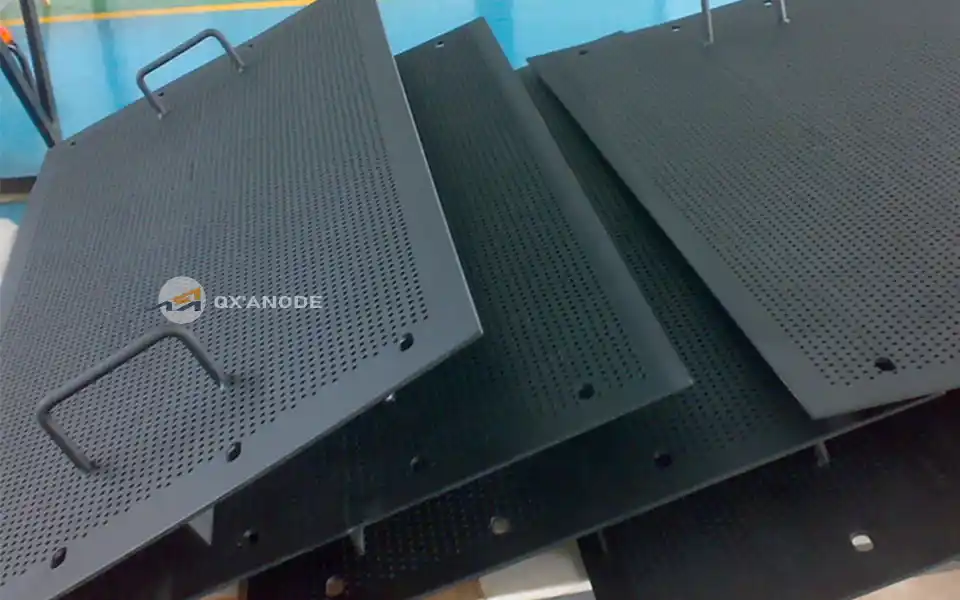
Electroplating
Zinc, nickel, copper, and chrome baths. Coatings tuned for uniform current distribution and deposit quality.
Water and Wastewater Treatment
Electro-oxidation of organic pollutants and disinfection duty.
Chlor-Alkali and Hypochlorite
Chlorine and sodium hypochlorite generation from brine and seawater.
Copper Foil and Electrowinning
Oxygen evolution coatings for acid sulfate baths at high current density.
Cathodic Protection
Buried pipelines, marine structures, and concrete reinforcement.
Ballast Water Treatment
Onboard treatment systems for vessels.
Roadmap
Where Our R&D Goes Next
- Hydrogen and energy storage. Anode coatings engineered for hydrogen electrolyzers and energy storage systems, where duty cycles and current densities stress coatings in new ways.
- Advanced oxidation. Coatings designed for hydroxyl radical generation in advanced oxidation process (AOP) water treatment.
- High-stability doped coatings. The next generation of doped oxide coatings for extreme electrolytes and long-life duty.
- Titanium Anode Engineering Technology Research Center. A planned integrated platform equipped with in-situ electrochemical workstations and scanning electron microscopy, combining basic research, pilot conversion, and testing under one roof.
Bring Us Your Toughest Anode Specification
Send your drawing plus three operating details: electrolyte composition, working current density, and target service life. Our R&D team reviews every request and returns a technical assessment and quote within 12 hours.