Key Takeaways
- Swirl electrolysis anodes use an iridium-tantalum (Ir-Ta) mixed oxide coating only. Ruthenium-iridium (Ru-Ir) coating is not used for this application.
- Tubular design matched to cyclone electrolysis cells: electrolyte spins along the tube surface at high velocity, so the anode works at current densities of 300 to 1,000 A/m² without passivation.
- Substrate: TA1 / Gr1 industrial pure titanium, wall thickness 3.0 to 5.0 mm, diameters and lengths made to your cell drawing.
What Is a Titanium Anode Tube for Swirl Electrolysis?
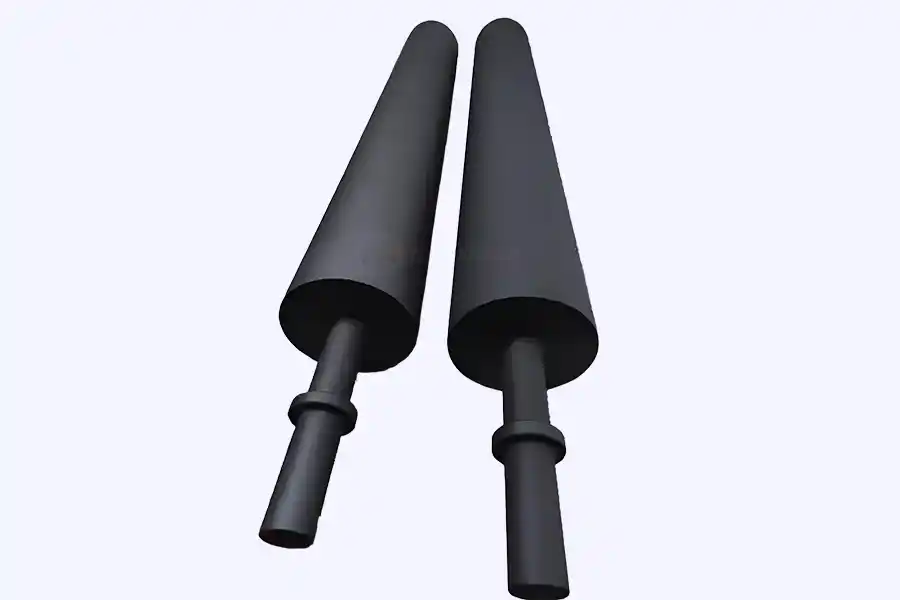
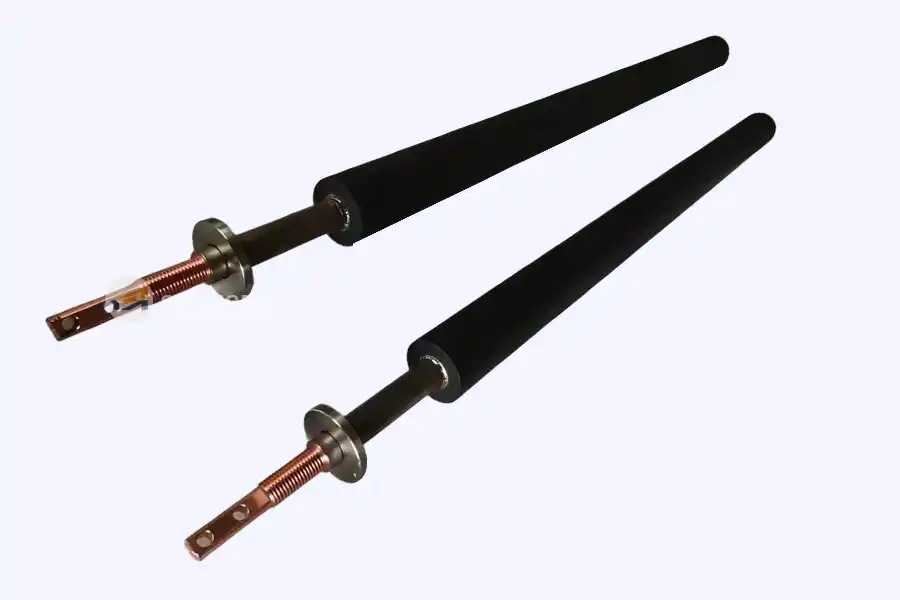
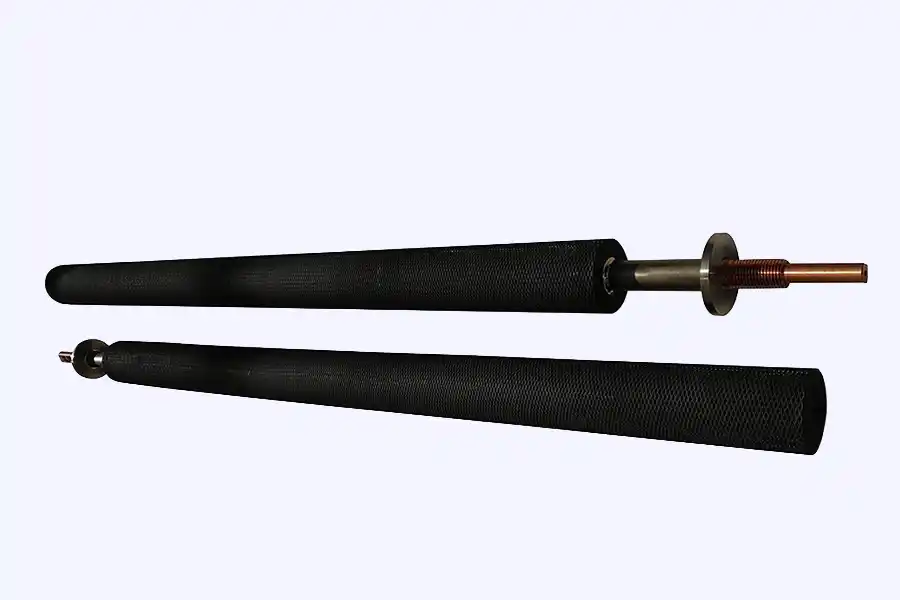
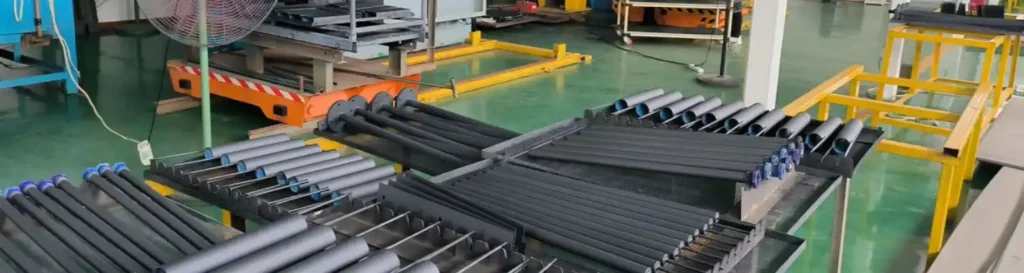
A titanium anode tube for swirl electrolysis is a mixed metal oxide (MMO) coated tubular anode installed at the center of a cyclone-type electrolysis cell. Electrolyte is pumped tangentially into the cell, spinning upward along the inner and outer surfaces of the tube at high velocity. This swirling flow strips gas bubbles and concentration polarization off the anode surface, which allows deposition at far higher current density than a conventional parallel-plate cell.
The tube itself is industrial pure titanium (TA1, equivalent to ASTM Gr1) coated with a thermally formed iridium-tantalum oxide layer. The coating is the working surface; the titanium is only the conductive and structural carrier. Because the coating determines both performance and lifetime, coating selection is the single most important decision when specifying an anode for a swirl cell.
Why Ir-Ta Coating, and Not Ru-Ir
Swirl electrolysis is used mainly for metal recovery from acidic sulfate systems: copper from spent etchant, nickel from plating rinse water, silver from refinery liquors. In these baths the anode reaction is oxygen evolution, and the electrolyte is strongly acidic with frequent chloride contamination.
The Ir-Ta mixed oxide coating is the established anode coating for oxygen evolution duty. Iridium oxide carries the electrocatalytic activity for O₂ evolution, and tantalum oxide stabilizes the film, slowing iridium dissolution under the high anodic potential and high current density that swirl cells impose. This is why only Ir-Ta coating is used for swirl electrolysis anodes.
Ruthenium-iridium coating belongs to a different duty: chlorine evolution in brine, seawater and hypochlorite systems. In acidic sulfate electrolytes, ruthenium oxide dissolves rapidly at oxygen evolution potentials, and the coating fails in a fraction of its rated life. Specifying Ru-Ir for a swirl metal recovery cell is a common sourcing mistake, and one we actively steer buyers away from.
| Coating | Anode reaction it is built for | Suitable for swirl electrolysis? |
|---|---|---|
| Ir-Ta mixed oxide | Oxygen evolution in acidic sulfate media | Yes. This is the correct and only recommended option. |
| Ru-Ir mixed oxide | Chlorine evolution in brine / hypochlorite duty | No. Ruthenium dissolves quickly at O₂ evolution potentials in sulfate baths. |
Product Specifications
| Item | Specification |
|---|---|
| Substrate | TA1 / Gr1 industrial pure titanium, meets GB/T 3620 and ASTM B265 |
| Form | Seamless or welded titanium tube, single section or segmented |
| Diameter | 76 to 108 mm, per cell drawing |
| Length | 500 to 2,000 mm, per cell drawing |
| Wall thickness | 3.0 to 5.0 mm |
| Coating system | Ir-Ta mixed metal oxide (thermal decomposition), Ir : Ta ratio tuned to electrolyte chemistry |
| Coating thickness | 8 to 15 μm typical; higher Ir loading available for harsh duty |
| Typical current density | 300 to 1,000 A/m² in swirl cell operation |
| Accelerated life test | ≥ 40 h at 20,000 A/m² in 1 mol/L H₂SO₄ at 40 °C (per our internal standard) |
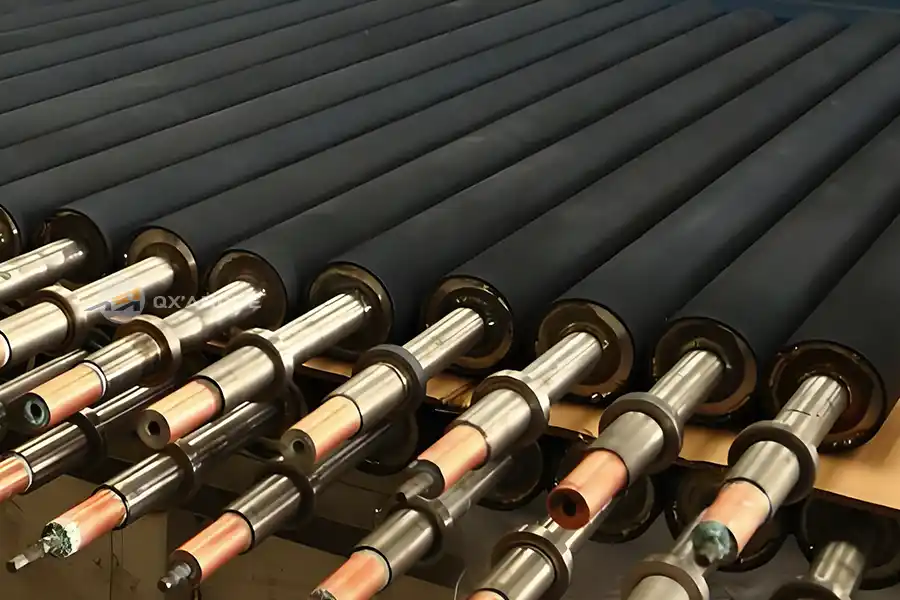
| Electrical connection | Titanium or copper core bar welded inside tube head, sealed and encapsulated |
| Working electrolyte | Acidic sulfate systems, Cu / Ni / Ag recovery, pH 0.5 to 3, temperature up to 60 °C |
| Expected service life | 1 to 3 years under rated current density |
How We Produce the Tubes
Each tube passes through a fixed production sequence. Nothing in this chain is skipped, because the most common anode failure modes (coating spalling, early passivation, core bar overheating) all trace back to shortcuts here.
- Substrate selection and forming. TA1 titanium tube is cut to length and checked for surface defects. Weld seams on welded tubes are dressed flush.
- Surface preparation. The tube is sandblasted to a uniform matte profile, then pickled in hot oxalic acid to remove the native oxide skin and hydrogen contamination. This step decides coating adhesion.
- Coating solution application. The Ir-Ta precursor solution is applied by brush or roll coating in multiple passes. Each pass is dried under infrared before the next.
- Thermal decomposition. After every 3 to 4 passes the tube is sintered in an oxidizing furnace at 450 to 500 °C. A full coating is built up over 15 to 20 passes until the target Ir loading is reached.
- Head assembly. The conductive core bar is welded inside the tube head and the joint is sealed with titanium cap and encapsulant, keeping the current path entirely metallic.
- Final inspection and packing. See the inspection section below. Tubes are packed with foam-lined end caps; coating surfaces never touch each other in the crate.
Quality Inspection Before Shipment
| Test | Method | Acceptance |
|---|---|---|
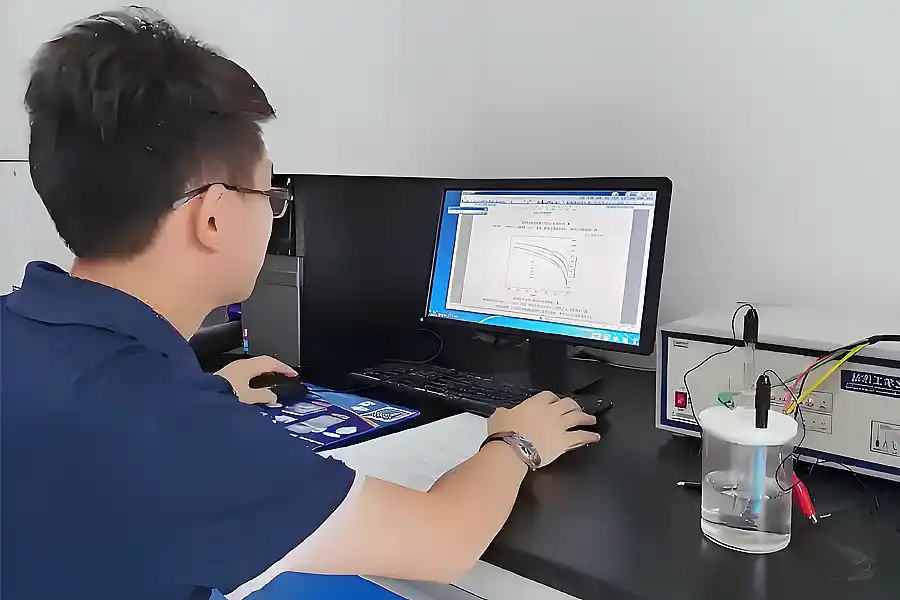
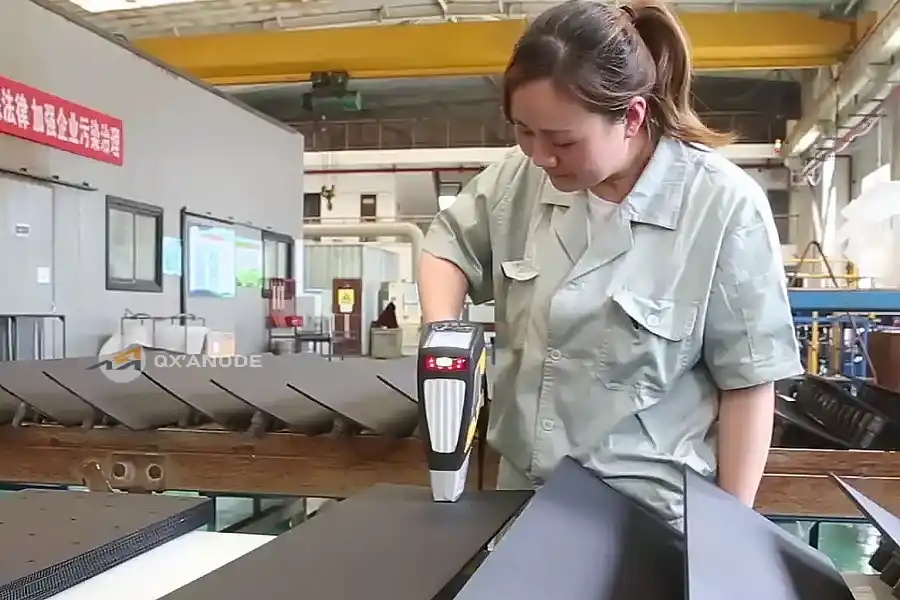
| Coating composition | XRF / EDS on sample coupons processed with the batch | Ir-Ta ratio within agreed tolerance |
| Coating thickness | XRF on coupon, correlated to Ir loading | Within specified 8 to 15 μm band |
| Accelerated life test | 20,000 A/m², 1 mol/L H₂SO₄, 40 °C, on coupon | Meets rated hours per agreed standard |
| Coating adhesion | Tape pull and bend check on coupon | No flaking or lifting |
| Dimensional check | Caliper and straightness gauge | Per drawing tolerance |
| Weld and seal integrity | Visual plus dye penetrant on head welds | No defects |
| Appearance | Visual under standard light | Uniform gray coating, no exposed titanium, no cracks |
Application of Titanium Anode Tube
- Copper recovery from spent etchant. Swirl cells recover copper from PCB etching waste and spent cupric chloride or sulfate liquors, using the tube anode at the cell core.
- Nickel and cobalt recovery from plating rinse water. High mass transfer makes swirl electrolysis practical at metal concentrations where flat cells stop working.
- Silver and precious metal refining. Cyclone cells with tube anodes recover silver from refinery and photographic waste streams.
- Zinc and other metal powders. Swirl deposition produces loose dendritic powder for later compaction.
- Hydrometallurgical pilot and lab cells. Small diameter tubes serve bench scale cyclone rigs for process development.
If your process involves chlorine or hypochlorite duty instead, that is a different anode family. See ourtitanium anodes for sodium hypochlorite generators, which use the Ru-Ir system where it belongs.
Installation and Usage Precautions
MMO anodes are not fragile, but a few habits decide whether they last their full 3 to 5 years. Follow these rules and the coating will degrade on schedule instead of early.
- Never run the anode dry. Energize the cell only when the tube is fully submerged and electrolyte is flowing. Dry heating above 60 °C in air attacks the coating.
- Protect against reverse polarity. A momentary polarity reversal during maintenance or rectifier fault can dissolve the coating. Use a rectifier with polarity interlock or a blocking diode.
- Keep fluoride out of the bath. Fluoride ions, and strong fluoboric or fluosilicic media, etch titanium and destroy the coating. If fluoride is present in trace amounts, tell us before ordering so we can assess compatibility.
- Stay within rated current density. Swirl cells tempt operators to push current. Occasional peaks are fine; sustained operation above the agreed rating shortens life proportionally.
- Maintain conductivity at the head. Check the core bar connection torque at scheduled shutdowns. A loose joint runs hot and can weld-sever the head.
- Handle coated surfaces with care. Do not drag tubes across cell edges or scrape the coating with metal tools. Use plastic or wood contact surfaces.
- Storage. Keep tubes indoors, dry, away from dust. No special atmosphere needed. Avoid stacking weight on coated tubes.
- Cleaning. If scale builds up, soak in dilute hydrochloric or citric acid at room temperature. Never sand, grind or wire brush the coating.
Frequently Asked Questions
Can you supply the Ru-Ir coated version for swirl electrolysis?
No, and we advise against it anywhere else too. Swirl electrolysis for metal recovery runs on oxygen evolution in acidic sulfate media, and that duty requires the Ir-Ta coating. Ru-Ir coating is designed for chlorine evolution and fails early in sulfate baths. We only build swirl electrolysis tubes with Ir-Ta coating.
What information do you need for a quotation?
Your cell drawing or tube dimensions (diameter, length, wall thickness), the electrolyte composition and pH, target current density, and expected daily metal recovery. With these we confirm the Ir-Ta ratio, coating thickness and quoted lifetime.
How is the tube connected electrically?
A titanium or copper core bar is welded inside the tube head and sealed. You connect your busbar to the core bar extension outside the cell lid. The current path stays metallic from busbar to coating.
What lifetime should I expect?
1 to 3 years in typical acidic sulfate metal recovery duty at rated current density. Actual lifetime depends on current density, temperature and bath impurities, and we state a rated figure in the quotation backed by accelerated life test data.
Do you test every batch?
Yes. Coating composition, thickness and accelerated life are tested on coupons processed together with each production batch, and the report ships with the goods.
Questions about a swirl cell project?
Send us your cell drawing and electrolyte data, and our engineers will confirm the coating spec within one working day.