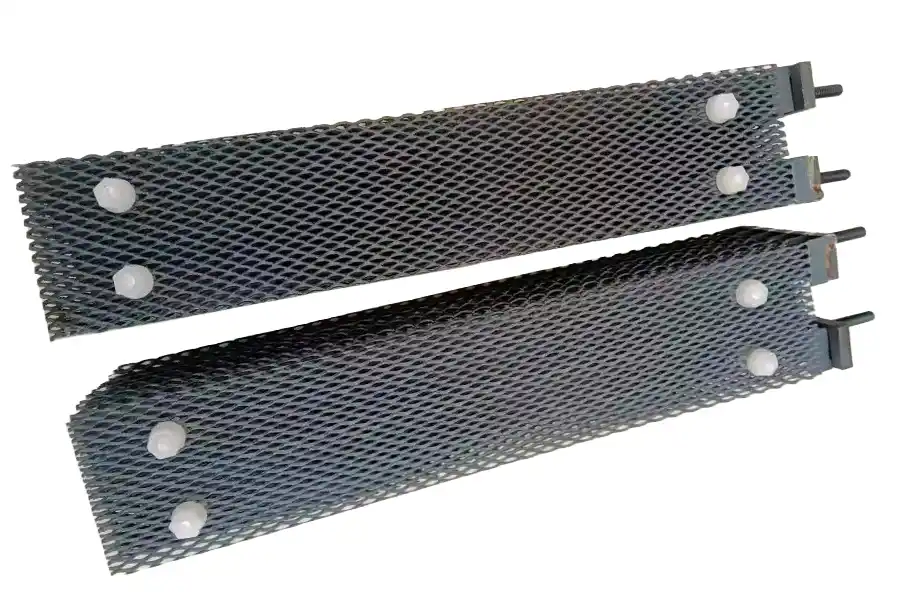
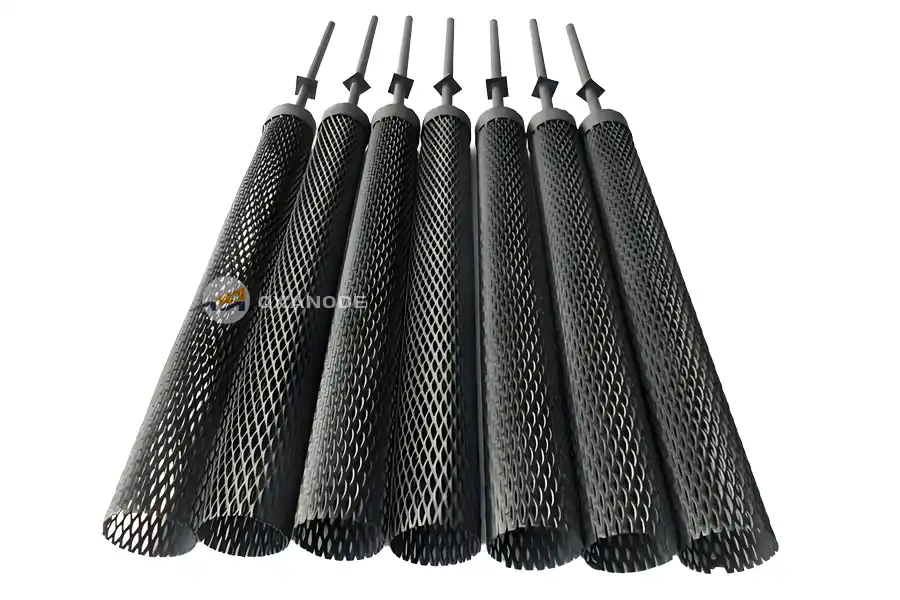
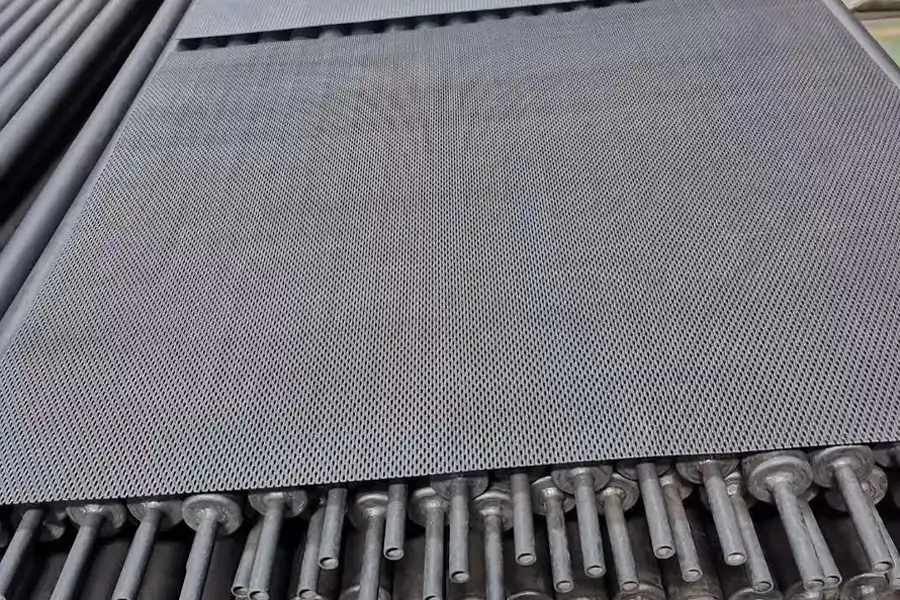
MMO coated titanium anode mesh for electrolysis
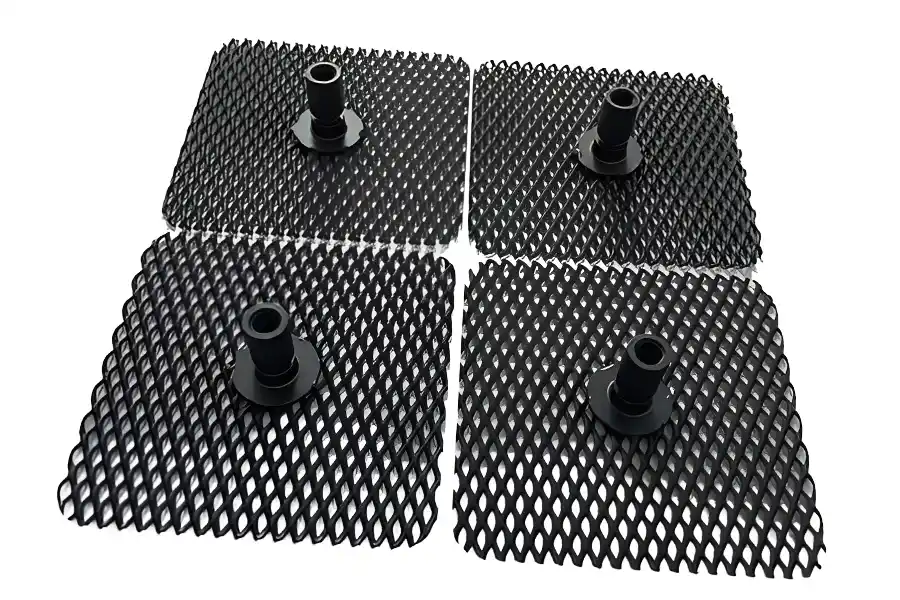
An MMO titanium mesh anode is an insoluble electrode made from an expanded titanium mesh, normally Grade 1 (ASTM B265), coated with a mixed metal oxide (MMO) catalytic layer. The mesh form multiplies the active surface area per unit of projected area, which lowers the real current density on the coating and lets the anode run at higher cell currents in a compact footprint. Coatings are iridium tantalum oxide (IrO₂-Ta₂O₅) for oxygen evolution and ruthenium iridium oxide (RuO₂-IrO₂) for chlorine evolution, applied by thermal decomposition.
Key specs at a glance
- Substrate: Grade 1 titanium expanded mesh per ASTM B265
- Coating: IrO₂-Ta₂O₅ (oxygen) or RuO₂-IrO₂ (chlorine), 5 to 20 microns
- Continuous current density: 500 to 1,200 A/m² of projected area in electrolysis duty
- Standard mesh openings: 6 × 3 mm and 12.7 × 6.5 mm (SWD × LWD)
- Panel size: up to 1,200 × 600 mm, cut to your cell dimensions
- Service life: 2 to 5 years at rated electrolysis conditions
What Is an MMO Titanium Mesh Anode?
An MMO titanium mesh anode is a dimensionally stable anode (DSA) built on an expanded metal mesh. A solid titanium sheet is slit and stretched to form a diamond pattern of strands and openings, which increases the surface area by roughly 1.5 to 2 times the projected area while keeping the structure open for electrolyte flow and gas escape. The mesh is then coated with a mixed metal oxide (MMO) catalytic layer on both faces.
The open structure matters in electrolysis. Bubbles of oxygen or chlorine escape through the openings instead of blanketing the electrode, so the active surface stays wetted and the cell voltage stays stable. In filtration style applications such as electrocoagulation, the mesh also lets water pass through the anode plane, which plate or solid anodes cannot do.
Coating Systems and Selection
Coating selection follows one rule: match the coating to the reaction the anode must drive.
- IrO₂-Ta₂O₅ (iridium tantalum oxide), typical molar ratio about 70:30: the standard coating for oxygen evolution in acidic sulfate media. It drives the oxygen evolution reaction with a low overpotential and resists dissolution at high anodic potentials. Use it for copper foil formation, copper electrowinning, acid copper plating, electrolytic water treatment, and electrochemical oxidation of organics.
- RuO₂-IrO₂ (ruthenium iridium oxide): the standard coating for chlorine evolution in chloride-rich electrolytes. Use it for sodium hypochlorite generation, seawater electrochlorination, swimming pool disinfection, and electrocoagulation in saline water. Ruthenium based coatings are not suitable for sustained oxygen evolution in strong acid.
The mesh is degreased, sandblasted, and acid etched before coating. The MMO layer is built up in multiple thermal decomposition cycles to a thickness of 5 to 20 microns with a precious metal loading of 5 to 50 g/m², set against your current density and target life.
Technical Specifications
| Parameter | Value |
|---|---|
| Product Name | MMO Titanium Mesh Anode (Mixed Metal Oxide Coated) |
| Substrate Material | Titanium Grade 1 expanded mesh, ASTM B265 |
| Coating Material | IrO₂-Ta₂O₅ (oxygen evolution) or RuO₂-IrO₂ (chlorine evolution) |
| Coating Thickness | 5 to 20 microns |
| Precious Metal Loading | 5 to 50 g/m², set by current density and target life |
| Continuous Current Density | 500 to 1,200 A/m² of projected area (electrolysis) |
| Operating Temperature | Max 60 °C continuous |
| Mesh Opening (SWD × LWD) | 6 × 3 mm / 12.7 × 6.5 mm / custom |
| Mesh Thickness (from sheet) | 1.0 to 3.0 mm |
| Panel Size | Up to 1,200 × 600 mm, cut to drawing |
| Connection Method | Titanium-copper-titanium welded lug / threaded bolt |
| Certifications | ISO 9001:2015, CE |
| Lead Time | 10 to 15 business days (standard); 20 to 30 days (custom) |
| Packaging | Export grade wooden crate with foam protection |
| Service Life | 2 to 5 years at rated electrolysis conditions |
Applications
- Electrolytic copper foil: mesh anodes distribute current uniformly across the drum surface in copper foil cells, and the open structure releases oxygen without trapping gas. IrO₂-Ta₂O₅ coating is standard for the sulfate bath.
- Electrowinning and electroplating: copper, nickel, and zinc recovery plus rack and barrel plating lines. The mesh keeps the deposit uniform at the edges where solid anodes tend to throw uneven current.
- Water treatment: electrochemical oxidation of refractory organics, electrocoagulation, and disinfection. RuO₂-IrO₂ coating generates active chlorine in saline and brackish water; IrO₂-Ta₂O₅ handles direct oxidation of organics in sulfate media.
- Cathodic protection: mesh anodes embedded in concrete for rebar protection and laid in backfill for tank bottom protection, running at low current density for decades.
How to Specify a Mesh Anode
Send us these five items and we will confirm the design within 48 hours:
- Application and electrolyte. Copper foil, plating, water treatment, or cathodic protection, plus the electrolyte chemistry. This decides the coating system.
- Current density and total current. The design current in A/m² of projected area and the total current per panel.
- Panel dimensions. Width, height, and mesh opening. If you have a cell drawing, send it.
- Connection type. Welded lug, threaded bolt, or a bus bar arrangement to your specification.
- Target service life. We set the precious metal loading against this number, since loading is the main cost driver.
Frequently Asked Questions
Why choose a mesh anode over a plate anode?
A mesh anode carries more active surface per unit of projected area, roughly 1.5 to 2 times for standard expanded metal, so the real current density on the coating is lower at the same cell current. The open structure also lets gas bubbles escape and, in flow-through cells, lets electrolyte pass through the anode plane. Plates are simpler to machine and handle, but meshes win where surface area and gas release matter.
How long does an MMO titanium mesh anode last?
In electrolysis duty at 500 to 1,200 A/m² of projected area, expect 2 to 5 years at rated conditions. Actual life depends on current density, electrolyte composition, temperature, and coating loading. In low current cathodic protection service, the anode can last a decade or more. The mesh form lowers the real surface current density, which generally extends life compared with a solid plate at the same cell current.
What mesh openings are available?
Standard diamond openings are 6 × 3 mm and 12.7 × 6.5 mm (SWD × LWD), from sheet thicknesses of 1.0 to 3.0 mm. We cut panels up to 1,200 × 600 mm and can produce custom openings for specific current distribution or flow requirements.
Can mesh anodes be used for chlorine and oxygen evolution in the same system?
Not with one coating. RuO₂-IrO₂ is the right coating for chlorine evolution in chloride-rich electrolytes, and IrO₂-Ta₂O₅ is the right coating for oxygen evolution in acidic sulfate media. A ruthenium based coating degrades quickly under sustained oxygen evolution in strong acid. If your bath carries both chloride and significant oxygen evolution, tell us the chemistry and we will recommend the coating that fits the duty.
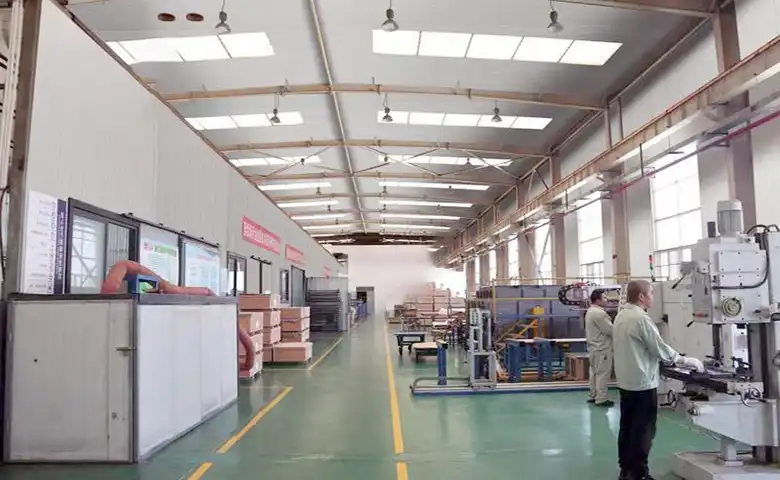
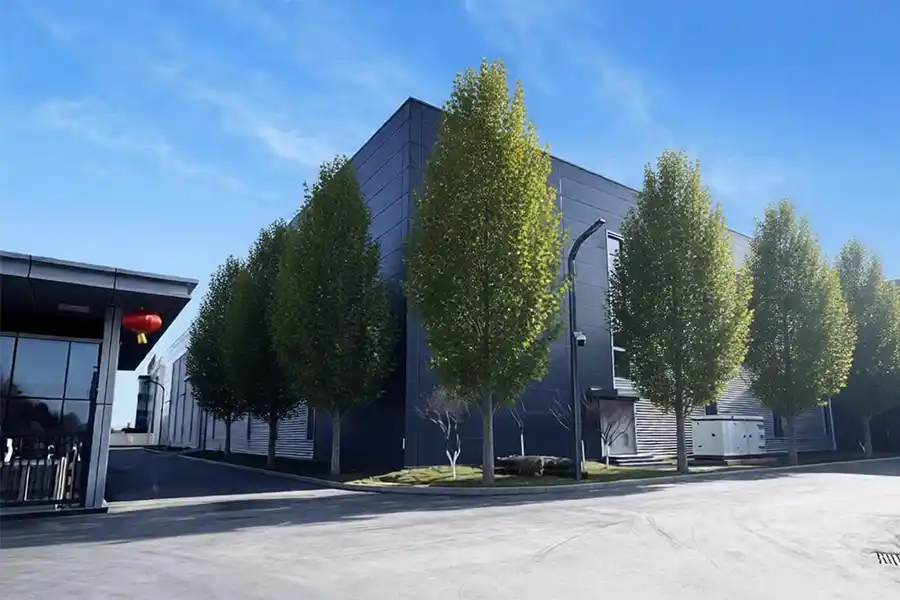
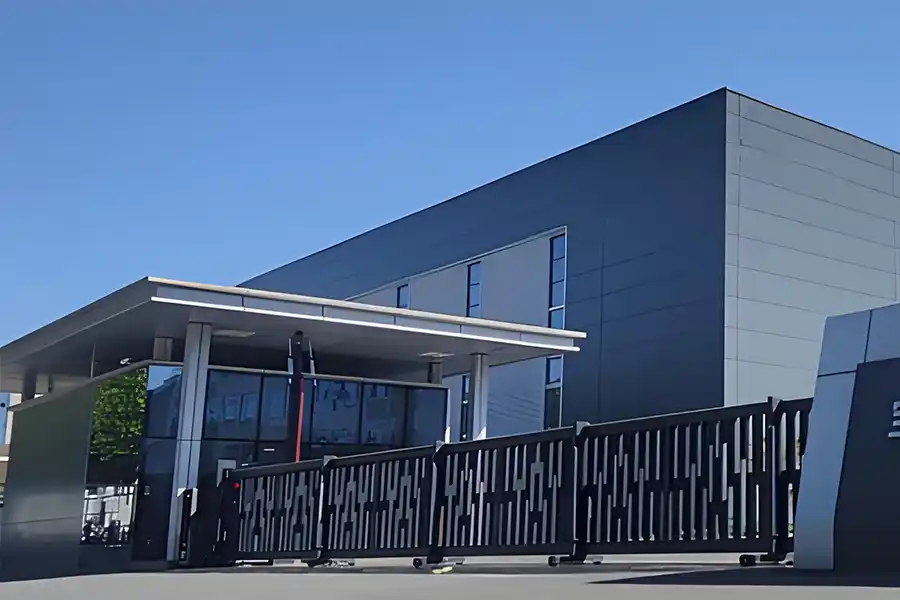
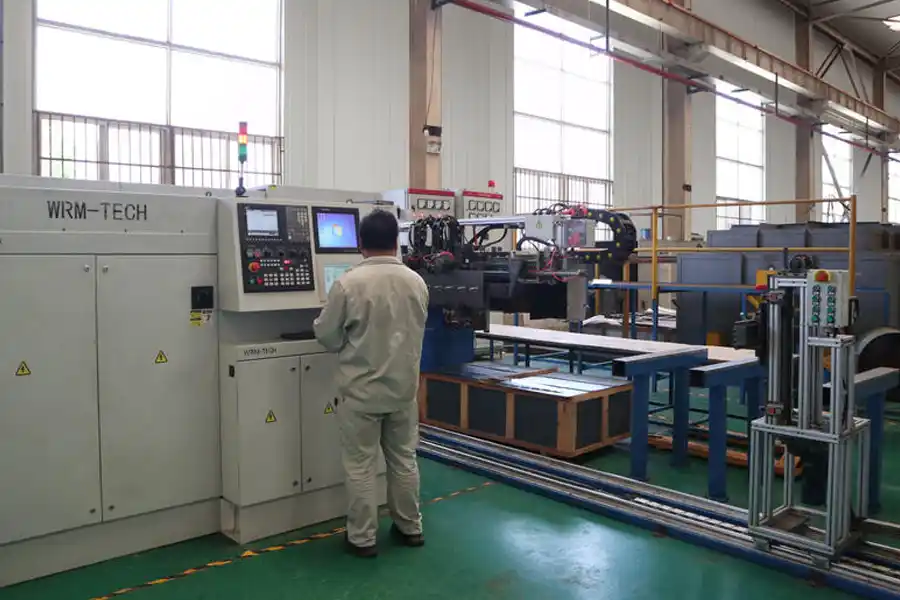
Qixin Titanium Industry factory real scene
Your ordered products will dispatch from Qixin Factory, Baoji, China.
Need a mesh anode cut to your cell or protection layout?
Send us your application, electrolyte, current density, and panel dimensions, with a drawing if you have one. We confirm the coating spec and quotation within 48 hours.