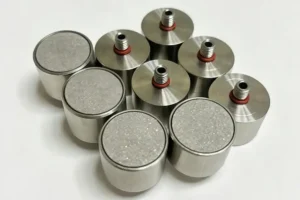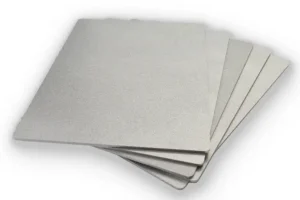
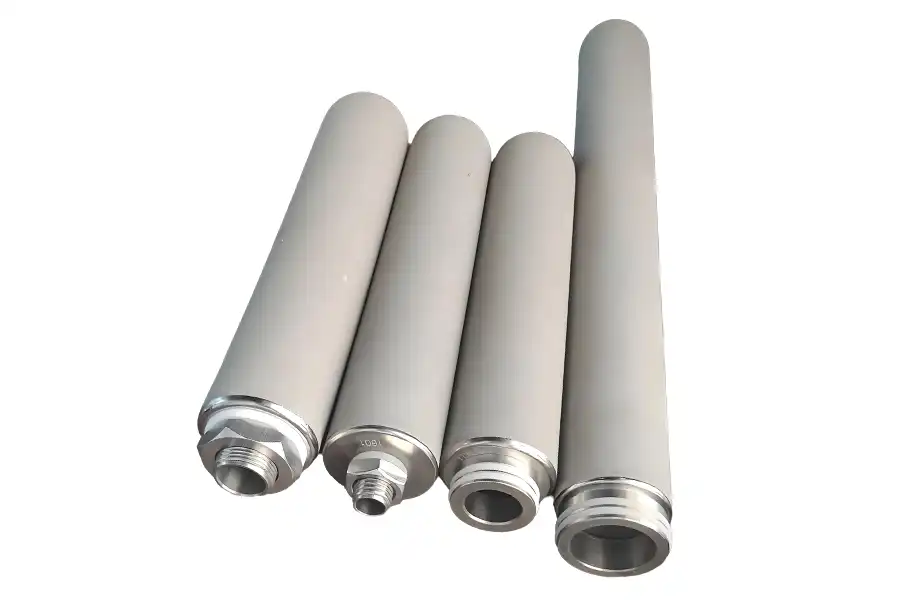
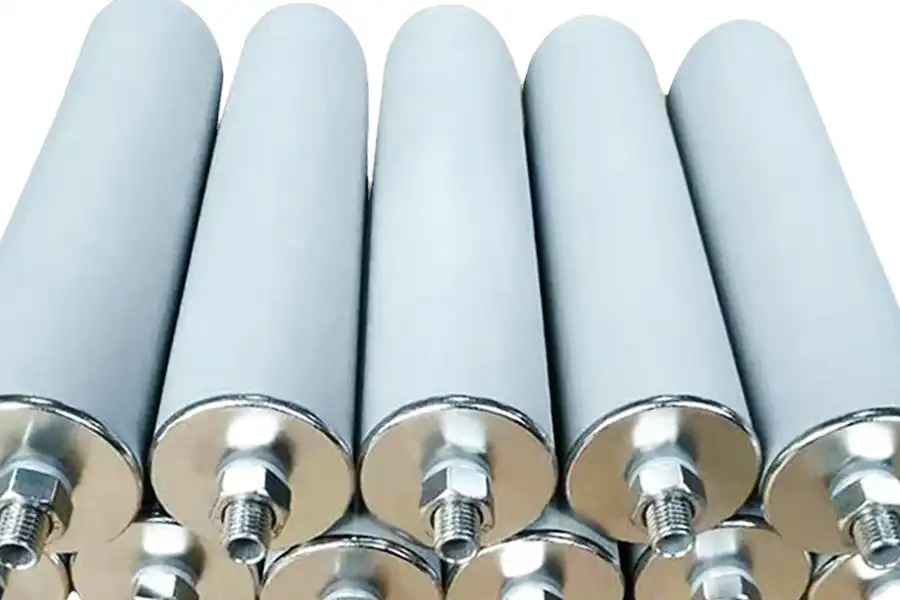
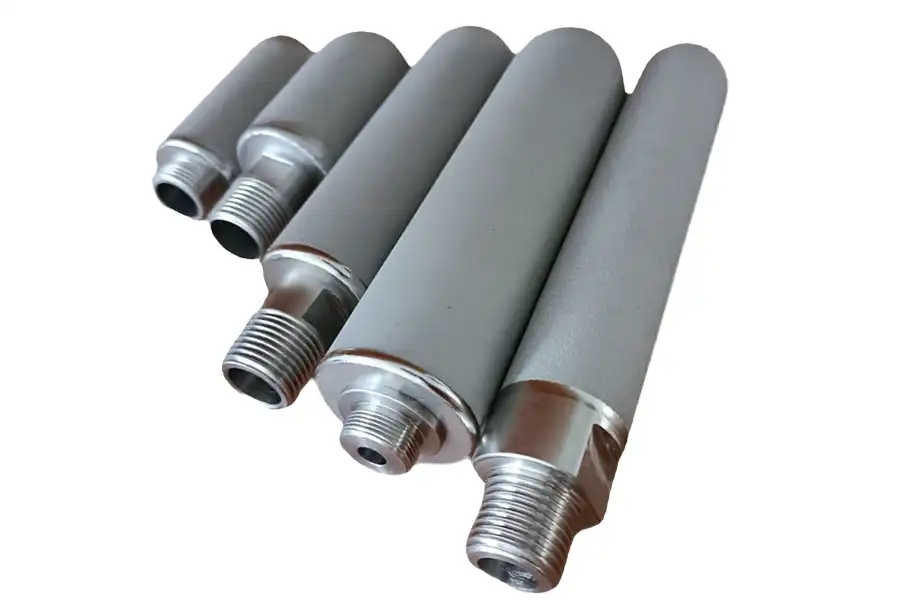
A sintered titanium filter element is a rigid porous metal filter built from Grade 1 titanium powder, pressed and vacuum sintered into tubes, candles, and cartridges. The sintered body is a three dimensional network of fixed pores with no binders, no glue, and no fibers to shed into the product stream. Standard filtration ratings run from 5 to 80 μm, custom grades from 0.22 to 100 μm, and the element regenerates by backwashing instead of being discarded after a single campaign.
Key specs at a glance
- Material: Grade 1 commercially pure titanium, Ti content ≥99.4%
- Filtration rating: 5 to 80 μm standard, 0.22 to 100 μm custom
- Continuous service to 300 °C, short excursions to 600 °C
- Regenerable: over 90% performance recovery after backwash and ultrasonic cleaning
- Manufacturer: ISO 9001 certified, 14+ years in porous metal filters, exports to 25+ countries
What a Sintered Titanium Filter Element Is
A sintered titanium filter element is made by powder metallurgy. High purity titanium powder is cold isostatically pressed into the required form and sintered at high temperature in a vacuum furnace, where neighboring particles bond metallurgically into a rigid, porous body. Pore size is set by the powder grade and the pressing schedule, so the filtration rating is fixed into the metal itself. There is no membrane to puncture, no weave to unravel, and no polymer to swell, soften, or hydrolyze in service.
Technical Specifications
| Parameter | Value |
| Material | Grade 1 commercially pure titanium, Ti content ≥99.4% |
| Filtration rating | 5 to 80 μm standard |
| Porosity | 25 to 45%, up to 50% on request |
| Continuous operating temperature | up to 300 °C, short term to 600 °C |
| Max working pressure | 0.6 MPa |
| Compressive strength | 2.0 to 3.0 MPa |
| Permeability | 3 to 800 m³/(m²·h·kPa) |
| Forms | Tube, candle, cartridge, and welded assemblies |
| Regeneration | Backwash, ultrasonic cleaning; over 90% performance recovery |
| Sample lead time | 10 to 15 working days |
| Bulk order lead time | 15 to 25 working days |
Where Titanium Beats Polymer and Fiber Media
Four failure modes of conventional filter media do not exist in sintered titanium:
- Chemical attack. Titanium resists hydrochloric acid, sulfuric acid, acetic, oxalic, and phosphoric acids, seawater and chloride brines, and common organic solvents. Polymer membranes swell, hydrolyze, or dissolve in the same service.
- Heat. Continuous service to 300 °C and short excursions to 600 °C. Most polymer membranes are limited below 100 °C.
- Structural failure. A compressive strength of 2.0 to 3.0 MPa holds the element in shape under full differential pressure, where felt and paper media blind, tear, or collapse.
- Media migration. Particles are locked in place by metallurgical bonds, so nothing sheds downstream into the filtrate. That is what qualifies the material for sterile and high purity duties in pharmaceutical and food plants.
Applications
Typical duties for sintered titanium filter elements:
- Pharmaceutical: decarbonization of medicinal liquids and clarification of intermediates
- Water treatment: filtration after ozone sterilization and in ozone sparging contactors
- Food and beverage: clarifying filtration of syrups, oils, and process water
- Electronics: pre-filtration ahead of reverse osmosis in ultrapure water lines
- Petrochemical: terminal filtration of petroleum products and filtration of alkaline-carbon solutions
- Fine chemicals: filtration and recovery of precious metal catalysts
Frequently Asked Questions
What is a sintered titanium filter element?
A rigid porous metal filter made by pressing Grade 1 titanium powder into shape and sintering it in a vacuum furnace. The particles bond metallurgically into a fixed pore structure with no binders or fibers. Filtration ratings run from 5 to 80 μm as standard, with custom grades from 0.22 to 100 μm.
Can sintered titanium filter elements be cleaned and reused?
Yes. Backwashing and ultrasonic cleaning recover over 90% of original performance, and heavily fouled elements can be returned for re-sintering. Service life runs 3 to 10 times that of disposable filter media, which is what makes the element economical despite a higher purchase price.
What chemicals can a titanium filter element handle?
Most inorganic and organic acids, including hydrochloric, sulfuric, acetic, oxalic, and phosphoric acids, plus seawater, chloride brines, and common organic solvents. Titanium is non-toxic, non-magnetic, and biocompatible, so it meets food and pharmaceutical grade requirements.
What temperatures can a sintered titanium element take?
Continuous operation to 300 °C, with short excursions to 600 °C and no loss of pore structure or strength.
Need a custom filter element for your plant?
Send the medium, operating temperature and pressure, flow rate, and required rating. We will recommend a configuration and quote within 12 hours.