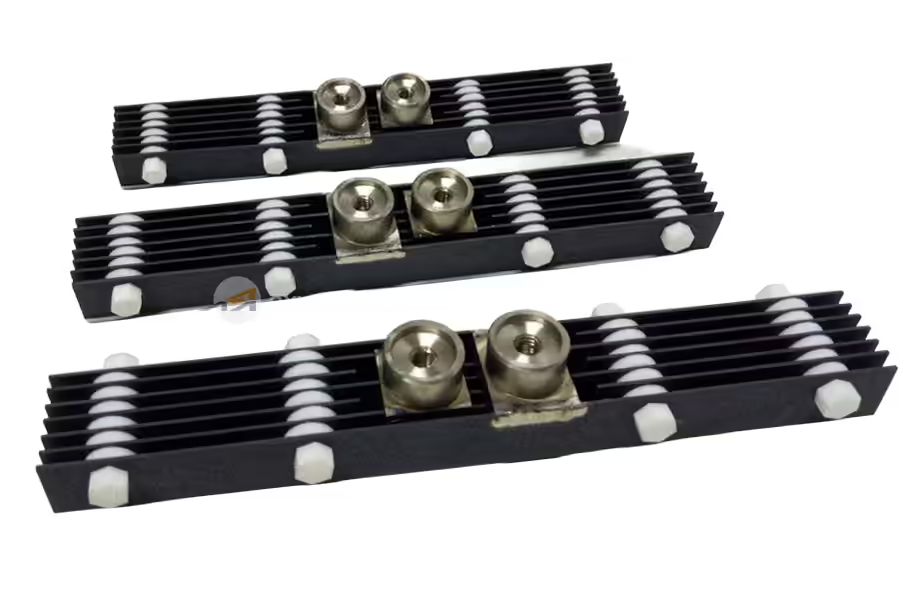
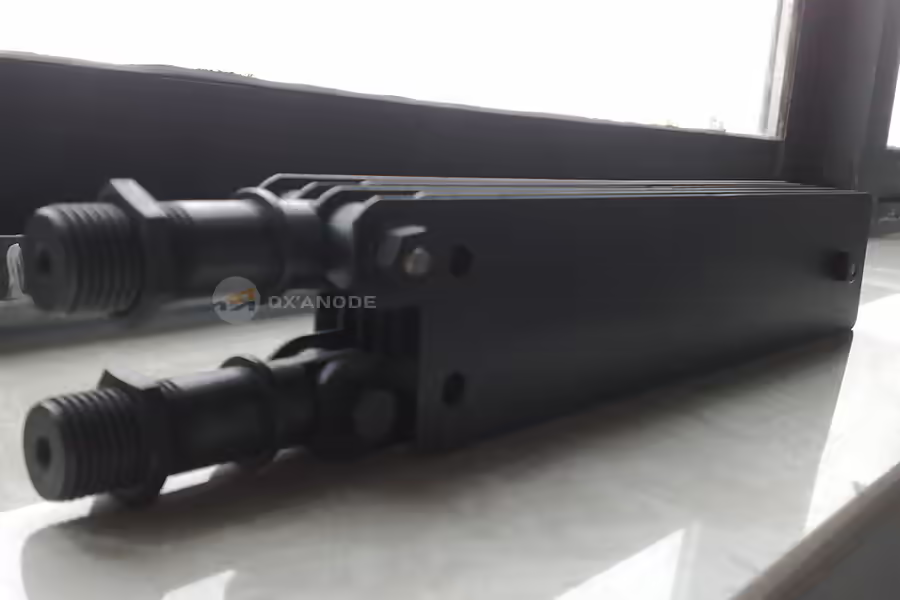
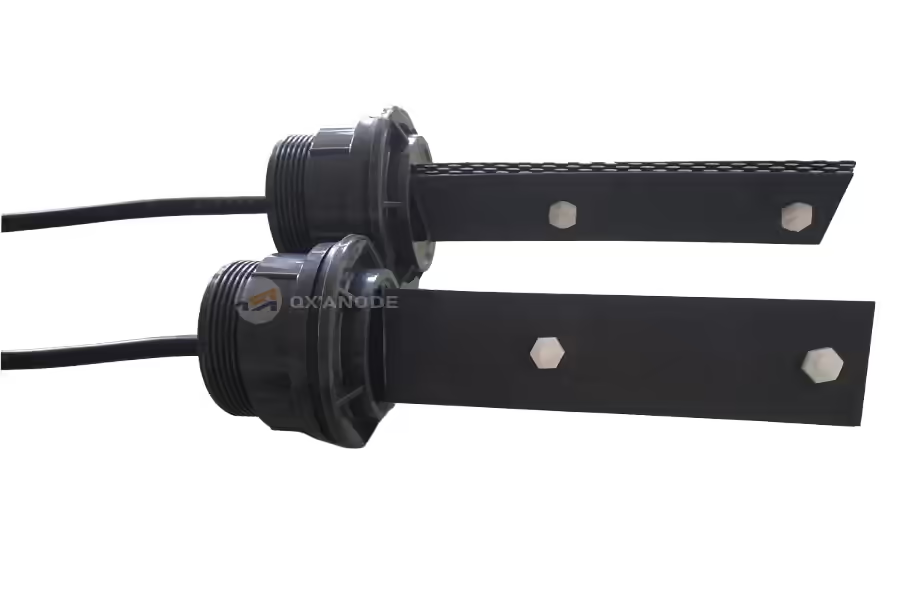
MMO Coated Electrodes for Boat Seawater Systems
Every boat that draws raw seawater for engine cooling, air conditioning, or refrigeration faces the same enemy. Barnacle larvae, mussel spat, and bacterial biofilm enter through the seacock and begin colonizing the inside of strainers, pipes, and heat exchangers. Within weeks, flow rates drop. Pump heads rise. Compressors trip on high pressure. The traditional fix is acid descaling, a messy and corrosive procedure that takes a boat out of service.
Why Titanium Anodes Matter in Small Boat Electrochlorination
Electrochlorination offers a cleaner alternative. A small electrolytic cell installed in the raw water line generates sodium hypochlorite on demand by passing a low DC current through titanium electrodes immersed in flowing seawater. The chlorine dose is tiny, roughly comparable to municipal drinking water, yet enough to prevent larvae from settling and biofilm from establishing. The entire system lives or dies by one component, the anode.
A marine electrochlorination anode must survive continuous immersion in aerated seawater while carrying current at a voltage low enough to run from a 12V or 24V battery bank. Graphite and lead anodes corrode and shed particles. Platinum clad electrodes work but cost far more than a small vessel owner expects. The industry standard solution is a dimensionally stable anode, or DSA, built from pure titanium coated with a mixed metal oxide catalyst of ruthenium and iridium oxides.
How the MMO Titanium Anode Works
The anode performs two jobs at once. The titanium substrate provides mechanical strength and corrosion resistance. Titanium naturally forms a thin, self healing titanium dioxide passivation layer when polarized anodically, which prevents the base metal from dissolving in seawater. On top of that substrate, a thermal decomposition process deposits a micrometers thick layer of ruthenium dioxide, iridium dioxide, and titanium dioxide.
This mixed metal oxide coating is the actual catalyst. When DC current flows, chloride ions in seawater lose electrons at the anode surface and form chlorine gas. The chlorine immediately reacts with water to form hypochlorous acid and hypochlorite ion, collectively called free available chlorine. These species diffuse into the bulk seawater and oxidize the proteins and cell membranes of any organism passing through.
Ruthenium oxide provides the low overpotential for chlorine evolution that keeps cell voltage down, typically 3 to 5 volts at practical current densities. Iridium oxide adds chemical stability and slows coating dissolution under the oxygen evolution side reaction that always competes with chlorine generation in seawater. Titanium dioxide acts as a stabilizer and improves coating adhesion. The ratio of these three oxides is tuned for seawater service, not for chlor alkali cells or sulfate based plating baths.
Technical Specifications
| Parameter | Standard Value | Notes |
|---|---|---|
| Substrate | ASTM B265 Grade 1 or Grade 2 pure titanium | TA1 or TA2 per Chinese standard |
| Coating | RuO₂ + IrO₂ + TiO₂ mixed metal oxide | Thermal decomposition applied |
| Coating thickness | 8 to 12 micrometers | Measured by XRF or cross section |
| Coating loading | 8 to 15 grams per square meter of noble metal | Higher loading extends life |
| Recommended current density | 500 to 1500 A/m² | Up to 2000 A/m² for intermittent duty |
| Cell voltage | 3.0 to 5.0 V DC | Depends on gap, salinity, temperature |
| Operating temperature | 2 to 60 degrees Celsius | Seawater ambient range |
| pH tolerance | 1 to 12 | Natural seawater pH 7.5 to 8.4 |
| Available geometries | Flat plate, expanded mesh, tube, rod, custom profile | Mesh preferred for flow through cells |
| Design life | 3 to 5 years | At 1000 A/m², 8 hours per day average |
| Connection | Titanium stud, copper bus bar, or cable lug | Insulated to prevent galvanic coupling |
Selecting the Right Anode for Your Vessel
Small vessel systems rarely exceed 50 gallons per minute of raw water flow. At that scale, the electrolytic cell is compact, and the anode area is measured in square decimeters rather than square meters. The first design choice is geometry.
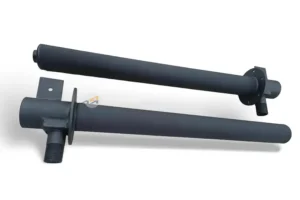
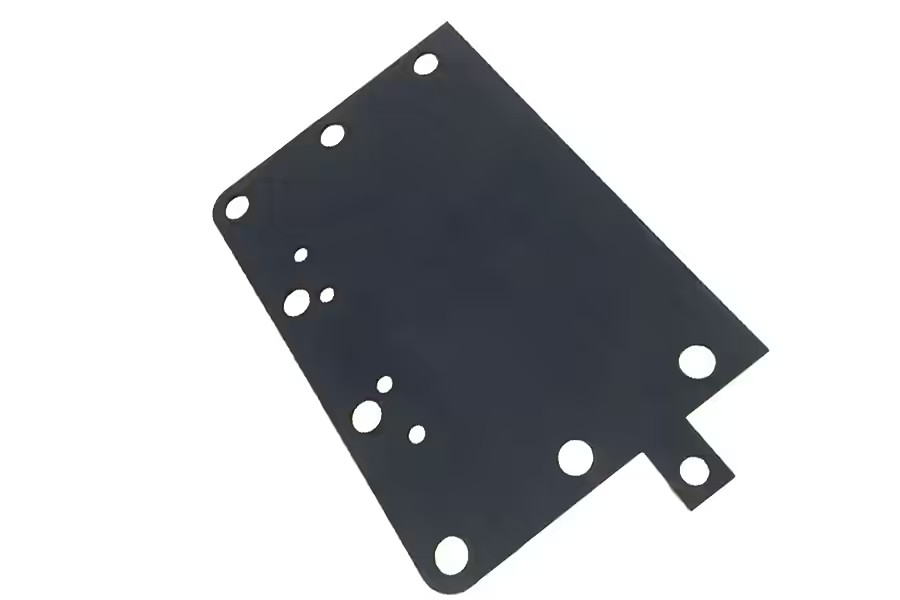
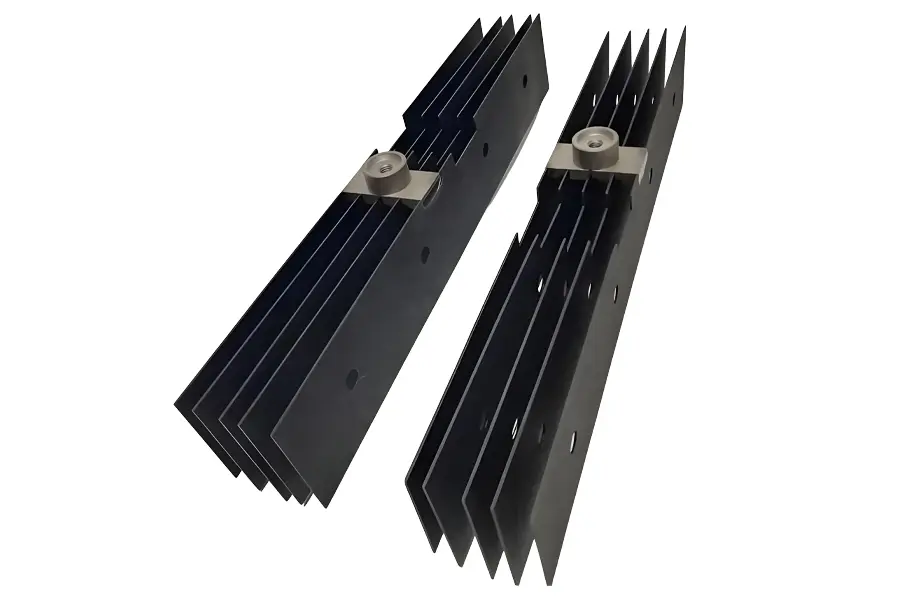
Expanded mesh anodes are the most common choice for flow through cells because the open area lets seawater pass with minimal pressure drop while the two sided surface provides active area. Flat plate anodes suit parallel plate cell designs where the cathode is a stainless steel or titanium plate facing the anode. Tubular anodes work well in concentric cell designs where the cathode is the cell body itself.
The second choice is coating loading. For a weekend boat that runs the generator and air conditioning only a few hours per week, a standard 8 gram per square meter noble metal loading is sufficient and economical. For a liveaboard vessel or a commercial boat that runs cooling systems 12 or more hours per day, specify 12 to 15 grams per square meter. The extra coating directly translates to longer service life because the wear mechanism is gradual loss of catalyst through dissolution and spalling.
The third choice is current density. Running an anode below 500 A/m² wastes active area because the cell voltage drops only marginally and the capital cost per amp increases. Running above 1500 A/m² in continuous service accelerates coating loss and can cause local overheating at the electrode surface. Most small marine systems operate between 800 and 1200 A/m², a sweet spot that balances chlorine yield, power draw, and anode life.
A useful rule of thumb for sizing. To generate 1 gram per hour of chlorine as NaOCl from seawater at roughly 35 parts per thousand salinity, you need approximately 0.95 amp hours of current at the anode, assuming a typical current efficiency of 80 percent. A 5 amp cell therefore produces about 5 grams of chlorine per hour, enough to maintain a residual of 0.2 to 0.5 milligrams per liter in a 10 gallon per minute flow. That residual is well below the level that corrodes bronze or rubber components, yet high enough to prevent settlement.
Installation Best Practices
The anode is the most expensive wear item in the cell, so a few installation details directly affect how long it lasts.
- Keep the anode and cathode properly spaced. A gap of 3 to 8 millimeters is typical for small cells. Too narrow and calcium and magnesium scale from hard seawater can bridge the gap and short the cell. Too wide and cell voltage climbs, wasting battery power. The gap should be uniform across the entire active area because current concentrates at the closest point.
- Isolate the anode terminal from the seawater and from any dissimilar metal. The current carrying connection is usually a titanium stud welded to the anode, with a copper cable lug fastened above the waterline. Any copper or stainless steel exposed to seawater near the anode will suffer accelerated corrosion because the anode makes the local environment strongly oxidizing. All hardware below the waterline should be titanium or a plastic that resists chlorine.
- Orient the cell so that hydrogen bubbles produced at the cathode can escape freely. Hydrogen is the other product of seawater electrolysis. If it collects in a pocket at the top of the cell, it insulates the electrode surface and raises voltage. Most marine cells are mounted with the flow moving upward or with a vent at the highest point.
- Install a strainer upstream of the cell. Even a small piece of shell or plastic can wedge between electrodes and cause a short. The electrochlorinator does not replace the raw water strainer, it protects everything downstream of it.
Maintenance and Service Life
MMO titanium anodes are not consumable in the way a zinc sacrificial anode is. They lose catalytic activity gradually over thousands of hours. The first sign of end of life is a rising cell voltage at constant current, followed by a drop in chlorine output. When the coating is gone, the underlying titanium passivates and the cell essentially stops working. It does not suddenly disintegrate.
he single most effective maintenance procedure is periodic acid cleaning. Seawater contains calcium and magnesium ions that precipitate as hydroxide scale on the cathode and, to a lesser degree, on the anode when local pH rises. Scale insulates the surface and forces the power supply to push more voltage. A 5 to 10 percent citric acid or dilute hydrochloric acid soak, performed every 3 to 6 months depending on water hardness, restores performance. The cell should be removed from the line and soaked in a plastic bucket. Never pour acid into the installed cell.
Coating life follows a predictable relationship with current density. Doubling the current density roughly halves the service life. This is why oversizing the anode and running at a lower current density pays for itself in replacement intervals. A boat that runs 1000 hours per year at 1000 A/m² can expect 4 to 6 years from a standard coating. The same anode at 2000 A/m² might last 18 to 24 months.
Replacement is straightforward. The cell body, cathode, and power supply usually outlast several anodes. When chlorine production falls below the design setpoint and acid cleaning no longer restores it, the anode cartridge is swapped out. Some manufacturers build the anode as a removable cartridge specifically for this reason.
Comparison with Alternative Anode Materials
Anode Type | Chlorine Efficiency | Corrosion Resistance | Cost | Typical Life in Seawater |
|---|---|---|---|---|
Ru-Ir MMO titanium | High | Excellent | Moderate | 3 to 5 years |
Pt plated titanium | High | Excellent | Very high | 4 to 8 years |
Graphite | Moderate | Poor | Low | 3 to 6 months |
Lead alloy | Low | Moderate | Low | 1 to 2 years |
For small vessel owners, the Ru-Ir MMO titanium anode hits the practical balance. It costs a fraction of platinum plated electrodes while delivering most of the performance and life. Graphite is cheaper upfront but sheds conductive particles into the cooling system and requires replacement every season, which is false economy on a boat that is hard to access.
Frequently Asked Questions
Can I run this anode directly from my boat’s 12V battery?
Yes, but you need a constant current DC power supply between the battery and the cell. The anode itself operates at 3 to 5 volts, and the current must be regulated to match the flow rate. Connecting the cell directly across 12V would drive far too much current and destroy the coating in minutes. Most marine electrochlorinator control panels include a switched mode power supply that converts 12V or 24V battery power to a regulated 0 to 10 amp DC output.
How much chlorine does a small system produce?
A typical 5 amp cell produces 4 to 6 grams of chlorine per hour, expressed as equivalent NaOCl. In a 10 gallon per minute raw water flow, that yields a residual of 0.2 to 0.5 milligrams per liter. This is below the threshold that damages bronze pumps, rubber impellers, or cupronickel heat exchangers, and it is comparable to the chlorine level in city tap water.
Will the chlorine harm my engine or air conditioner?
At the residual levels used for biofouling prevention, no. Engine manufacturers and air conditioning compressor makers routinely approve electrochlorination systems for raw water cooling. The key is keeping the residual below 1 milligram per liter and ensuring that the system does not overshoot when flow drops. A flow switch that cuts current when the raw water pump stops is an essential safety feature.
How do I know when the anode needs replacement?
Watch for two signs. The cell voltage at a given current setpoint climbs gradually as the coating wears. If your control panel reports voltage, a 20 to 30 percent increase over baseline indicates declining activity. More directly, you can measure free chlorine residual downstream of the cell with a DPD test kit. If the residual drops below your target after acid cleaning has been performed, the anode is at end of life.
Can I clean the anode with muriatic acid?
Dilute hydrochloric acid, also called muriatic acid, works but must be handled carefully. A 5 percent solution is strong enough to dissolve calcium scale. Soak time is 15 to 30 minutes. Do not use full strength acid, and do not soak for more than an hour, because the acid can attack the titanium substrate at defects in the coating. Citric acid at 10 percent is safer for the user and slightly gentler on the coating, though it takes longer to dissolve scale.
What happens if the raw water pump stops while the cell is energized?
Without flow, the chlorine produced in the cell has nowhere to go. Concentration builds rapidly, hydrogen accumulates, and the cell can overheat. Every properly designed marine system includes a flow switch that interlocks with the power supply. If flow stops, current cuts off within a few seconds. This is not optional, it is a safety requirement.
Do I need a separate cathode, or can the pipe act as the cathode?
You need a dedicated cathode. Using a stainless steel or bronze pipe as the cathode seems convenient, but the cathodic protection effect can cause hydrogen embrittlement at high current densities, and the pipe surface will scale heavily. A dedicated titanium or stainless steel 316 cathode mounted with a fixed gap to the anode gives consistent performance and protects the piping from unintended electrochemical effects.
Can I install this myself, or do I need a marine electrician?
The mechanical plumbing is straightforward for anyone who has installed a raw water strainer. The electrical side requires a fused DC supply, a flow switch interlock, and proper bonding to the boat’s grounding system. If you are comfortable wiring a 12V panel and reading a wiring diagram, a DIY install is feasible. If not, an authorized marine electrician should handle the electrical connections. The anode itself is a plug in component inside the cell body.
The titanium MMO anode is the quiet workhorse inside every marine electrochlorination system. It turns a few amps of DC and a flow of seawater into a continuous, low dose disinfectant that keeps barnacles and biofilm out of the cooling circuits that keep a boat running. Choosing the right coating loading, geometry, and current density from the start means years of maintenance free service. Cutting corners on anode quality means more frequent acid cleanings, earlier replacement, and the risk of a clogged heat exchanger far from home port.
For small vessel owners, the practical specification is clear. Grade 1 or Grade 2 titanium substrate, ruthenium iridium mixed metal oxide coating at 8 to 15 grams per square meter, expanded mesh or plate geometry sized for 800 to 1200 A/m² , installed in a cell with a dedicated cathode, flow switch interlock, and constant current control. That combination delivers reliable biofouling prevention at a cost that makes sense for a yacht, a sport fisher, or a commercial workboat.
Need a custom anode for your process?
Send us your drawing or specs — we’ll quote within 12 hours.