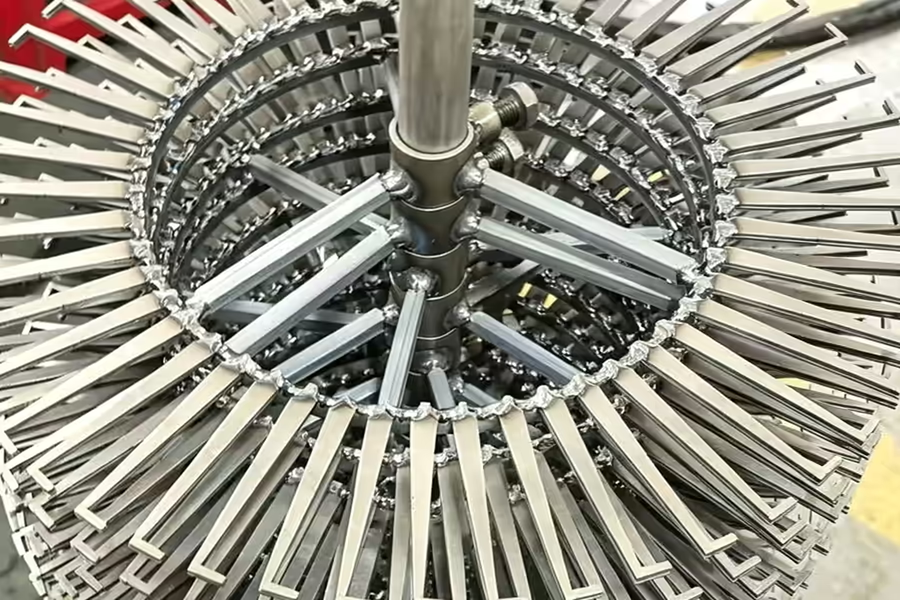
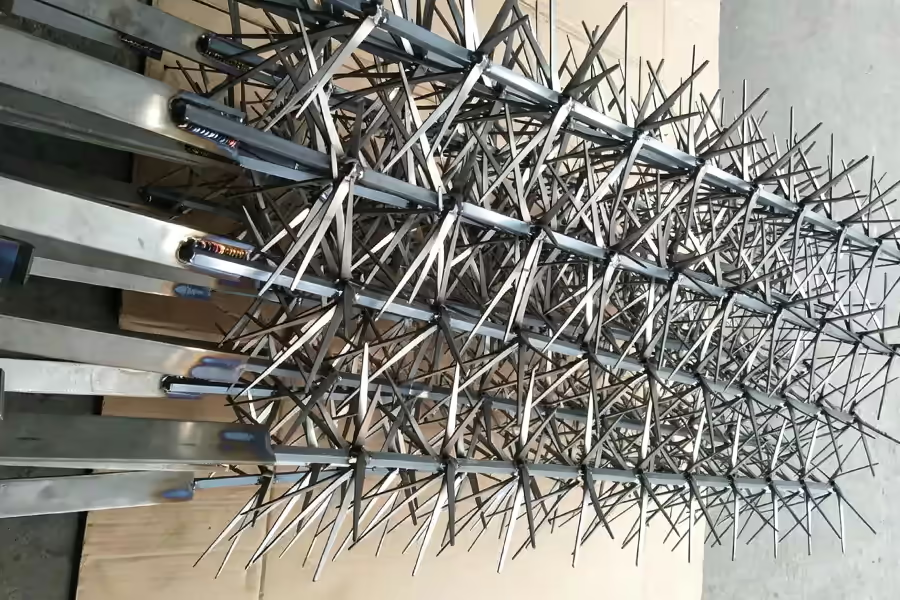
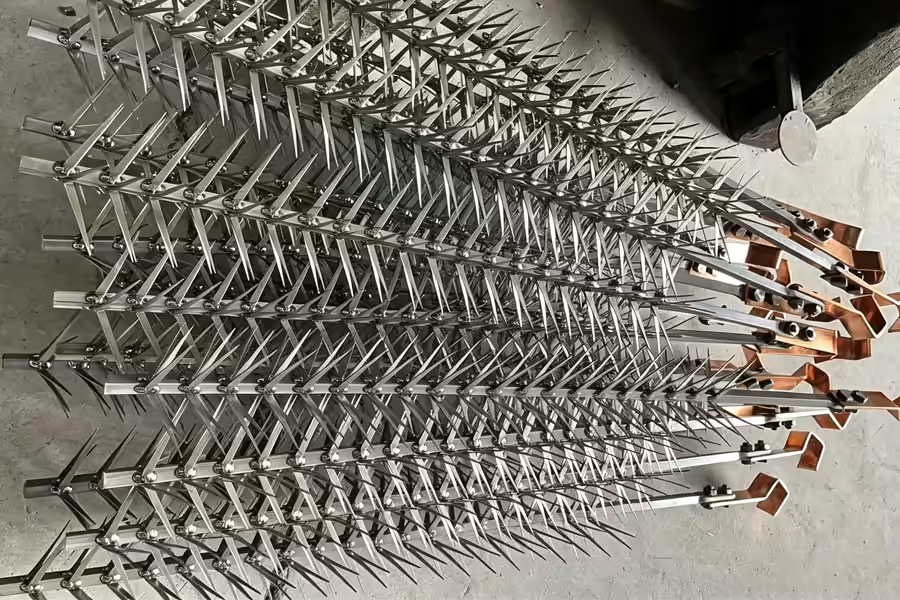
A titanium anodizing rack is a fixture that holds aluminum parts and carries the anodic current during anodizing. We build it from ASTM B265 Grade 2 commercially pure (CP) titanium, which stays passive in sulfuric, chromic, and most electropolishing electrolytes. In standard sulfuric acid anodizing, a rack with routine contact maintenance stays in service for 3 to 5 years, while an aluminum rack is typically retired after 4 to 8 weeks. Finger, spline, disc, hook, and clamp style racks are built to your tank depth and part geometry, with quotations returned within 48 hours of receiving your drawings.
Key specs at a glance
- Material: ASTM B265 Grade 2 CP titanium (UNS R50400), Grade 5 fingers optional
- Stripping: not required between cycles
- Contact capacity: about 0.5 A per finger tip, 8 to 10 A per square inch of contact area
- Construction: TIG welded, 99.99% argon shielding
- Styles: finger, spline, disc, hook, clamp, and custom
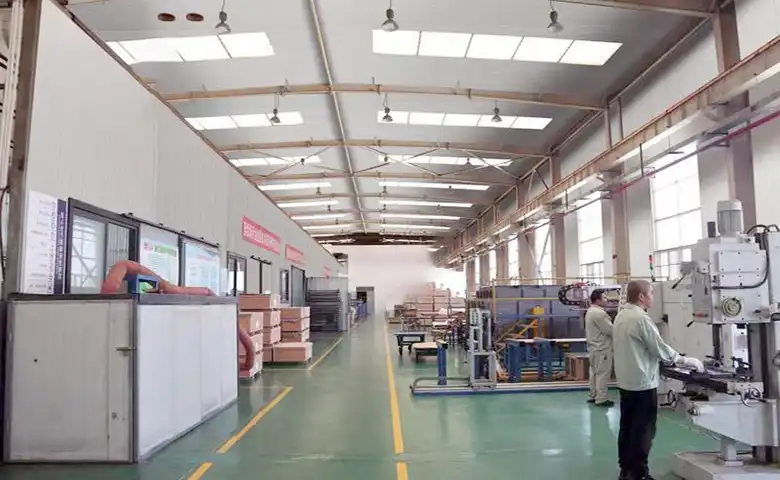
- Factory direct, manufactured in Baoji, China
What Is a Titanium Anodizing Rack?
An anodizing rack, also called a jig or fixture, does two jobs at once. It holds each workpiece as the flight bar moves through cleaning, anodizing, dyeing, and sealing tanks, and it delivers the DC current that grows the oxide coating on the part. Because every point where the rack touches the part blocks the coating, contact design controls both coating quality and the size of rack marks.
Type II and Type III coatings per MIL-A-8625 grow at roughly 10 to 50 amps per square foot (ASF) of part surface area, and the rack has to carry that current without heating at the contacts. Titanium racks handle this duty cycle after cycle because the metal does not dissolve in the bath, which is why most high volume anodizing lines run on titanium today.
Why Grade 2 Titanium
Grade 2 CP titanium is the standard rack material because it solves the three failures that shorten aluminum rack life.
- It does not dissolve in the bath. In an anodizing tank the titanium surface polarizes and forms a thin oxide film within seconds. That film protects the spine, welds, and fingers from the electrolyte. At the contact tips, spring pressure pushes through the film, so current still flows into the part.
- It never needs stripping. Aluminum racks anodize along with the parts, so they lose cross section every cycle and must be stripped in nitric or caustic between runs. Titanium racks go straight from the tank back to the loading station, which removes a full process step and the chemicals that go with it.
- It keeps the bath clean. A dissolving aluminum rack adds metal to the electrolyte and generates sludge. Titanium adds nothing, so bath chemistry stays easier to hold on spec.
The tradeoff is electrical conductivity. Titanium carries roughly one tenth the current of aluminum at the same cross section, so spines, hooks, and contact areas must be sized for your amperage rather than copied from an aluminum rack drawing.
Rack Styles and Configurations
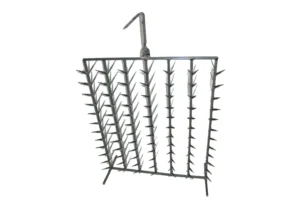
- Finger racks: spring fingers stamped from titanium strip, bent to grip small parts at high density. The workhorse for volume production of small components.
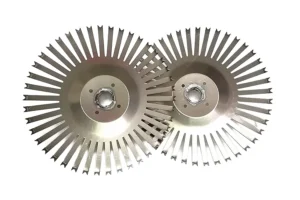
- Spline racks: a vertical spine with contact stations at a fixed pitch, sized for discs, plates, and saw blades.
- Disc racks: split fingers with two contact points per station, so if one tip loses contact during agitation the second keeps the current flowing. Fewer burn marks, fewer rejects.
- Hook and clamp racks: hooks, bolts, and clamps for long or heavy parts where contact area has to scale with amperage.
- Custom racks: built to your STEP or IGES file. Spine length is cut to your tank working depth and busbar height, and station pitch is set to avoid shadowing between parts.
Finger thickness, spring tension, and station count are set to the weight and surface area of your parts. Finger thickness of 1.0 to 1.5 mm covers most standard duties, with 2.0 mm available for heavier work.
Technical Specifications
| Parameter | Value |
|---|---|
| Product Name | Titanium Anodizing Racks (Grade 2 CP Titanium) |
| Material | ASTM B265 Grade 2 CP titanium (UNS R50400) |
| Rack Styles | Finger, spline, disc, hook, clamp, custom |
| Contact Design | Split spring fingers, dual point contact |
| Contact Current Capacity | About 0.5 A per finger tip; 8 to 10 A per square inch of contact area (15 A high load variants) |
| Welding Process | TIG (GTAW), 99.99% argon shielding |
| Dimensional Tolerance | Tip spacing ±1.0 mm |
| Spine Length | Cut to tank working depth and busbar height |
| Compatible Electrolytes | Sulfuric acid (Type II), sulfuric oxalic hard coat (Type III), chromic acid (Type I), electropolishing baths |
| Not Compatible | Fluoride-containing solutions (HF, ammonium bifluoride); high concentration hydrochloric acid |
| Stripping | Not required between cycles |
| Quality System | ISO 9001:2015 |
| Lead Time | 10 to 15 business days (standard); 20 to 30 days (custom) |
| Packaging | Export wooden crate with foam inserts |
How to Specify Your Racks
- Send the part data. Part drawings in STEP or IGES, or samples, plus material and total surface area per load. Surface area drives everything downstream.
- Confirm the electrical duty. Multiply surface area by your current density, typically 10 to 50 ASF depending on whether you run Type II or Type III. That number sets the finger count, contact area, and spine cross section. Remember that titanium needs about ten times the contact area of aluminum for the same current.
- Give the tank data. Working depth, busbar height, flight bar type, and agitation. The spine is cut to these dimensions, so a few millimeters of accuracy here saves a remake later.
- Set station pitch. Weight per station and the gap between parts decide pitch. Too tight and the parts shadow each other, leaving thin spots in the coating.
- Prototype first. Order one rack, run it through a full cycle, and check rack marks and contact performance before committing to a fleet.
Care, Cleaning, and What to Avoid
Titanium racks ask for little maintenance, but the little they ask for matters.
- Contact tips: after hundreds of cycles the tips can build a thicker film. A wipe with an abrasive pad restores conductivity. Stubborn tips respond to a brief pickle.
- Fingers: check spring tension during loading. Bent fingers are straightened cold; cracked fingers are cut out and TIG replaced.
One chemistry rule overrides everything else: keep titanium racks out of fluoride-containing solutions, including hydrofluoric acid and ammonium bifluoride. Fluoride attacks the passive oxide film and will dissolve the rack quickly. High concentration hydrochloric acid without inhibitors is also off limits. In sulfuric, chromic, and standard electropolishing chemistries, the rack is safe.
Applications
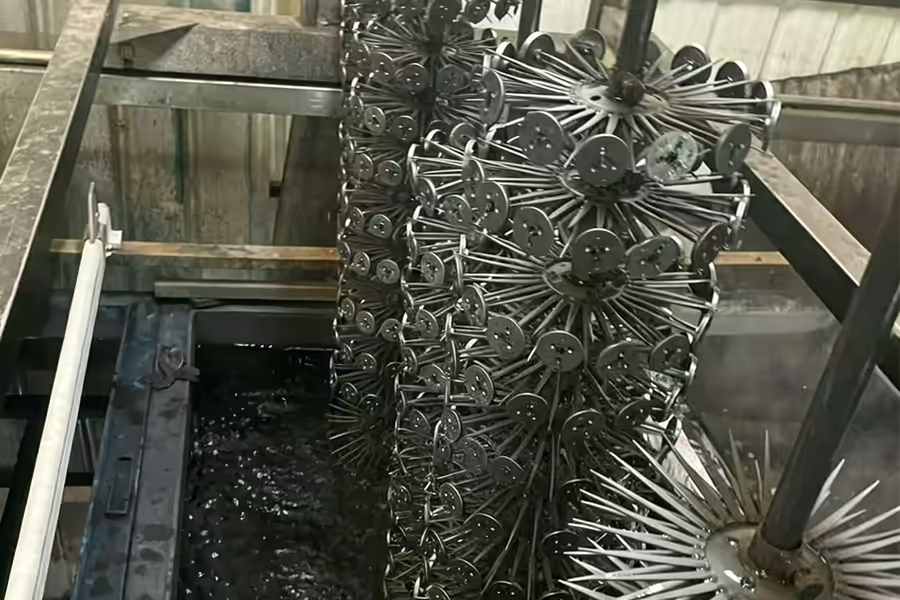
- Type II sulfuric anodizing: decorative and protective coatings on consumer, automotive, and electronics parts, run at high rack density.
- Type III hard coat anodizing: thick, wear resistant coatings at high current, where contact reliability decides burn mark rates.
- Type I chromic acid anodizing: aerospace structures, where bath purity matters and a dissolving rack is not acceptable.
- Electropolishing: titanium racks and fixtures hold parts through phosphoric and sulfuric electropolishing electrolytes.
- Electroplating lines: the same fixtures carry cathodic current through plating tanks where a passive, non contaminating rack is preferred.
Frequently Asked Questions
What is a titanium anodizing rack?
A fixture that holds aluminum parts and carries the anodic current during anodizing. It is built from ASTM B265 Grade 2 commercially pure titanium and moves with the parts through cleaning, anodizing, dyeing, and sealing tanks. Every point where a finger touches the part blocks the coating, so contact design controls both coating quality and rack mark size.
Why use titanium racks instead of aluminum?
Aluminum racks anodize along with the parts, dissolve a little every cycle, and need stripping in nitric or caustic after every run, so most are retired after 4 to 8 weeks. Titanium stays passive in sulfuric and chromic baths, needs no stripping, and lasts 3 to 5 years. The tradeoff is conductivity, about one tenth that of aluminum, so contact area and spine cross section must be sized for the amperage.
How long do titanium anodizing racks last?
3 to 5 years in standard sulfuric acid anodizing with basic care. Actual life depends on bath chemistry, handling, and contact maintenance. Keep the contact tips clean and keep the racks out of fluoride baths, and one rack outlasts dozens of aluminum replacements.
Do titanium anodizing racks need to be stripped?
No. The thin oxide film that forms on the titanium in the bath is broken at the contact points by spring finger pressure, so current flows without removing the film. Only the contact tips need occasional attention, a wipe with an abrasive pad or a brief pickle after hundreds of cycles.
What baths should titanium racks not be used in?
Fluoride-containing solutions such as hydrofluoric acid and ammonium bifluoride, plus high concentration hydrochloric acid without inhibitors. Fluoride attacks the passive oxide film and dissolves the titanium. Grade 2 racks are proven in sulfuric acid Type II, sulfuric oxalic Type III hard coat, chromic acid Type I, and most electropolishing electrolytes.
Need racks built to your tank and your parts?
Send your part drawings in STEP or IGES, tank working depth, busbar height, and coating type (Type II or Type III). We will confirm the rack design and quotation within 48 hours.