MMO Coating Systems and Specifications
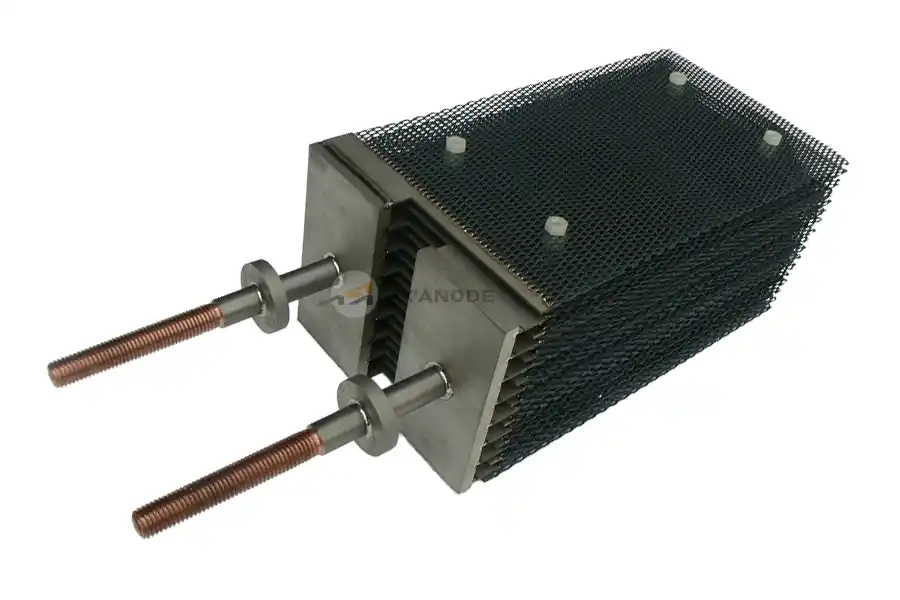
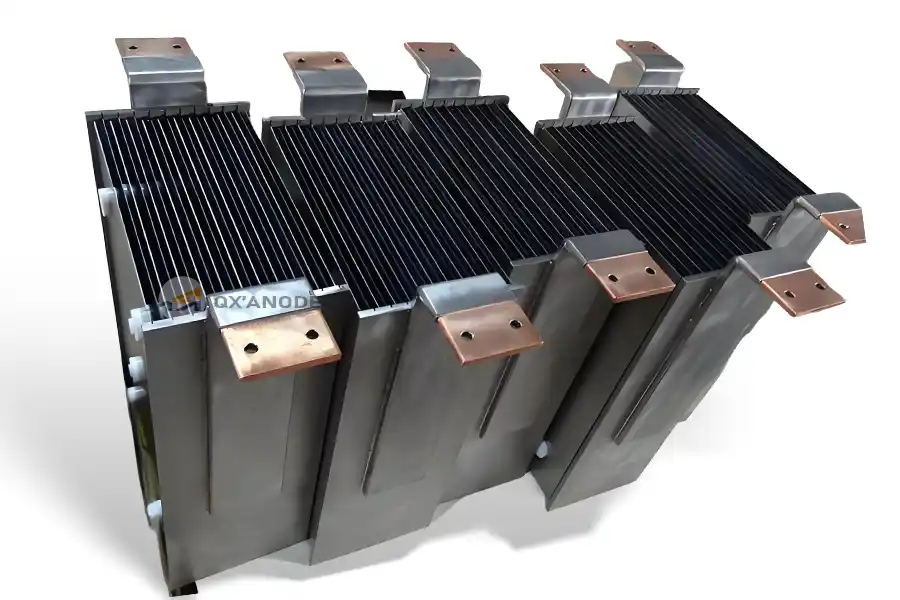
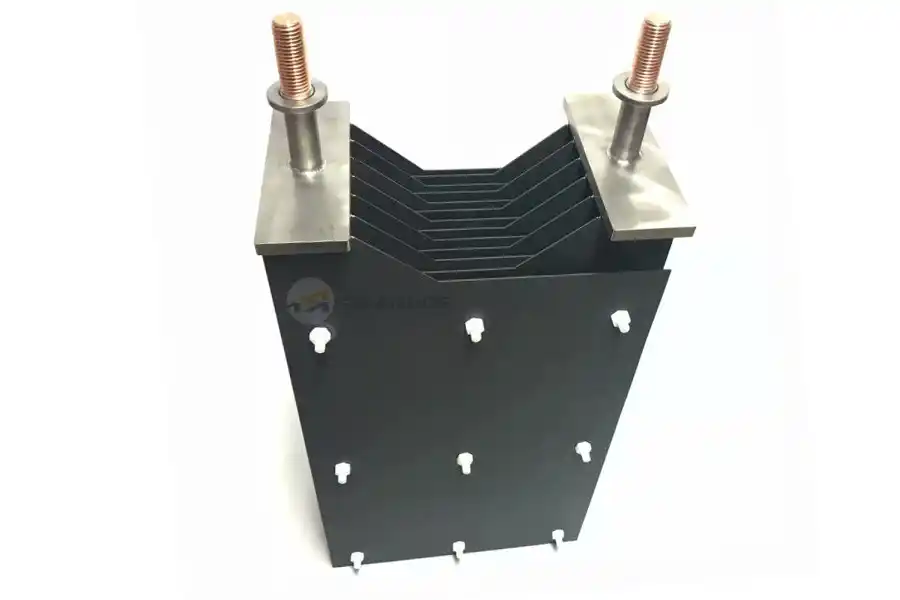
Our mixed metal oxide (MMO) coated titanium anodes handle the two jobs that decide electrochemical wastewater treatment economics: oxidizing refractory organics (dyes, pharmaceuticals, landfill leachate COD) and evolving chlorine efficiently for breakpoint ammonium removal and on-site hypochlorite production. We manufacture plate, mesh, rod, and tubular geometries from ASTM B265 Grade 1/2 titanium substrate with IrO₂–Ta₂O₅, RuO₂–IrO₂–TiO₂, and Pt-based coatings, sized to your reactor — from laboratory coupon to full-scale modular racks.
Electro-oxidation and electro-chlorination anodes for refractory industrial wastewater — engineered for COD polishing, color removal, and on-site disinfectant generation.
| Item | Specification |
|---|---|
| Substrate | ASTM B265 Grade 1 or Grade 2 titanium (CP titanium) |
| Coating systems | IrO₂–Ta₂O₅ (oxygen-evolution / oxidation); RuO₂–IrO₂–TiO₂ (chlorine-evolution); Pt and Pt/IrOx on request |
| Coating load | 5–25 g/m², matched to current density and target service life |
| Recommended current density | 200–800 A/m² (electro-oxidation); 1,000–2,000 A/m² (electro-chlorination) |
| Design service life | 1–3 years, condition-dependent; accelerated life-tested per lot |
| Operating temperature | ≤60 °C (continuous) |
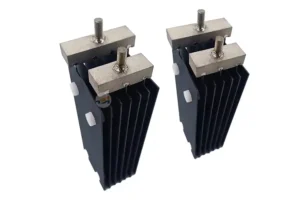
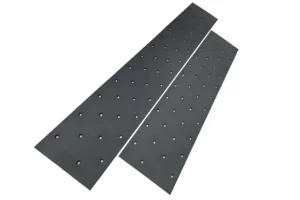
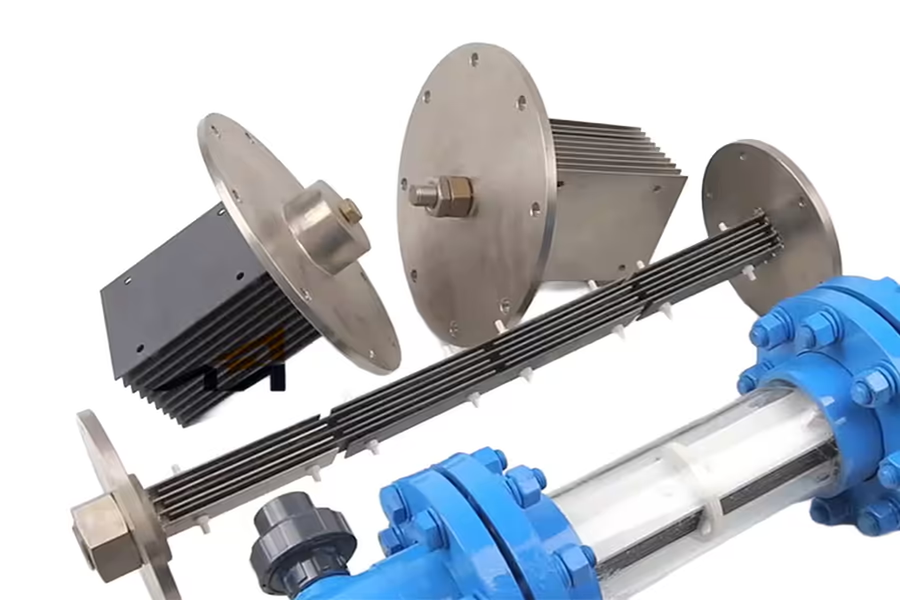
| Geometry | Mesh, perforated plate, solid plate, rod, wire, tube, ribbon; customizable |
| Connection | Titanium clad copper core bar, titanium bolt, or welded lug |
Why Electrochemical Oxidation Needs the Right Anode
Electrochemical advanced oxidation (EO/eAOP) destroys organics that biological treatment leaves behind — reactive azo dyes, pharmaceutical residues, phenolics, and the colored, high-conductivity effluent typical of textile, chemical, and landfill-leachate streams. The anode is the single largest cost driver in these systems: it sets cell voltage, current efficiency, oxidation selectivity, and how often your plant shuts down for electrode replacement.
Three failure modes decide anode lifetime in wastewater service:
Coating degradation at high oxygen overpotential, IrO₂–Ta₂O₅ systems resist this best; this is why they dominate electro oxidation duty.
Substrate passivation — oxygen generated at the coating interface can form an insulating TiO₂ layer if the coating is underspecified for the applied current density.
Reverse-polarity and short-circuit damage, frequent polarity reversal (used in some electrocoagulation and anti-scaling duty) demands a dedicated coating formulation; ask us before specifying.
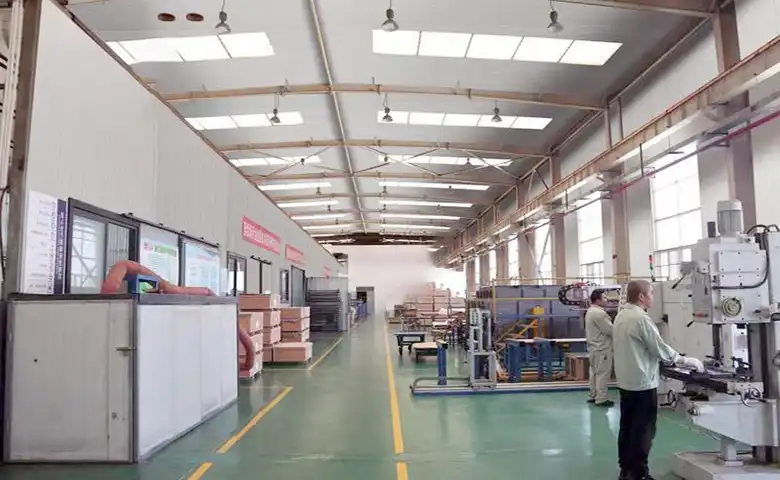
We control all three at the source: grit-blasted and chemically etched substrate (no smooth-surface delamination), verified precious-metal loading, and lot-by-lot accelerated life testing.
Selecting a Coating System by Wastewater Application
| Application | Dominant electrochemistry | Recommended coating | Notes |
|---|---|---|---|
| Textile / dyeing wastewater (color + COD polish) | Oxygen-evolution oxidation of chromophores | IrO₂–Ta₂O₅ | Excellent decolorization; pair with stainless or titanium cathode |
| Landfill leachate (post-MBR polishing) | Oxidation of refractory humics + ammonia | IrO₂–Ta₂O₅, or Ru-Ir if chlorides present | Chloride-rich leachate enables indirect oxidation via active chlorine |
| Pharmaceutical & fine-chemical effluent | Electro-oxidation of bio-recalcitrant organics | IrO₂–Ta₂O₅ (high loading) | Confirm chloride level — it shifts mechanism to mediated oxidation |
| Cyanide-containing effluent (electroplating) | Direct + indirect oxidation of CN⁻ | IrO₂–Ta₂O₅ / Ru-Ir | Operate under alkaline conditions; see FAQ |
| Ammonium removal (breakpoint chlorination) | Chlorine evolution | RuO₂–IrO₂–TiO₂ | Chloride must be present / dosed |
| On-site hypochlorite generation (electro-chlorination) | Chlorine evolution, brine feed | RuO₂–IrO₂–TiO₂ | Also serves seawater/RO-reject disinfection duty |
| Electrocoagulation power anode | Inert current delivery | MMO Ti (low loading) or iron/aluminum soluble anodes | MMO used where passivation and sludge minimization matter |
Not sure which system fits your stream? Send us the water analysis (COD, chloride, sulfate, conductivity, pH, temperature) and target outlet values — we will recommend coating, loading, and current density in writing.
Quality Assurance, Verified Per Lot
- Substrate preparation: mechanical grit blasting + acid etching to remove the native oxide skin before coating — the step most low-cost producers skip, and the #1 cause of early delamination.
- Coating application: repeated thermal decomposition cycles (sol-gel / Pechini route) with interlayer adhesion control; loading verified by weight gain per area.
- Accelerated life testing: every production lot is sampled and life-tested under accelerated conditions (elevated current density in standard electrolyte).
- Shipping inspection: each anode ships with dimensional report, coating loading report, and lot traceability. Test coupons can be included with your order for incoming verification.
FAQ
Which coating should I choose for COD removal — IrO₂ or RuO₂?
Use IrO₂–Ta₂O₅ when oxygen-evolution oxidation dominates (low-chloride streams, direct oxidation of organics). Use RuO₂–IrO₂–TiO₂ when chlorides are abundant and you want mediated oxidation via active chlorine — it is far more energy-efficient per kg COD in those matrices. Send us your water analysis and we’ll confirm in writing.
What current density should I design around?
For electro-oxidation polishing, 200–800 A/m² is the practical window balancing energy cost against treatment rate. Electro-chlorination cells typically run 1,000–2,000 A/m². Exceeding the coating’s design current density is the fastest way to shorten anode life — tell us your maximum, not average, current density.
How long do the anodes actually last?
Design life in wastewater service is typically 1–3 years, driven by current density, temperature, fluoride contamination, and polarity-reversal frequency. We provide accelerated life-test data per lot so you can de-rate with evidence instead of guesswork.
Can these anodes handle polarity reversal?
Standard oxidation-grade coatings are not optimized for frequent reversal. If your process reverses polarity (some electrocoagulation and anti-fouling duty), specify it in the RFQ — we produce a reversal-tolerant formulation with modified interlayers.
What titanium grade do you use, and does it matter?
ASTM B265 Grade 1 or Grade 2 CP titanium. The grade matters less than surface preparation; both offer the corrosion resistance and conductivity the coating system requires. Grade 1 is slightly more formable for complex geometries.
Are there streams where titanium anodes are NOT suitable?
Yes — fluoride-rich acidic streams (F⁻ attacks the titanium substrate through coating pores) and very high-temperature (>80°C) organic electrolytes. Fluoride below ~20 mg/L at neutral pH is generally tolerable. Flag fluoride in your RFQ so we can advise.
Can you manufacture to our reactor drawings?
Yes. Send drawings or an existing anode sample and we quote reverse-engineered replacements, including connection hardware (Ti-clad Cu busbar, titanium bolts, welded lugs). Mesh, plate, rod, tube, and ribbon forms are all routine.
Need a custom anode for your process?
Send us your drawing or specs — we’ll quote within 12 hours.
Send your water analysis and target outlet limits to info@mmo-anode.com — receive a written coating, loading, and current-density recommendation within 1–2 business days.
Or request test coupons to validate performance in your own electrolyte before committing to full scale.