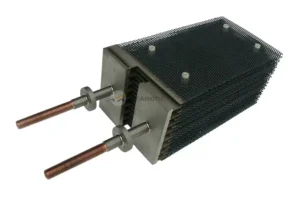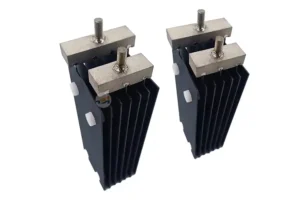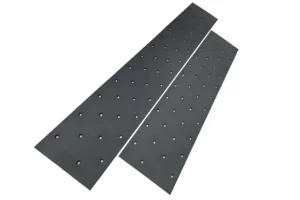
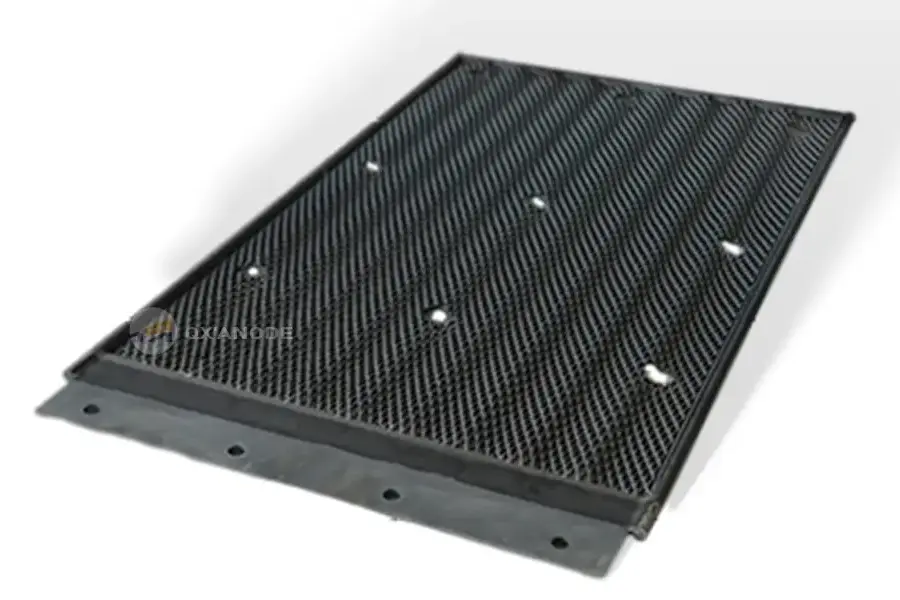
A PbO₂ titanium anode is an insoluble electrode with a lead dioxide coating electrodeposited on a titanium substrate. The titanium base, usually Grade 1 or Grade 2 per ASTM B265, provides the strength and corrosion resistance. The lead dioxide layer is the working surface where oxidation takes place. Our anodes carry a two layer coating of alpha PbO₂ and beta PbO₂ and are rated for 2 to 3 years of service under normal operating conditions.
Key specs at a glance
- Oxygen evolution overpotential: about 1.8 V vs SHE
- Current efficiency: above 90%
- Service life: 2 to 3 years at rated conditions
- Shapes: plates, rods, tubes, mesh, and custom geometries
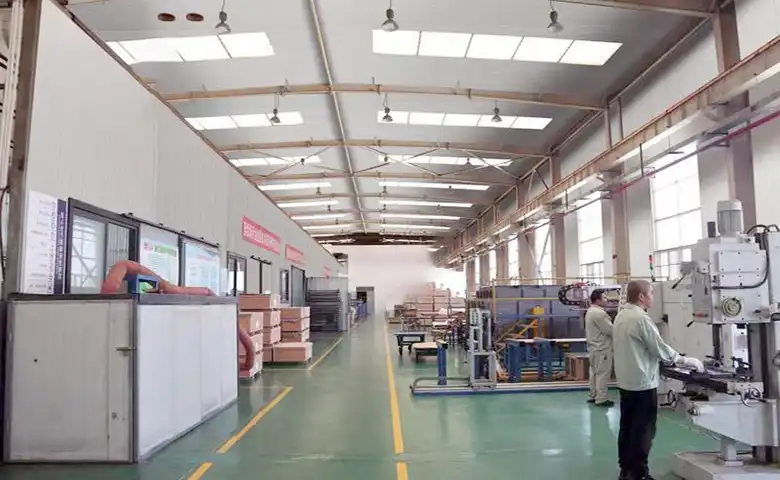
- Factory direct pricing, manufactured in Baoji, China
What Is a PbO₂ Titanium Anode?
A PbO₂ titanium anode, also called a lead dioxide coated titanium anode, is an insoluble electrochemical electrode. It is made by electrodepositing a lead dioxide (PbO₂) catalytic layer onto a titanium substrate. The titanium base, typically Grade 1 or Grade 2 (ASTM B265), provides mechanical strength and corrosion resistance. The PbO₂ coating acts as the active electrocatalytic surface that drives oxidation reactions.
Lead dioxide stands out for its high oxygen evolution overpotential, around 1.8 V vs SHE. This lets the anode oxidize organic compounds and other pollutants that would passivate conventional anodes. That is why PbO₂ titanium anodes are used in electrochemical wastewater treatment, electrowinning of non ferrous metals, and electrochemical synthesis.
Dual Layer Coating Architecture
PbO₂ anodes perform best with a two layer coating structure:
- Inner layer (alpha PbO₂): a dense, fine grained deposit that bonds the coating to the titanium and absorbs mechanical stress.
- Outer layer (beta PbO₂): a thicker, large crystal deposit with high electrical conductivity and strong catalytic activity. This is the main working surface where the reactions take place.
The two layers adhere more firmly and resist delamination better than a single coating. In practice this extends service life from the 2 to 3 years typical of single layer parts to 3 to 5 years in milder service conditions.
Key Performance Advantages
- High oxygen evolution overpotential (about 1.8 V vs SHE): enough to mineralize most organic pollutants and support efficient ozone generation. Outperforms MMO and graphite anodes in these duties.
- Corrosion resistance: the titanium substrate stays passive in acidic, neutral, and mildly alkaline electrolytes, so the anode keeps its structure over years of operation.
- Current efficiency above 90%: lowers energy use in electrowinning and electrochemical synthesis, typically cutting power draw by 15 to 30% compared with lead alloy anodes.
- Service life of 2 to 3 years at rated conditions: fewer change outs and less downtime than traditional lead anodes.
- Light weight: the titanium substrate weighs about 40% less than a comparable lead alloy anode, which simplifies installation and handling.
- Lower cost than BDD: performance in the same range as boron doped diamond (BDD) anodes at a much lower price, which is why industrial users choose it for large scale installations.
Technical Specifications
| Parameter | Value |
|---|---|
| Product Name | PbO₂ Titanium Anode (Lead Dioxide Coated) |
| Substrate Material | Titanium Grade 1 / Grade 2 (ASTM B265) |
| Coating Material | Lead Dioxide (PbO₂), dual layer: alpha PbO₂ + beta PbO₂ |
| Coating Thickness | 0.5 to 3.0 mm |
| Oxygen Evolution Overpotential | About 1.8 V vs SHE |
| Max Current Density | 2,000 A/m² (recommended: 300 to 1,000 A/m²) |
| Current Efficiency | Above 90% |
| Operating Temperature | Max 60 °C (140 °F) |
| pH Range | 1 to 7 (works best in acidic media) |
| Available Shapes | Mesh |
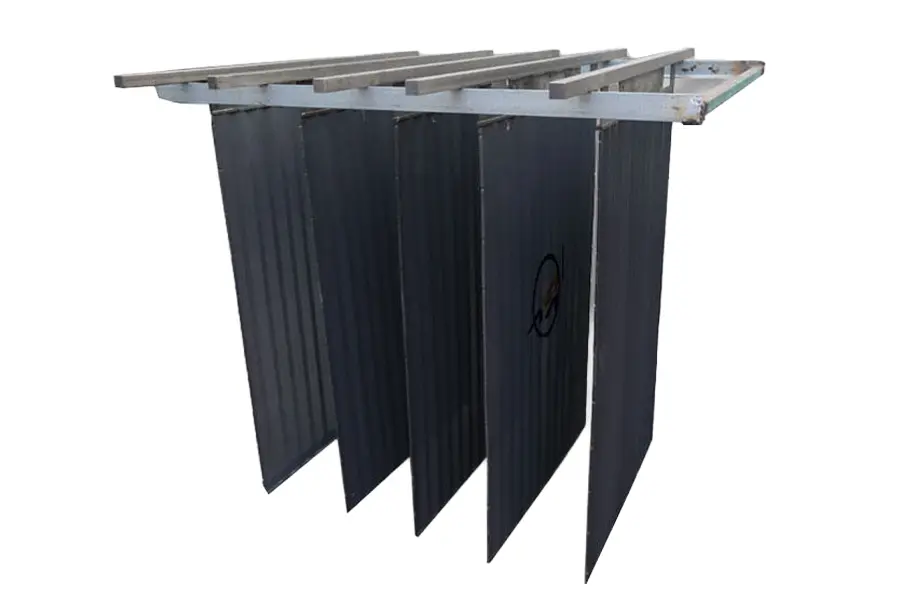
| Standard Plate Sizes | 50×50 mm to 1000×800 mm (custom available) |
| Connection Method | Titanium-copper-titanium welded lug / threaded bolt |
| Certifications | ISO 9001:2015, CE |
| Lead Time | 10 to 15 business days (standard); 20 to 30 days (custom) |
| Packaging | Export grade wooden crate with foam protection |
| Service Life | 2 to 3 years at rated conditions |
Applications
- Electrowinning: zinc, copper, and manganese. PbO₂ anodes replace lead alloy anodes, cutting energy use by 15 to 30% and keeping lead out of the cathode deposit.
- Wastewater treatment: electrochemical oxidation of refractory organic pollutants such as dyes, pharmaceuticals, and pesticides. The high overpotential allows complete mineralization to CO₂ and H₂O.
- Ozone generation: on site electrochemical ozone production for water disinfection and food processing, with ozone current efficiencies of 15 to 25%.
- Electrochemical synthesis: persulfate, perchlorate, and other strong oxidants, plus selective organic electrosynthesis that needs high anodic potentials.
How to Select and Maintain
A five step guide to specifying and maintaining your PbO₂ anode:
- Define your requirements. Note the electrolyte, current density, temperature, and the anode shape your cell needs.
- Choose the specs. Select the substrate grade, coating type (dual layer recommended), dimensions, and coating thickness.
- Install properly. Ensure solid electrical contact, keep anode to cathode spacing at 10 to 30 mm, and avoid impact on the coating.
- Monitor operation. Run the cell within the rated current density, check temperature and pH during operation, and inspect the coating surface at regular intervals.
- Clean and maintain. Clean periodically with dilute acid. Recoat or replace the anode when coating wear exceeds 30%.
Frequently Asked Questions
What is a PbO₂ titanium anode?
An insoluble electrode made by electrodepositing a lead dioxide (PbO₂) coating onto a titanium substrate. The titanium provides structural strength and corrosion resistance, and the PbO₂ coating is the active electrocatalytic layer. Because of its high oxygen evolution overpotential, about 1.8 V vs SHE, it is widely used in electrowinning, wastewater treatment, ozone generation, and electrochemical oxidation.
What are the advantages of PbO₂ titanium anodes over other anode types?
PbO₂ titanium anodes combine a high oxygen evolution overpotential with a relatively low price. They cost far less than boron doped diamond (BDD) anodes, resist corrosion better than graphite or lead alloy anodes, and last longer than traditional lead anodes. The lighter titanium substrate is also easier to handle. Current efficiency stays above 90% in most applications.
How long does a PbO₂ titanium anode last?
Under normal operating conditions, with a current density of 500 to 1,000 A/m², a temperature below 60 °C, and a pH of 1 to 7, a PbO₂ titanium anode typically lasts 2 to 3 years. Actual life depends on current density, electrolyte composition, temperature, and maintenance. Regular cleaning and avoiding current overload will extend it.
What applications use PbO₂ titanium anodes?
Zinc and copper electrowinning, industrial wastewater treatment, especially organic pollutant degradation, ozone generation, synthesis of perchlorate and persulfate, seawater electrolysis for chlorination, cathodic protection systems, and chromium and other metal electroplating.
What is the difference between alpha PbO₂ and beta PbO₂ coatings?
Alpha PbO₂ has a compact structure with small crystals, so it bonds well to the titanium substrate and serves as the intermediate layer. Beta PbO₂ has larger crystals, higher conductivity, and stronger catalytic activity, so it forms the outer working layer. High performance anodes use both, with alpha PbO₂ inside for bonding and beta PbO₂ outside for catalysis.
Need a PbO₂ anode built to your tank and duty cycle?
Send us your electrolyte, current density, temperature, and required dimensions. We will confirm the coating spec and quotation within 48 hours.